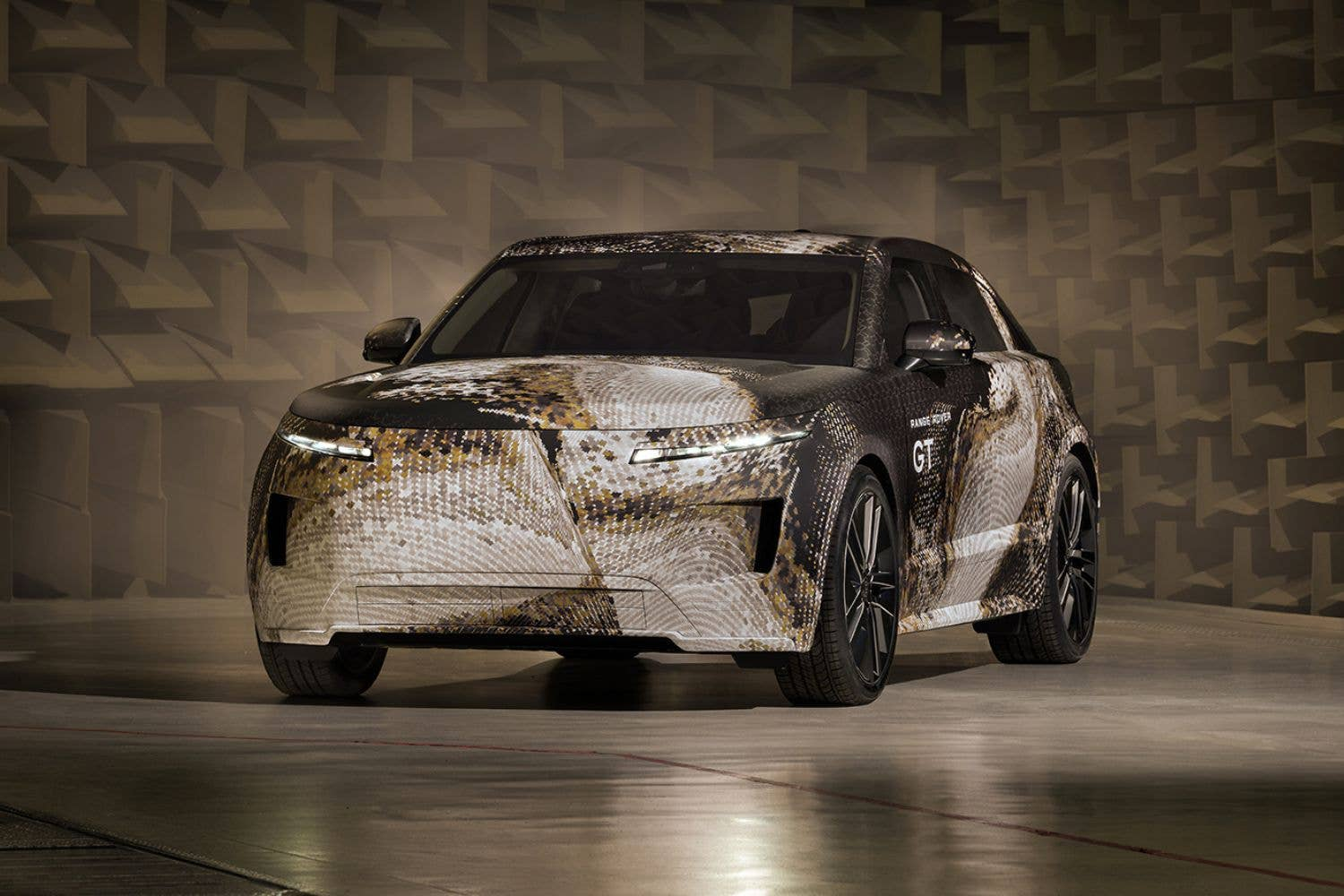
The upcoming Range Rover GT is shaping up to be a departure from the brand’s traditional SUV lineup, with a lower stance, coupe-like roofline and grand-touring focus. Newly shared images from a public residential street in the UK offer a clearer look at the camouflaged prototype’s distinctive proportions after Range Rover first unveiled the vehicle in July 2026. The model is expected to make its full debut by early 2027 and will become the fifth member of the Range Rover family.
Range Rover GT Takes a Different Approach to SUV Design
Unlike other Range Rover models, the Range Rover GT is designed around grand-touring characteristics rather than a conventional SUV identity. Its crossover proportions, sloping roofline and low-slung profile give it a more road-focused appearance.
Range Rover initially revealed a camouflaged version of the GT in July 2026. However, the controlled setting used for the official images made it difficult to appreciate the vehicle’s proportions fully.
A newer social media post from letsdriveukk shows the prototype on a public residential street in the UK, offering a different perspective on its design. Unlike the earlier images, the new sighting captures the vehicle in an everyday setting rather than at a test facility or automotive event.
Why the Range Rover GT Has a Lower Ride Height
One of the most noticeable details in the latest images is the rear of the prototype, where the bumper appears to sit just inches from the curb. Its low ride height could serve two main purposes: improving aerodynamic performance and delivering a more composed driving experience.
A lower profile can help reduce aerodynamic drag, potentially improving efficiency and extending driving range. These characteristics are particularly relevant to electric vehicles, for which driving range is an important consideration for buyers.
The GT will be the first model built on Jaguar Land Rover’s new Electrified Modular Architecture (EMA) platform. By comparison, the flagship Range Rover Electric uses the Modular Longitudinal Architecture (MLA) platform.
The so-called Defender Sport is also expected to use the EMA architecture. However, shifting market preferences have prompted the automaker to plan for hybrid powertrains on the platform as well, meaning a future Range Rover GT variant is expected to combine a gasoline engine with electrification.
Range Rover GT Promises a More Refined Driving Experience
The GT’s low-slung design could also improve comfort and handling by lowering the vehicle’s center of gravity. This can be particularly beneficial when cornering, as taller vehicles tend to experience more body roll.
These characteristics reinforce the GT’s focus on grand-touring refinement rather than the more traditional SUV approach associated with the Range Rover name.
The model will become the fifth member of the Range Rover family, joining the Range Rover, Range Rover Sport, Range Rover Velar and Range Rover Evoque.
Despite its road-oriented design, the Range Rover GT is still expected to retain some off-road capability. Earlier footage showed the vehicle driving on both sand and snow, suggesting that its broader capabilities will extend beyond paved roads.
Range Rover GT Prototype Features Gold, White and Black Camouflage
The spotted prototype wears a distinctive camouflage wrap combining gold, white and black. The design was created by Range Rover’s in-house creative team and incorporates elements inspired by the company’s engineering and design headquarters.
According to the automaker, the flowing gold pattern takes inspiration from the surrounding topography in Gaydon, England. The wrap’s digital appearance is intended to reflect the advanced technologies underpinning the GT.
As with any prototype, some design details and features could change before the production model arrives. Range Rover has not announced a specific launch date, but the vehicle’s full reveal is expected by early 2027.
With its distinctive proportions, electrified platform and emphasis on a more relaxed driving experience, the Range Rover GT will expand the lineup with a model aimed at buyers seeking a different interpretation of the brand’s familiar identity.