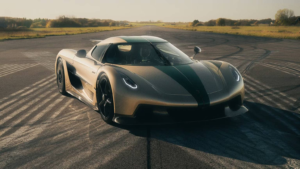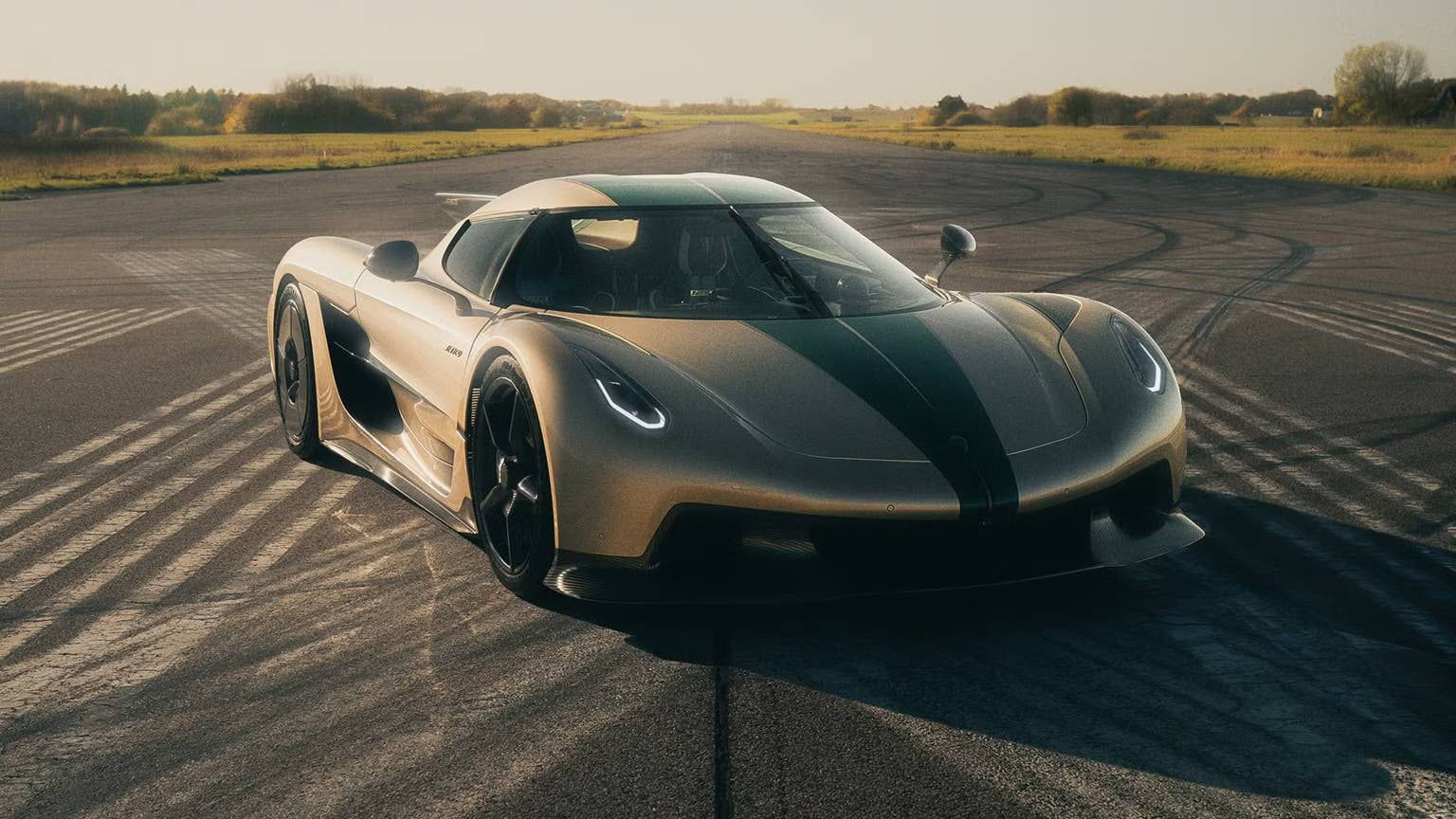
Koenigsegg has officially completed production of the Jesko, bringing its 125-unit run to a close with a specially finished Jesko Absolut known as the “Jesko 125.” The final car was handed over to former world No. 1 tennis player Daniil Medvedev, marking a major milestone for the Swedish hypercar manufacturer as attention turns toward its next generation of high-performance models.
The Jesko first debuted in 2019 in Attack configuration, while the Absolut version followed in 2020. However, the COVID-19 pandemic slowed production and disrupted supply chains worldwide. Combined with the extensive customization involved in building each vehicle, these challenges meant customer deliveries did not begin until 2023.
The Final Koenigsegg Jesko Absolut Gets a Special Finish
The final Jesko Absolut features a champagne-like exterior color called Skumpa, complemented by a green-tinted carbon fiber strip running along the center of the car. The design takes inspiration from the Regera and carries its distinctive visual theme into the cabin.
Inside, the hypercar combines tan and caramel upholstery with rose gold metal accents and Koenigsegg Naked Carbon, creating an interior that emphasizes both luxury and performance.
Special “125” badges appear on the exterior’s central fin and on each seatback, identifying the vehicle as the final example in the limited production run.
Koenigsegg’s future customization options could become even more distinctive. Earlier this year, during Monterey Car Week, the company unveiled the limited-edition CCGT1 and announced that it had perfected a white carbon fiber finish called Ghost Fibre.
Ghost Fibre not only delivers a distinctive appearance but also weighs less than conventional carbon fiber. Several Koenigsegg customers could choose this material for future vehicles.
Koenigsegg Continues Deliveries of Other Hypercars
Although Jesko production has ended, Koenigsegg has several other models moving through production and delivery. The company has begun delivering the Gemera while continuing to build the remaining CC850 and CCGT1 allocations, alongside the Sadair’s Spear.
With the exception of the four-seat Gemera, these models share the Jesko’s monocoque structure. They also use versions of the Jesko’s 5.0-liter twin-turbo V8 engine.
What Comes Next for Koenigsegg?
Koenigsegg CEO Christian von Koenigsegg previously indicated that the company was preparing new models. In July last year, he said Koenigsegg would “introduce something new in one, one and a half years.”
Around the same time, he revealed that the company expected to introduce two new hypercars either by the end of 2026 or shortly afterward.
The CCGT1 is believed to be one of those vehicles, while the other is expected to be the Jesko’s successor. However, further details about the upcoming hypercars have not been provided.
Koenigsegg has also hinted at the possibility of producing a more attainable vehicle. Rather than another hypercar or what the company describes as a “megacar,” the potential model could be a sports car or supercar.
That would represent a different challenge for the manufacturer, which may consider pursuing this direction at a later stage.
The End of the Koenigsegg Jesko Era
With all 125 Jesko units completed, Koenigsegg has closed an important chapter in its production history. The final Jesko Absolut, delivered to Daniil Medvedev, marks the completion of a program that began with the model’s 2019 debut and continued through years of highly customized production.
Meanwhile, deliveries of the Gemera and production of the CC850, CCGT1 and Sadair’s Spear continue as Koenigsegg prepares for its next generation of hypercars.