Mazda is moving forward with an alternative approach to reducing vehicle emissions, developing carbon capture technology designed to remove carbon dioxide directly from engine exhaust. The automaker plans to begin testing the system on public roads by 2028, marking a new stage in its efforts to make internal combustion engines more environmentally sustainable.
Mazda and Toyota Explore Alternatives to Fully Electric Vehicles
As automakers continue exploring ways to reduce carbon emissions, Toyota and Mazda have taken pragmatic approaches to the future of vehicle technology. Rather than focusing exclusively on battery-electric vehicles (BEVs), both companies have been developing and testing alternative solutions aimed at lowering emissions.
Some of this development work has taken place on the racetrack. However, Mazda is now preparing to move its carbon-reduction technology beyond racing and into real-world driving conditions.
How Mazda’s Carbon Capture Technology Works
Mazda’s approach focuses on addressing carbon dioxide emissions produced by an engine rather than introducing an entirely new type of fuel.
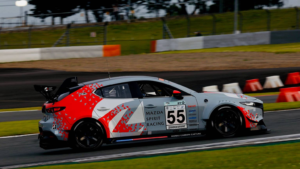
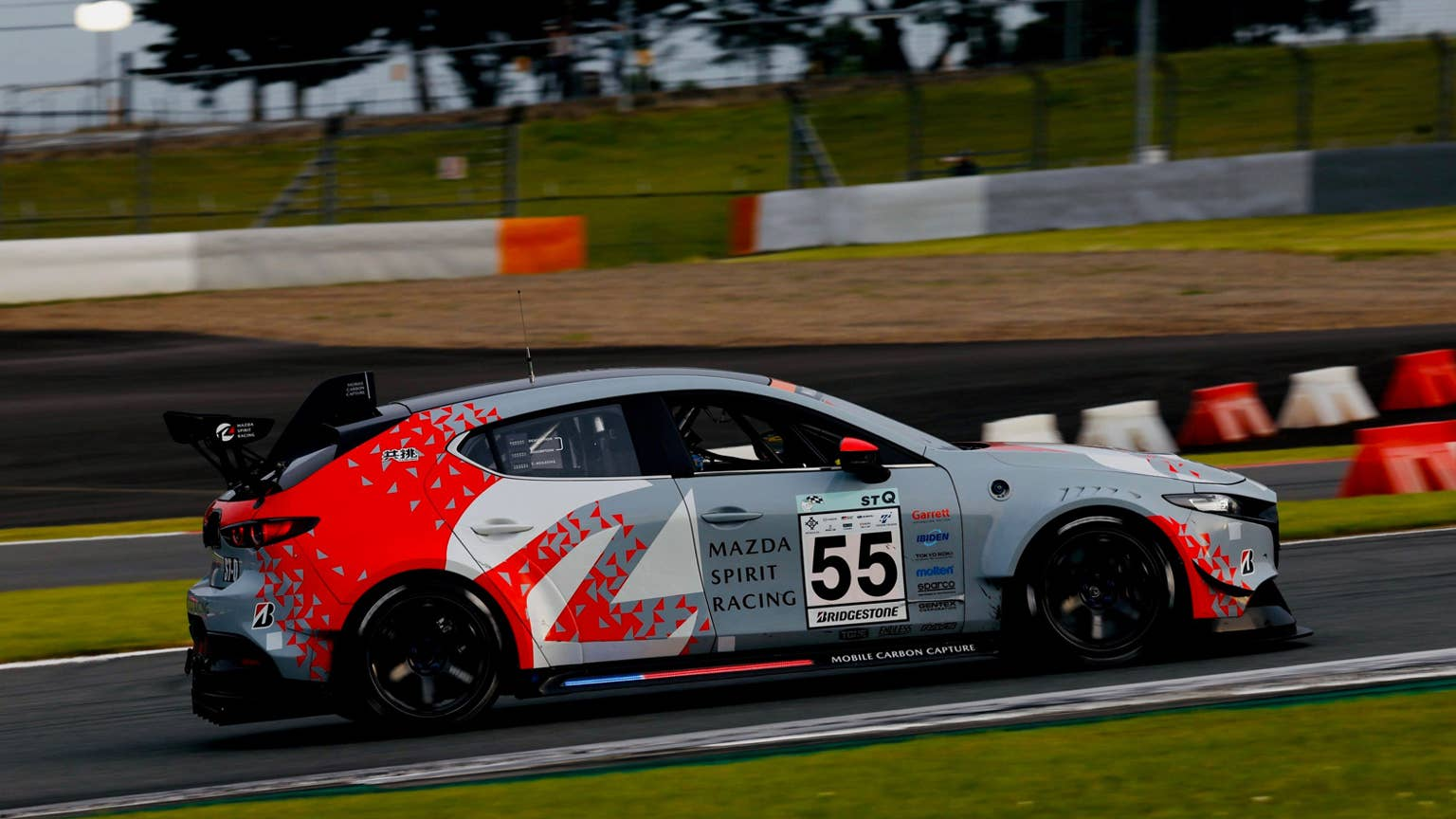
Earlier this year, the company introduced a Mazda 3 racecar for Japan’s Super Taikyu series, using the vehicle as a test platform for its carbon capture technology.
The system cools exhaust gases before using a microporous material called Zeolite to absorb carbon dioxide. The captured and cooled CO2 is then transferred into a storage tank, which can be replaced in approximately five minutes during racing pit stops.
Alternative Fuel Helps Reduce Carbon Emissions
Mazda’s testing program also uses a different type of fuel. The racecar runs on hydrotreated vegetable oil (HVO), a form of biodiesel produced from used cooking oil.
This biodiesel produces 90% less carbon dioxide than conventional diesel.
By combining HVO fuel with its carbon capture system, Mazda believes it can further reduce the vehicle’s overall CO2 emissions as it continues operating. The company has set a target of recovering between 20% and 40% of carbon.
Mazda Plans Public Road Testing by 2028
During the final race of the season, Mazda announced plans to begin testing its carbon capture technology on public roads by 2028.
The automaker aims to develop the system into a viable, production-ready technology by 2035. Moving testing beyond the racetrack will allow Mazda to identify challenges associated with normal driving conditions and make further improvements to the system.
Cost Remains a Challenge for Commercial Applications
Mazda’s longer-term objective is to install the carbon capture technology in commercial vehicles. However, the company acknowledges that economic feasibility and overall costs remain challenges that must be addressed.
With public road testing planned for 2028 and a production-ready target of 2035, Mazda is continuing to explore carbon capture as another potential solution for reducing emissions from internal combustion engines.