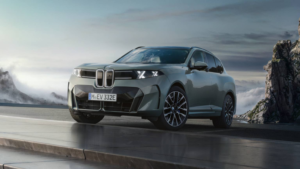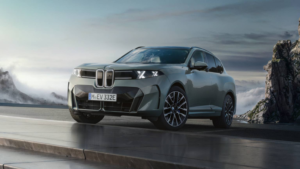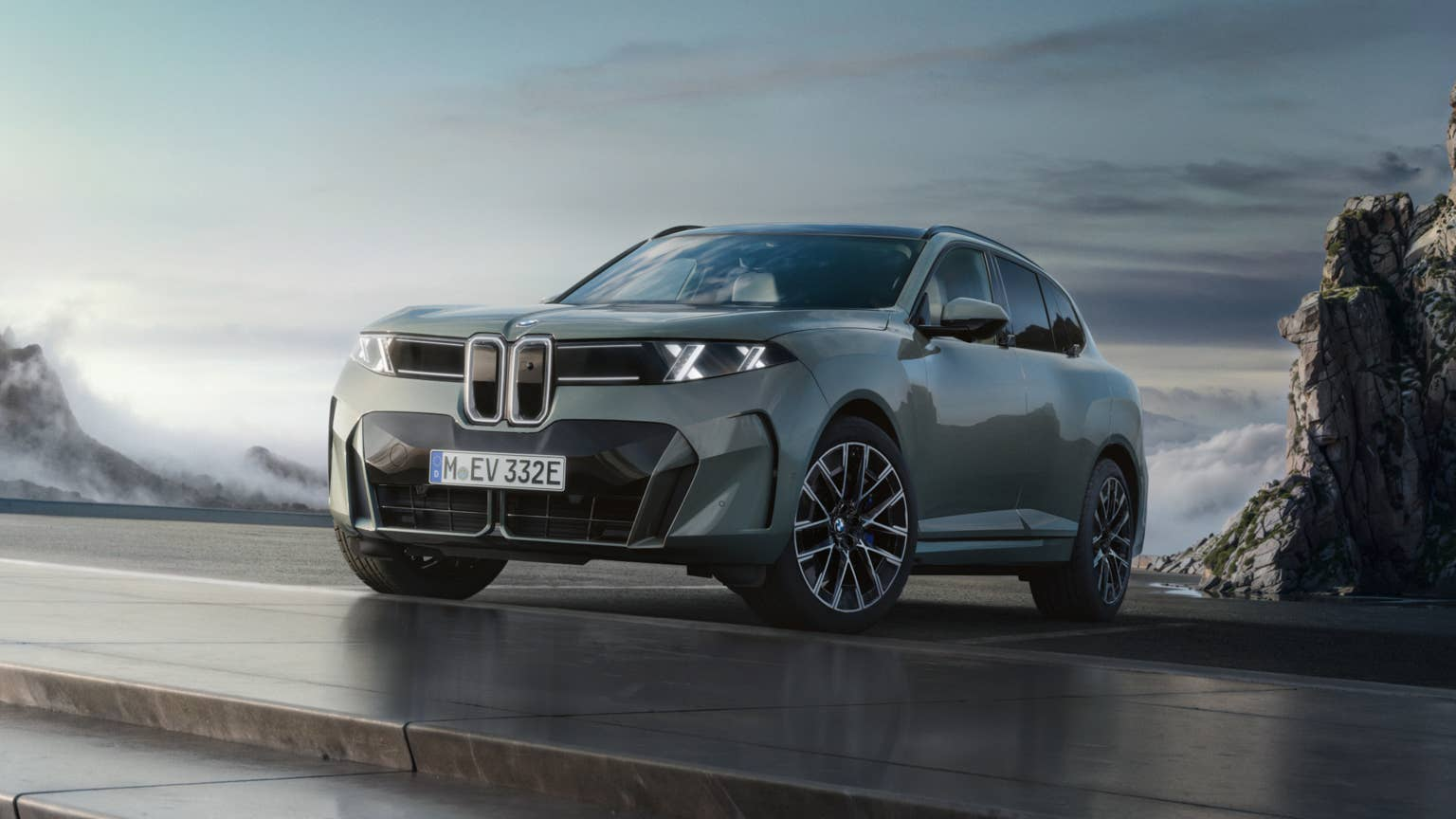
The BMW iX5 has demonstrated that it can continue driving even after its battery charge indicator reaches zero, covering approximately 11 additional miles during a closed-course test on a North Carolina racetrack. The test also revealed that the electric SUV could restart after coming to a complete stop, suggesting BMW may have incorporated a reserve-energy strategy similar to the fuel reserves found in conventional vehicles.
BMW iX5 Continues Driving After Reaching 0% Battery
The test began with a fully charged iX5 collected from BMW’s X Factory in Spartanburg, where the SUV is built. The vehicle was then taken to a racetrack, where its battery was drained by driving around a circuit at speeds ranging from 35 to 55 mph, with the air conditioning set to Eco mode.
As the battery charge decreased, the iX5 provided several warnings through its digital instrument display. At 4% state of charge (SOC), yellow graphics appeared on the gauges alongside a warning instructing the driver to recharge.
When the battery reached 1%, the vehicle displayed approximately seven miles of remaining range. However, reaching 0% did not immediately end the drive. The BMW iX5 continued moving for approximately 11 miles after the battery indicator showed no remaining charge.
The Electric SUV Could Restart After Stopping
Another notable finding came after the iX5 finally rolled to a stop. Switching the vehicle off and turning it back on allowed the SUV to move again, reaching speeds of up to 55 mph.
After reaching 0% and covering approximately 400 miles in total, the iX5 drew around 4 kWh from its supposedly depleted battery. This suggests BMW may have developed software that allows its electric vehicles to retain a reserve of usable energy, functioning similarly to a reserve tank in a gasoline-powered vehicle.
The approach reflects BMW’s tendency to provide conservative performance figures and acceleration estimates. Its electric vehicles may also be marketed with less driving range than they can potentially deliver.
BMW iX5 Battery and Estimated Driving Range
The BMW iX5 features a usable 144 kWh battery pack, with an estimated EPA driving range of up to 456 miles. The racetrack test suggests the SUV may have additional range beyond the figure indicated by its battery charge display.
The findings also follow independent evaluations of BMW’s Gen6 eDrive technology, associated with the Neue Klasse platform. The technology has demonstrated strong real-world efficiency in the iX3, outperforming estimates in several independent tests.
Additional Range Could Provide a Safety Margin for Drivers
BMW’s approach could address concerns among drivers who remain hesitant about electric vehicles, particularly in the United States. A study revealed that buyers want more driving range than they will ever need.
Providing more usable range than advertised could give BMW an advantage as other automakers work to catch up. It could also offer an additional margin for drivers who might otherwise risk getting stranded late at night or arriving at a charging station that turns out to be faulty or nonfunctional.
The test demonstrates that the BMW iX5 can continue driving beyond the point at which its dashboard reports 0% battery charge. It also highlights the potential role of reserved battery energy in extending the SUV’s driving capability without requiring a range extender.