
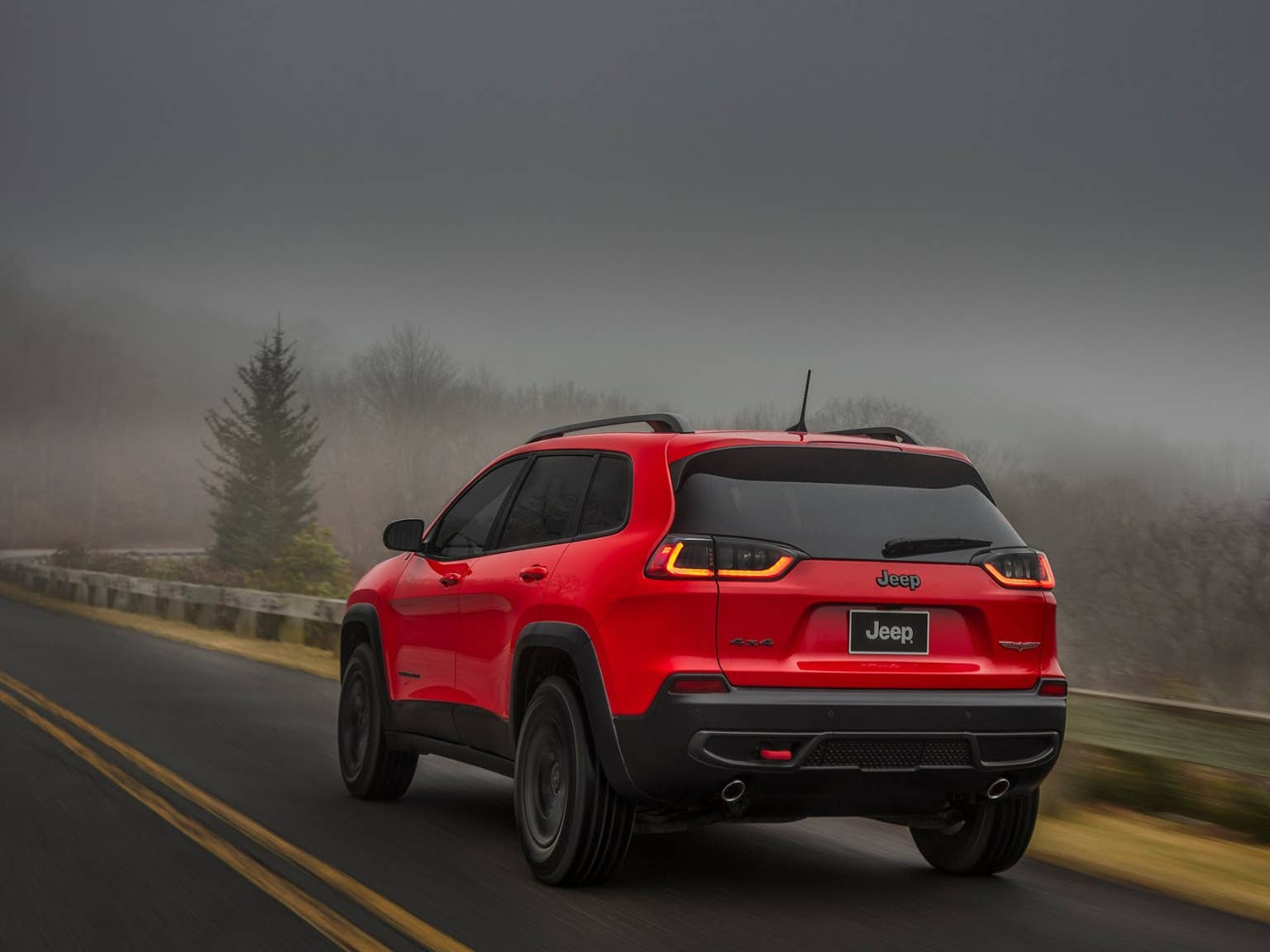
Jeep is facing a difficult reputation among some automotive professionals, with six employees at a family-owned repair shop in Middleton, Wisconsin, saying they would not buy a used vehicle from the brand. Their responses come as reliability studies place Jeep near the bottom of their rankings, adding to concerns about the automaker’s standing with consumers and dealers.
Repair Shop Employees Reject Used Jeeps
In an informal poll, all six employees at Aeschbach Auto said they would not consider buying a used Jeep. Five gave a straightforward “no,” while two of those respondents said even a brand-new Jeep would not change their minds.
The sixth employee said she would consider only Jeep models produced before the 2005 model year. None of the employees explained their responses, so their reasons for avoiding the brand remain unclear.
However, reliability data offers some context for the negative sentiment toward Jeep.
Jeep Ranks Near the Bottom in Reliability Studies
One reliability study ranked Jeep 25th out of 26 brands for used-car reliability, with only Tesla placing lower. The findings were based on a survey covering more than 140,000 vehicles from the 2016 through 2021 model years.
Jeep received a score of 32 points, trailing GMC at 37, Chrysler at 36 and Ram at 35. Lexus led the rankings with 77 points, followed by Toyota at 73 and Mazda at 58.
A separate 2026 vehicle dependability study also placed Jeep near the bottom of its rankings. It collected feedback from 33,268 original owners of 2023 model-year vehicles after three years of ownership.
Jeep recorded 267 problems per 100 vehicles, or 267 PP100. That placed the brand between Audi, at 244 PP100, and Land Rover, at 274 PP100. Volkswagen ranked last with 301 PP100.
Lexus again led the rankings, recording 151 PP100, ahead of Buick at 160 PP100 and Mini at 168 PP100. Together, the studies point to reliability challenges for Jeep, although they do not explain why the repair shop employees rejected the brand.
Why One Employee Prefers Jeep Models Before 2005
One employee’s preference for Jeep vehicles made before 2005 may be connected to changes in the Grand Cherokee’s engine lineup. For the 2005 model year, the automaker replaced the AMC-derived 4.0-liter inline-six with a 3.7-liter V6.
Older vehicles also generally had simpler electronics and powertrains, which could make them easier to diagnose and repair. However, the employee did not explain why she selected the 2005 cutoff.
Jeep Faces Sales Pressure From Dealers and Consumers
Jeep dealers have reportedly expressed frustration with the automaker, saying they were encouraged to make significant investments based on expectations of continued growth, only to see sales decline in recent years.
The brand is projected to sell 550,000 vehicles in the United States this year, which would represent its lowest annual sales total since 2013.
Despite those challenges, Jeep remains optimistic, pointing to strong retail sales performance from the Grand Wagoneer and Cherokee Hybrid.
New Jeep Models Face a Reliability Test
Questions about reliability could remain an obstacle if they are contributing to customers’ reluctance to buy Jeep vehicles. Newer models, including the Cherokee Hybrid, will have an opportunity to demonstrate whether the brand can improve its reputation and reduce the time and money owners spend on repairs.
Stellantis has already discontinued its Jeep and Chrysler 4xe plug-in hybrids in North America earlier this year, citing changing customer demand. The decision also followed multiple recalls involving 4xe models.
With Jeep facing criticism from repair shop employees, weak reliability rankings and pressure over declining sales, the brand’s ability to address customer concerns remains an important part of its current challenge.