
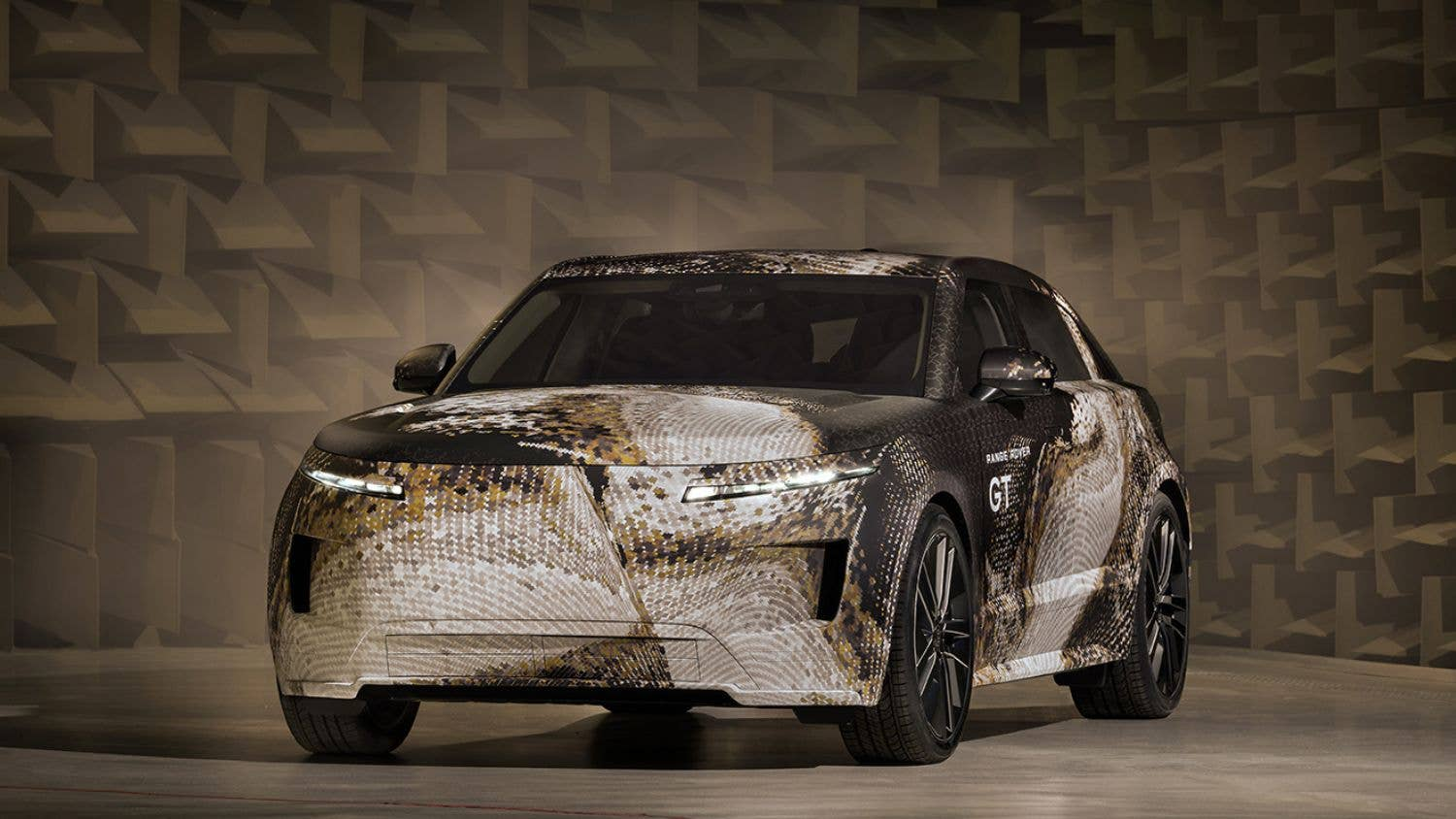
JLR has confirmed that the all-electric Range Rover GT will launch in early 2027, with a hybrid version expected to follow at a later date. The new model will sit below the full-size Range Rover, offering a sportier, lower-slung design focused on luxury and refinement rather than off-road capability.
JLR CFO Richard Molyneuz confirmed the launch timeline during the Q2 FY27 earnings call of Tata Motors Passenger Vehicles. He said the hybrid version would arrive “within a reasonable timeframe,” but not during 2027.
The Range Rover GT is expected to replace the brand’s more affordable current models, filling the space previously occupied by the Velar and Evoque. However, its arrival in the United States has not yet been confirmed.
Range Rover GT Will Take a Different Approach to Luxury
The upcoming GT will sit below the traditional full-size Range Rover and feature a lower, more car-like profile. Its design is expected to deliver a sportier driving experience while maintaining the luxury and refinement associated with the Range Rover name.
Earlier reports suggested the Velar could evolve into a sedan-like model, but the GT may move in that direction if customer demand supports it. The new vehicle will place less emphasis on off-road capability and more on luxury and comfort.
The GT is also expected to cost significantly less than a traditional Range Rover. The current combustion-powered Range Rover starts at more than $113,000, while the recently unveiled electric Range Rover costs around $140,000.
That leaves room for the GT to potentially start below $100,000, although it may only just fall under that threshold. Its U.S. launch and pricing have yet to be confirmed.
Range Rover EV Demand Exceeds Current Production Capacity
Despite the substantial price difference between the combustion-powered and electric Range Rover models, JLR says demand for its electric SUV is strong.
The company has already received almost 5,000 orders for the Range Rover EV. Molyneuz added that demand for all-electric models is ahead of current production capacity, although JLR is working to increase manufacturing output.
The automaker continues to view electric vehicles as a key part of its path to profitability. Its strategy involves offering electric models at different price points while maintaining the identity of its luxury brands.
The discontinuation of the Evoque and Velar is part of that approach. Along with streamlining the lineup, the move effectively directs new customers toward electric products.
Customers seeking combustion-powered vehicles will need to choose a full-size Range Rover or consider a model from the sister Defender brand. Defender is also preparing a smaller-than-usual Sport version that will be powered entirely by electricity.
JLR Plans Electric Options Across Its Entire Portfolio
JLR’s focus for the foreseeable future is on electric vehicles, including across its individual brands.
Jaguar, which is currently promoting its Type 01 EV while developing the Type 02, is also part of the transition. The Type 02 is expected to be an SUV of some kind.
With Range Rover and Defender also introducing electric vehicles, JLR’s entire portfolio is set to offer all-electric options.
The strategy represents a significant commitment to electric luxury vehicles, but it also raises questions about whether the company’s brands can manage the risks associated with moving away from combustion-powered models.
Buyers across different price ranges continue to value the convenience and reassurance of combustion-powered vehicles. Wealthy buyers have also shown reluctance to embrace electric vehicles, as demonstrated by the Rimac Nevera.
Competition is expected to increase as more prominent luxury brands, including Bentley, introduce electric options.
Range Rover GT Is Part of JLR’s Long-Term EV Strategy
Molyneuz remains convinced that the all-electric luxury segment is the right market for JLR.
The Range Rover GT will expand the company’s electric lineup with a model positioned below the full-size Range Rover, while the planned hybrid version will offer another powertrain option.
JLR’s broader strategy is to introduce electric vehicles across its brands while providing products at different price points. The company is continuing to increase production capacity as demand for its current electric models exceeds supply.
The Range Rover GT’s planned launch in early 2027 will mark another step in that transition, although its U.S. availability and final pricing remain unconfirmed.