
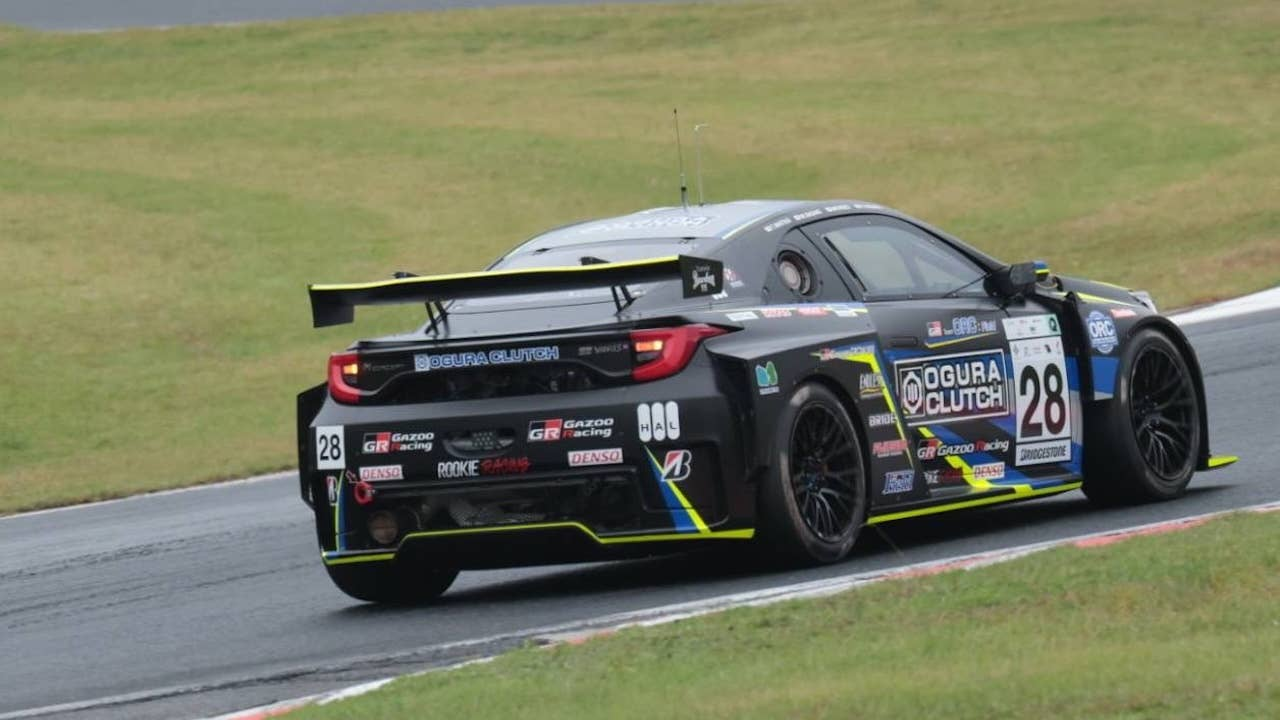
Toyota’s anticipated mid-engine sports car revival remains in the experimental stage, with development still below the halfway mark. Gazoo Racing boss Tomoya Takahashi says engineers have made progress understanding the challenges of placing a car’s heaviest system behind the driver, but significant work remains before the project can move toward product development.
The project has attracted attention over the past year as Toyota filed trademarks and developed prototypes beyond the mid-engine GR Yaris M Concept. At the beginning of 2026, the company confirmed it was working through the first of four development stages. Despite the progress, Toyota is not rushing the process amid increasingly difficult competition and economic constraints.
Toyota’s Mid-Engine Sports Car Faces New Engineering Challenges
Takahashi said engineers are about 70% to 80% of the way toward understanding how a car behaves when its heaviest individual system is positioned behind the driver. He emphasized that there is still a long way to go before development is complete.
Although Toyota previously built the mid-engine MR2, production ended in 2007. The earlier model featured a 1.8-liter naturally aspirated four-cylinder engine producing 138 horsepower, rear-wheel drive and an open-top body. It was also built to less stringent safety standards than a contemporary vehicle.
The new concept is expected to take a different approach, with a turbocharged engine described as a “baby 2JZ,” all-wheel drive and a coupe body. It would also weigh more than the original MR2.
Differences in wheel sizes, wheelbases, centers of gravity and aerodynamic profiles mean that knowledge retained from the earlier model would have limited relevance to the new project.
Aerodynamics and Airflow Are the Biggest Development Hurdles
Takahashi and his team have been studying how a coupe-like shape affects airflow while examining how changes in front-to-rear weight distribution influence the car during acceleration, braking and cornering.
Moving the engine farther back has created a significant cooling challenge. Takahashi said the configuration “makes it physically difficult to get enough airflow,” with much of the past year devoted to finding ways to direct more air into the engine bay.
Although engineers have also faced challenges in getting the concept to turn as intended and meeting other performance goals, Takahashi said most of the difficulties involve aerodynamics and airflow.
The coupe body appears to be helping with cooling, while airflow beneath the vehicle remains important for generating aerodynamic downforce. Toyota has raised the front lip slightly as part of its development work.
Some components, including the transfer case, can be cooled by high-velocity air flowing beneath the car. However, the engine sits too high to benefit from that airflow.
Manual Transmission and Left-Hand Drive Point to Broader Testing
The latest version of Toyota’s mid-engine concept features a manual transmission instead of the Direct Automatic Transmission used previously. The steering wheel has also moved to the left side of the vehicle.
Takahashi said the left-hand-drive configuration reflects Toyota’s consideration of “the potential for global expansion.” While other prototypes have used right-hand drive, he said the company “simply wanted to see what would happen with left-hand drive.”
The change does not confirm that a future production model would be sold globally, but it indicates that Toyota is exploring that possibility.
The manual transmission is also part of the engineering process rather than confirmation of a final production specification. Takahashi explained that Toyota wanted to “set aside the complexities of electronic control for now and focus development on the car’s dynamic performance.”
Toyota Says the Mid-Engine Project Remains Experimental
Takahashi stressed that the project has not yet reached the product development stage.
“Please understand that we’re still in the experimental stage, exploring different possibilities for a mid-engine car before moving into product development,” he said.
The project comes as Toyota continues investing in performance-focused vehicles developed with motorsport expertise. The company previously partnered with other automakers on the GR Supra and GR86 because developing those vehicles independently would have been too expensive.
Toyota has also developed the GR GT, which takes aim at the Mercedes-AMG GT, and built a technical center featuring a Nürburgring-inspired test course.
Those investments demonstrate Toyota’s commitment to developing consumer performance cars through motorsport-focused engineering. However, the mid-engine sports car remains an experimental project, and the company has not confirmed that it will enter production.
For now, Toyota continues exploring the possibilities for a new mid-engine sports car, with its eventual future still uncertain.