
Lamborghini has confirmed a major change in direction for the Lamborghini Lanzador, abandoning plans to launch it as the brand’s first fully electric production vehicle. Instead, the company now intends to develop the model as a plug-in hybrid grand tourer that will sit between its supercars and the Urus, citing both customer demand and its view that current electric performance car technology does not yet deliver the emotional driving experience it expects.
Lamborghini Confirms the Lanzador Will No Longer Be Electric
Speaking to media, Cossalter said the company changed course last year.
“We decided last year that the Lanzador is not going to be electric,” Cossalter said.
When asked whether Lamborghini is currently developing another fully electric production model, he responded: “We are not working on an EV model.”
Although Lamborghini continues developing electric motors, battery cells, battery chemistry, and software, its next major production vehicles—including the next-generation Urus and the proposed fourth model—will remain hybrids.
The Lanzador Is Evolving Into a Grand Tourer
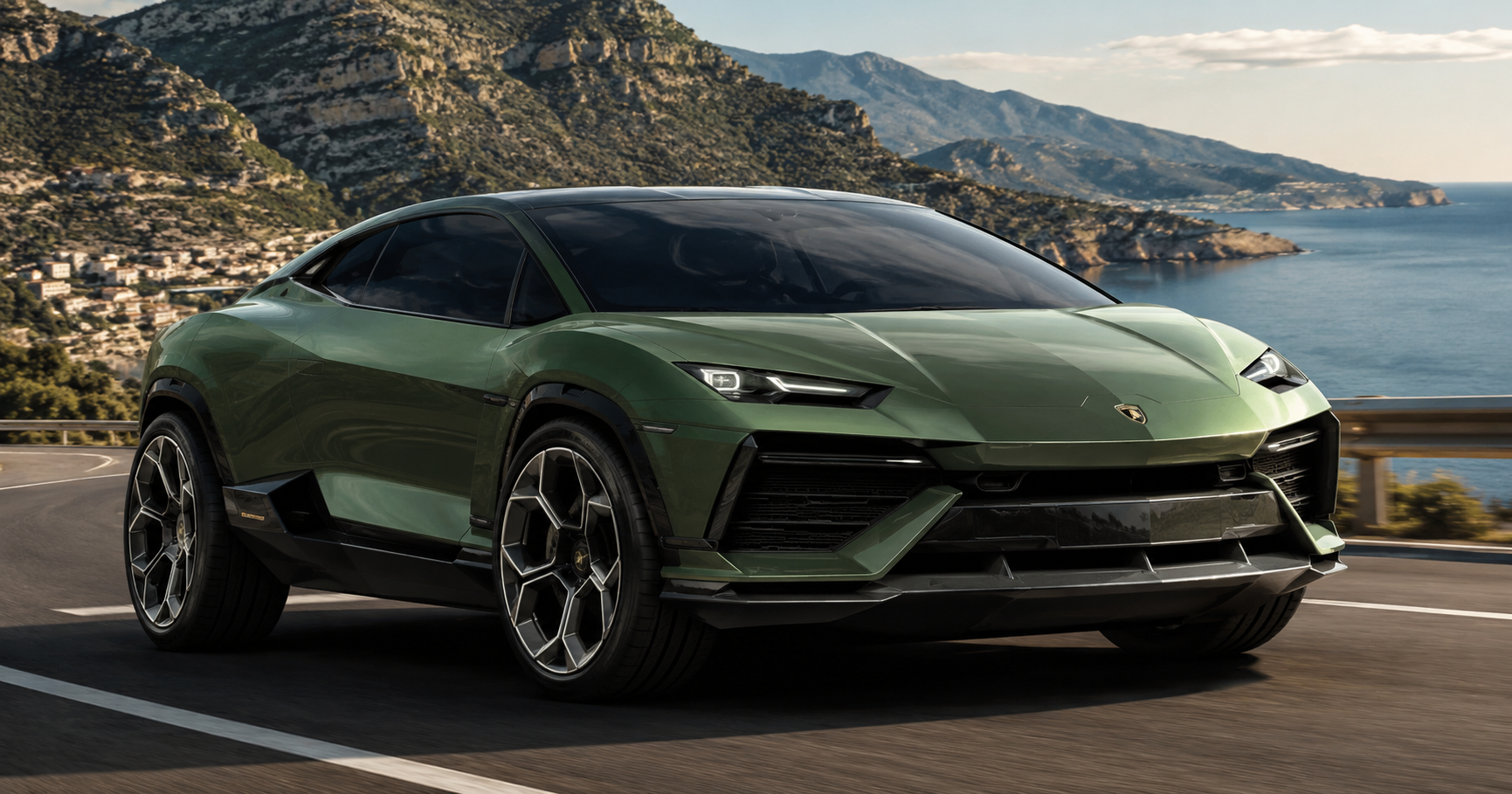
The Lanzador name continues to be used internally for Lamborghini’s fourth model, though the production vehicle is expected to differ significantly from the fully electric concept revealed in 2023.
Asked whether the new vehicle would be a grand tourer or a sedan, Cossalter said it would move “in that direction,” describing it as “an evolution of a GT” rather than a traditional four-door sedan or another SUV.
“Lamborghini is known for crazy and wild ideas,” Cossalter added, indicating that the company is not aiming to build a restrained or conventional grand tourer.
The upcoming model is expected to occupy the space between Lamborghini’s low-slung supercars and the Urus. That positioning closely follows the Lanzador concept, which featured an elevated driving position, four usable seats, generous luggage capacity, and proportions intended to resemble a grand tourer instead of a conventional crossover.
Lamborghini has not disclosed whether the production version will retain the concept’s styling, dimensions, or elevated ride height. However, the company appears to be maintaining its goal of creating a more practical Lamborghini without simply introducing a smaller Urus.
Lamborghini Says Today’s EV Technology Falls Short
Cossalter emphasized that Lamborghini’s decision is not rooted in opposition to electric technology. He praised the precision and control provided by electric motors, particularly their ability to manage torque independently at each wheel.
Instead, he said the company believes the emotional driving experience remains insufficient.
“We think that, at the moment, technology is not good enough for an electric car,” Cossalter said.
According to Lamborghini, today’s high-performance EVs may deliver exceptional acceleration, but that alone does not provide lasting driver engagement.
“Beside the strong acceleration, you’re feeling that’s it,” Cossalter said. “So emotions are not there.”
Simulated Sounds and Gear Changes Are “Not There Yet”
Several automakers have introduced artificial engine sounds and simulated gear changes in an effort to make electric performance cars feel more engaging. The Hyundai Ioniq 5 N, for example, uses programmed shifts and sound designed to imitate the behavior of a combustion-powered performance car.
Lamborghini has evaluated similar technologies, but Cossalter said they still do not provide a convincing enough experience.
“It’s not there yet,” he said when asked specifically about simulated gears and sounds.
While acknowledging that other manufacturers have created interesting solutions, Cossalter said they remain “not enough” for Lamborghini.
Customer demand also played a role in the company’s decision. Asked whether Lamborghini buyers currently want an electric model, Cossalter replied: “They don’t really want an EV today.”
Electric Research Will Continue
Although Lamborghini has postponed its first production EV, the company said it will continue investing in electric technology.
“It’s not going to stop development,” Cossalter said, referring to ongoing work involving software, battery chemistry, and battery cells.
He said that research could eventually support a fully electric Lamborghini once the technology is capable of delivering the sound, feedback, and emotional character the company’s customers expect.
Cossalter also acknowledged that future regulations could eventually make an electric Lamborghini unavoidable. Asked whether an EV could one day be as engaging as one of Lamborghini’s V12-powered models, he replied: “I hope so.”
“We need to have these kinds of simulations as a fan and as an engineer,” Cossalter added. “But we’re not there yet.”
Powertrain Details Remain Undisclosed
Lamborghini has not confirmed what powertrain the production Lanzador will use. However, a plug-in hybrid configuration appears to be the most likely direction, as the company’s current lineup is now electrified.
The Urus SE combines a 4.0-liter twin-turbocharged V8 with an electric motor to produce 789 horsepower and 700 lb-ft of torque. Lamborghini could potentially adapt that system for the larger grand tourer, although the company has not announced any engine, power output, or platform for the upcoming model.
The vehicle could also incorporate technology related to other high-performance plug-in hybrids within the Volkswagen Group. Lamborghini has not revealed which hardware it intends to use.
Return to the Grand Touring Segment
When Lamborghini’s fourth model enters production, it will mark the company’s return to the grand-touring segment after almost five decades. The Espada was Lamborghini’s last true four-seat GT, while the front-engined Jarama was famously a favorite of company founder Ferruccio Lamborghini.
The production Lanzador may keep the concept’s name and practical mission, but its identity has shifted significantly. Rather than becoming Lamborghini’s first fully electric production vehicle, it is now being developed as a hybrid grand tourer designed to deliver the emotional driving experience the company believes today’s electric vehicles cannot yet match.