
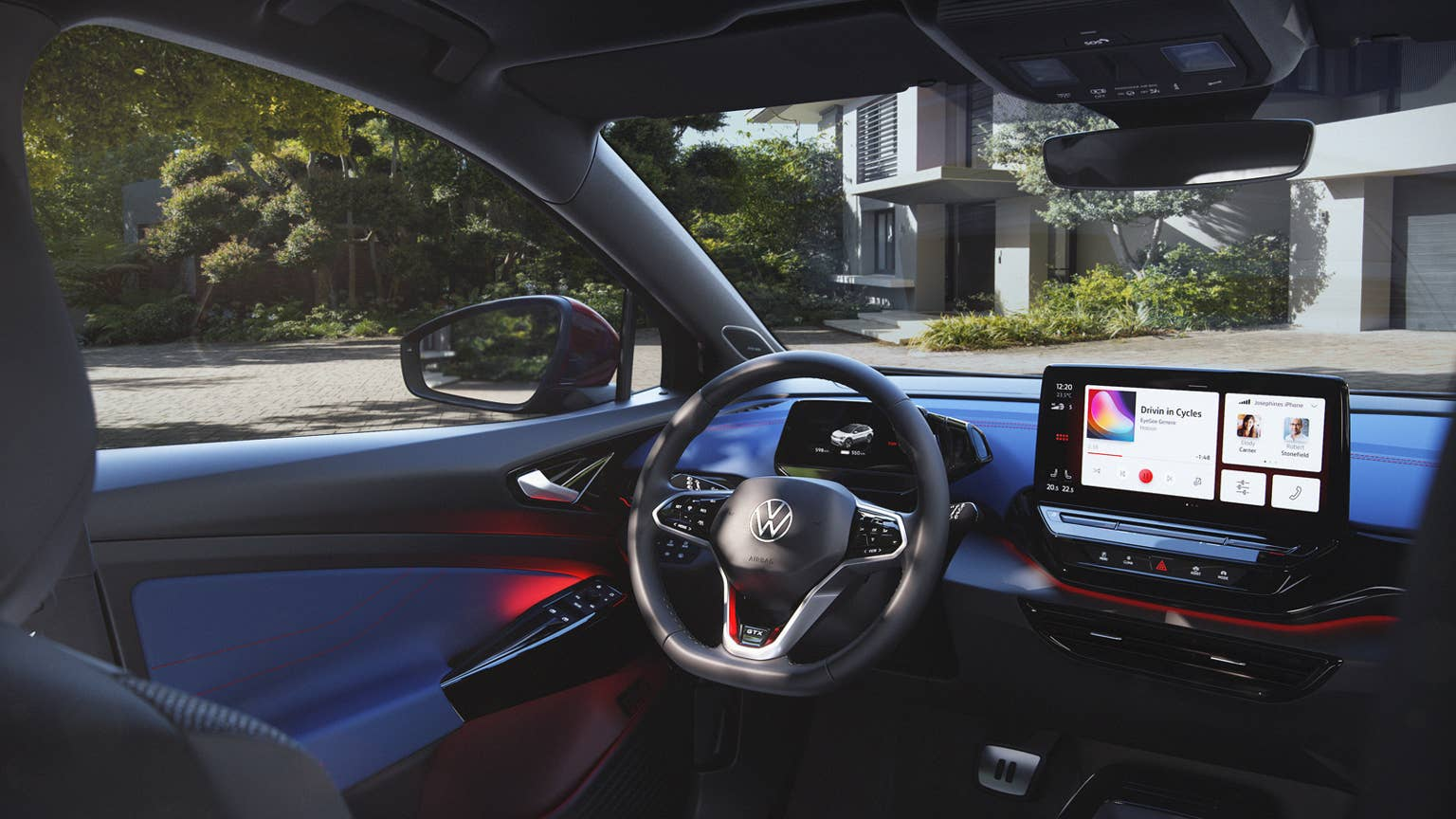
Volkswagen is moving away from an all-touchscreen approach after customers made their preference clear: Bring back physical controls. The company’s first wave of ID electric vehicles relied heavily on touchscreens, capacitive panels, sliders and other digital controls, but the approach received a far-from-positive reception.
Volkswagen Learned a Costly Lesson
Touchscreens and panels can serve many purposes, but navigating menus and submenus while driving at speed is not ideal. Capacitive touchpads have also led to occasional accidental inputs, creating additional issues.
Volkswagen’s approach became particularly apparent with its first wave of ID electric vehicles, where the company embraced touchscreens, pads and sliders throughout the interior. Speaking to Automobilewoche, VW’s head of quality, Andreas Krepp, described how the thinking behind the decision developed.
Translated from German, Krepp said, “With electric vehicles – including here at our company – there was this idea: Something new is beginning [electric vehicles], so the controls must also change significantly and be particularly modern. For example, we said, ‘Let’s install sliders instead of traditional rotary knobs. That’s the future.’ Then we learned that customers who buy an electric vehicle are primarily looking for a different type of powertrain. They don’t automatically want to buy a spaceship.”
Krepp also said many of the decisions surrounding the user interface were “tried out,” while a lack of reliable data meant those choices were effectively made in the dark.
VW Begins Bringing Back Physical Controls
Rather than defending its approach of using touchscreens and pads for almost everything, Volkswagen acknowledged that it had made a mistake. VW Passenger Cars CEO Thomas Schäfer described the move as “damaging,” prompting the company to work toward restoring more tactile controls.
The course correction began gradually, with some facelifts adding more buttons and dials to vehicle interiors. The change culminated in the reintroduction of the ID.3 as the ID.3 Neo, which brought commonly used and frequently adjusted functions back into physical form.
Volkswagen continued refining that approach in its latest electric vehicles, including the affordable and increasingly popular ID. Polo and the more recently launched ID. Cross.
Volkswagen Continues Its Interior Redesign
Volkswagen’s move toward more physical controls marks a clear shift from the touchscreen-heavy strategy used in its earlier ID electric vehicles. The company has already begun applying the lessons learned from that approach across newer models.
The changes also raise hopes that other brands within the VW Group will follow the same direction, while the MK.9 Golf could potentially receive an intuitive interior layout similar to the MK.7 and older models.