
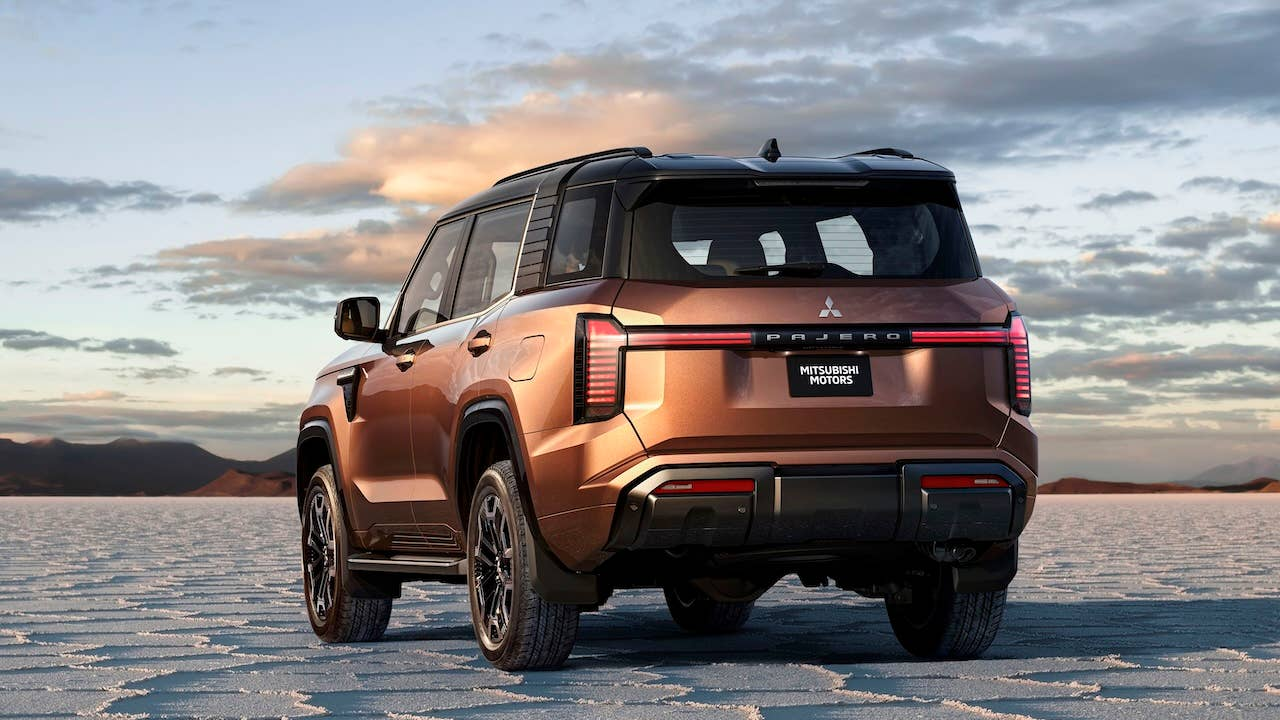
The new Mitsubishi Pajero takes inspiration from the rugged original but leaves behind one of its most recognizable features: the externally mounted spare tire. Mitsubishi says the decision was driven by the practical demands of customers who use their SUVs for both off-road adventures and everyday driving.
Why the New Pajero’s Spare Tire Is Underneath
Mitsubishi chief product specialist Kunitoshi Itagaki explained the decision to local media after Australian outlet Drive asked why the new Pajero does not carry its spare wheel on the tailgate.
According to Itagaki, the externally mounted spare was an identifying feature of the previous Pajero. However, Mitsubishi’s investigation into how customers actually use their vehicles found that although some owners take their Pajero/Montero on extreme off-road trips, they also use the vehicle every day.
Itagaki also noted that the top-hinged tailgate can be incorporated into a tent or camping setup, where it can act as a type of roof.
The new Pajero still includes a design reference to the old spare-tire setup. The previous Pajero featured a hexagonal external wheel cover, while the new model’s tailgate has a hexagonal shape as a nod to that design.
The Cost of an External Spare Tire
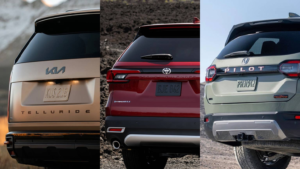
Mounting a full-size spare wheel and tire on the tailgate adds weight to the door. That would require stronger hinges to handle the additional load during daily opening and closing.
Without an electronic mechanism, the added weight could also make the tailgate more difficult for owners to operate. An externally mounted spare can create additional complexity during homologation because the wheel can move in a crash.
The setup can also interfere with towing equipment and other accessories. Taken together, these factors add costs, making the traditional off-road spare-tire arrangement less practical for the new Pajero.
Why the Rear-Mounted Spare Was Once Important
The external spare tire served a practical purpose when the Pajero was at its peak. Vehicles of its type were marketed for their off-road capabilities, and many were used for the demanding conditions their engineers had designed them to handle.
If a tire failed on a difficult trail, retrieving a spare from underneath the vehicle could be particularly challenging because stabilizing an off-roader on difficult terrain was already a problem.
In those situations, having the spare mounted externally made it easier to access quickly. Mounting the spare to the vehicle’s body also freed up cargo space beneath the floor.
Everyday Use Changed the Equation
Mitsubishi’s explanation centers on how customers use the vehicle today. While some Pajero/Montero owners use their vehicles for extreme off-roading, most will drive them every day, with their tires unlikely to encounter anything more challenging than a parking lot curb.
That makes the additional complexity and cost of installing an external spare on the back of the SUV less practical for the majority of users.