
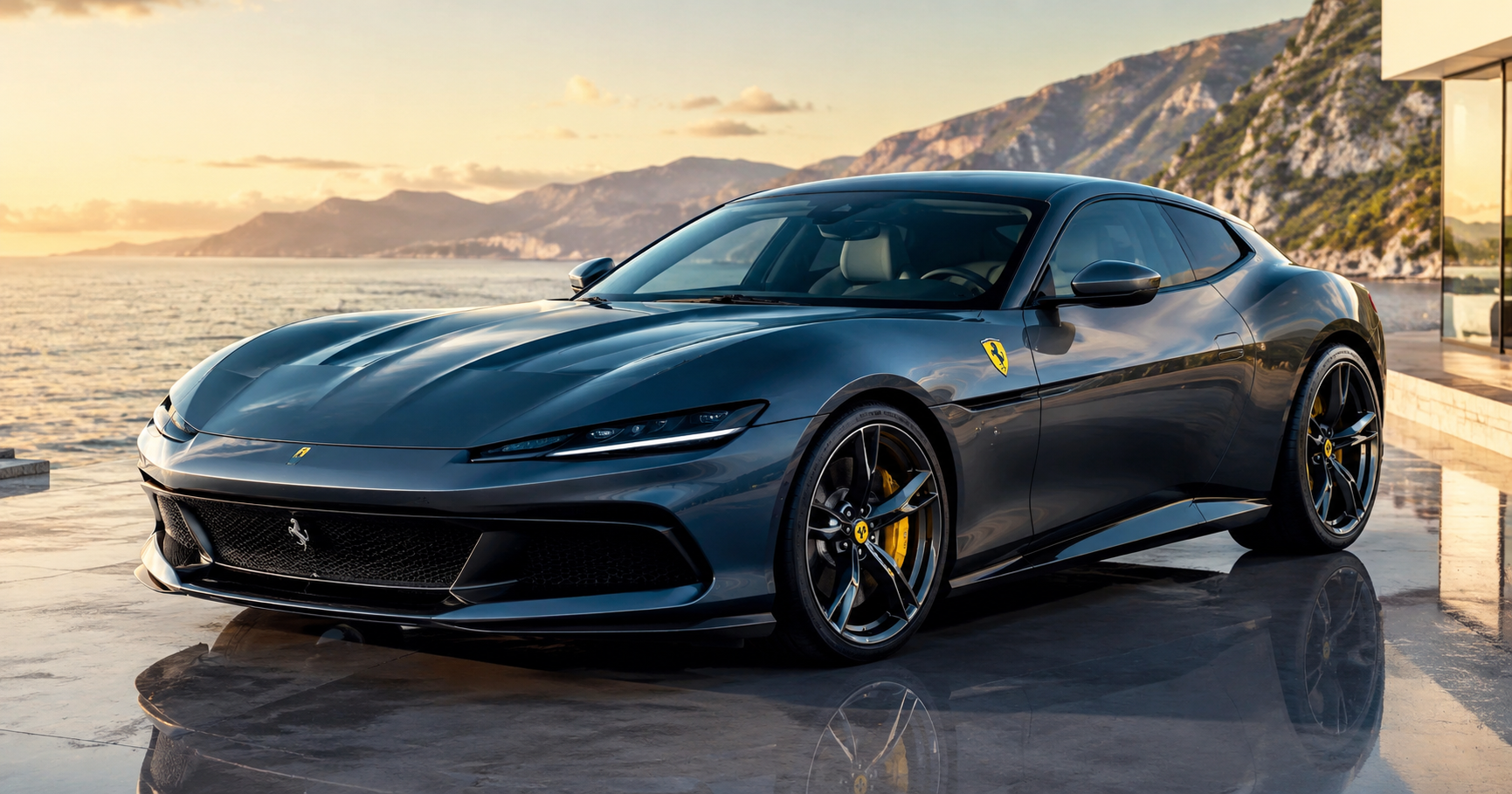
The Ferrari Luce Investor Backlash became one of the biggest automotive and financial stories of 2026 almost overnight. What was supposed to be Ferrari’s historic leap into the electric future quickly turned into a Wall Street shockwave after investors, analysts, and even longtime Ferrari loyalists reacted negatively to the unveiling of the company’s first fully electric production car.
When Ferrari revealed the €550,000 ($640,000) Luce in Rome on May 25, 2026, the company expected excitement around its 1,035-horsepower electric supercar. Instead, markets responded with panic. Ferrari shares fell nearly 8% in a single trading session, wiping out billions in market value and triggering widespread debate about whether the legendary Italian automaker had misjudged its EV strategy.
The controversy surrounding the Ferrari Luce goes beyond stock prices. It touches the heart of Ferrari’s identity: roaring V12 engines, emotional driving experiences, exclusivity, and unmistakable styling. Critics argue that the Luce may deliver incredible performance, but it risks diluting the very DNA that made Ferrari one of the world’s most valuable luxury brands.
The Ferrari Luce: Ferrari’s First Fully Electric Car
The Ferrari Luce represents a major milestone for the Maranello-based automaker. It is not only Ferrari’s first fully electric vehicle, but also the brand’s first five-passenger production model.
Ferrari developed the Luce on a dedicated EV platform featuring quad-motor all-wheel drive technology. On paper, the numbers are staggering.
Ferrari Luce Specifications
- Power Output: Approximately 1,035 horsepower
- 0–100 km/h: Around 2.5 seconds
- Top Speed: Approximately 310 km/h (193 mph)
- Battery Pack: 122 kWh
- Range: Roughly 280 miles EPA / over 330 miles EU
- Drive System: Quad-motor AWD
- Starting Price: €550,000 ($640,000)
- Production Start: Late 2026
- First Deliveries: Early 2027
From a technical perspective, the Luce competes with the world’s fastest electric hypercars. Ferrari engineers focused heavily on performance, weight distribution, aerodynamics, and battery efficiency to preserve the company’s reputation for precision driving.
Yet despite those achievements, Wall Street’s reaction revealed that technology alone may not be enough for Ferrari customers or investors.
Why the Ferrari Luce Investor Backlash Happened
The backlash erupted almost immediately after Ferrari unveiled the vehicle. Social media platforms filled with memes comparing the Luce to mainstream electric sedans rather than exotic Italian supercars.
Some critics described the design as a mix between a Tesla Model 3, Honda Accord EV, and Nissan Leaf. Others argued the vehicle looked too restrained and lacked the emotional drama associated with Ferrari’s iconic styling.
Investors Worried About Brand Identity
Ferrari has spent decades building one of the strongest luxury automotive brands in the world. Investors pay premium valuations because Ferrari is viewed differently from traditional automakers.
Unlike mass-market brands, Ferrari sells emotion, heritage, racing pedigree, and exclusivity. That formula has allowed the company to maintain enormous profit margins and long waiting lists even during economic slowdowns.
The Luce raised a difficult question:
Can Ferrari remain Ferrari without the sound, vibration, and mechanical soul of its combustion engines?
For many investors, the answer remains uncertain.
The Market’s Brutal Reaction
On May 26, 2026, Ferrari shares plunged more than 8% during trading in Milan and on Wall Street. The drop marked Ferrari’s worst single-day decline since October 2025.
Reports estimated that approximately $5 billion in market value disappeared almost immediately after the launch event. Some broader estimates suggested the total value impact may have exceeded $14 billion during subsequent trading sessions.
Several factors contributed to the sharp selloff:
- Concerns about Ferrari abandoning its heritage
- Fear that wealthy buyers may reject electric Ferraris
- Questions surrounding the car’s styling
- The extremely high €550,000 price tag
- Luxury market weakness in 2026
- Ferrari’s already elevated stock valuation
The Design Debate: Why Appearance Became a Problem
Ferrari vehicles are traditionally known for dramatic proportions, aggressive lines, and unmistakable road presence. The Luce, however, adopted a cleaner and more futuristic approach that divided opinion.
For some automotive enthusiasts, the car simply did not look “special enough” to justify its ultra-luxury positioning.
That criticism quickly snowballed online.
Social Media Memes Amplified the Crisis
In the modern automotive industry, social media perception can heavily influence investor confidence. Within hours of the unveiling, memes mocking the Luce spread across X, Instagram, Reddit, TikTok, and automotive forums.
Many posts compared the vehicle to mainstream EVs instead of legendary Ferraris like the LaFerrari, F40, or 812 Superfast.
While internet jokes alone do not determine a company’s future, they can shape public perception remarkably fast. In Ferrari’s case, the online narrative reinforced investor fears that the Luce lacked emotional appeal.
Ferrari’s EV Strategy Was Always Risky
Ferrari knew entering the EV market would be controversial. The company spent years gradually preparing customers and investors for electrification through hybrid models like the SF90 Stradale and 296 GTB.
However, moving from hybrids to a fully electric Ferrari represents a much bigger psychological leap.
Why Ferrari Had to Build an EV
Despite the backlash, Ferrari likely had little choice but to pursue electrification.
Governments around the world continue tightening emissions regulations, especially in Europe. Luxury brands are under increasing pressure to reduce carbon emissions while remaining competitive in a rapidly evolving market.
Ignoring EV development entirely could eventually threaten Ferrari’s global business model.
Tesla, Porsche, Rimac, Lucid, and other manufacturers have already proven that wealthy buyers are willing to spend large amounts on high-performance electric vehicles.
Ferrari’s challenge is different:
It must build an EV without losing the emotional character that defines the brand.
Can Performance Alone Save the Luce?
From a pure performance standpoint, the Luce is undeniably impressive.
A 1,035-horsepower quad-motor electric Ferrari capable of accelerating from 0–100 km/h in 2.5 seconds places it among the fastest production vehicles ever created.
Its battery technology, torque delivery, and handling systems demonstrate Ferrari’s engineering expertise.
Still, Ferrari has never competed purely on numbers.
Many enthusiasts argue that Ferrari ownership is about emotion, theater, sound, and heritage — qualities that are harder to replicate in electric vehicles.
Comparisons With Other Luxury EVs
The Luce enters a competitive high-end EV market that already includes:
- Porsche Taycan Turbo GT
- Rimac Nevera
- Lucid Air Sapphire
- Tesla Model S Plaid
- Lotus Evija
However, Ferrari’s strategy differs significantly from those brands. Ferrari sells exclusivity above all else.
That exclusivity may help protect the Luce from mainstream market pressures. Early production numbers are expected to remain extremely limited, with some countries receiving only a few hundred units initially.
Analysts Say Investors May Be Overreacting
Although the Ferrari Luce Investor Backlash triggered panic selling, not all analysts believe the situation is catastrophic.
Several market experts argue that Ferrari’s long-term fundamentals remain strong despite the rocky launch.
Why Some Analysts Remain Optimistic
Supporters of Ferrari’s strategy point to several factors:
- Ferrari buyers are extremely loyal
- Production remains intentionally limited
- The company maintains industry-leading margins
- Luxury EV adoption continues growing globally
- Ferrari still dominates brand prestige rankings
Some analysts also note that Ferrari stock had already been under pressure before the Luce reveal due to broader concerns surrounding luxury demand and high market valuations.
In other words, the Luce controversy may have accelerated an existing correction rather than caused it entirely.
The Bigger Question: What Happens to Ferrari’s Legacy?
The real issue extends far beyond a single vehicle launch.
Ferrari now faces a defining moment in its modern history. The company must convince both investors and enthusiasts that electrification can coexist with Ferrari’s legendary identity.
That will not be easy.
For decades, Ferrari engines were considered works of art. The sound of a naturally aspirated Ferrari V12 became part of automotive culture itself.
Electric vehicles fundamentally change that experience.
The Luce therefore represents more than a new product. It symbolizes Ferrari’s attempt to redefine what a Ferrari can be in the electric era.
Will the Ferrari Luce Ultimately Succeed?
It is still far too early to declare the Luce a failure.
History shows that controversial Ferrari models sometimes become successful after initial skepticism fades. Even iconic Ferraris faced criticism during their original launches before later achieving legendary status.
Several factors could determine the Luce’s long-term success:
- Real-world driving experience
- Customer demand after first deliveries
- Production exclusivity
- Ferrari’s ability to market the EV emotionally
- Global luxury EV trends
- Future advancements in battery technology
If Ferrari delivers an unforgettable driving experience, the current backlash may eventually look like a temporary overreaction.
But if customers view the Luce as just another expensive electric luxury car, investor concerns may intensify.
Final Thoughts
The Ferrari Luce Investor Backlash reveals how difficult the transition to electrification has become for legacy luxury brands. Ferrari is attempting something incredibly delicate: preserving decades of emotional heritage while adapting to a future dominated by batteries and software.
Wall Street’s harsh response reflects fears that Ferrari could lose part of its identity in the process.
Yet the story is far from over.
Ferrari still possesses one of the most powerful brands in the automotive world, enormous engineering talent, and a loyal global customer base. The Luce may ultimately become either a historic turning point that modernized Ferrari successfully — or a cautionary tale about the risks of changing too much, too quickly.
For now, investors, enthusiasts, and the luxury automotive industry will be watching closely.
Frequently Asked Questions (FAQ)
What is the Ferrari Luce?
The Ferrari Luce is Ferrari’s first fully electric production vehicle. It features a quad-motor AWD setup producing around 1,035 horsepower and starts at approximately €550,000.
Why did Ferrari stock fall after the Luce reveal?
Investors reacted negatively to concerns surrounding the car’s design, pricing, and perceived departure from Ferrari’s traditional brand identity. Shares dropped more than 8% after the unveiling.
How fast is the Ferrari Luce?
The Luce accelerates from 0–100 km/h in about 2.5 seconds and reaches a top speed of approximately 310 km/h (193 mph).
What is the range of the Ferrari Luce?
Ferrari estimates roughly 280 miles of EPA range and more than 330 miles under European testing standards.
When will the Ferrari Luce be delivered?
Production is expected to begin in late 2026, with customer deliveries scheduled for early 2027.
Is the Ferrari Luce backlash permanent?
Not necessarily. Some analysts believe the market reaction may be temporary and that Ferrari’s long-term brand strength could help the Luce succeed over time.