
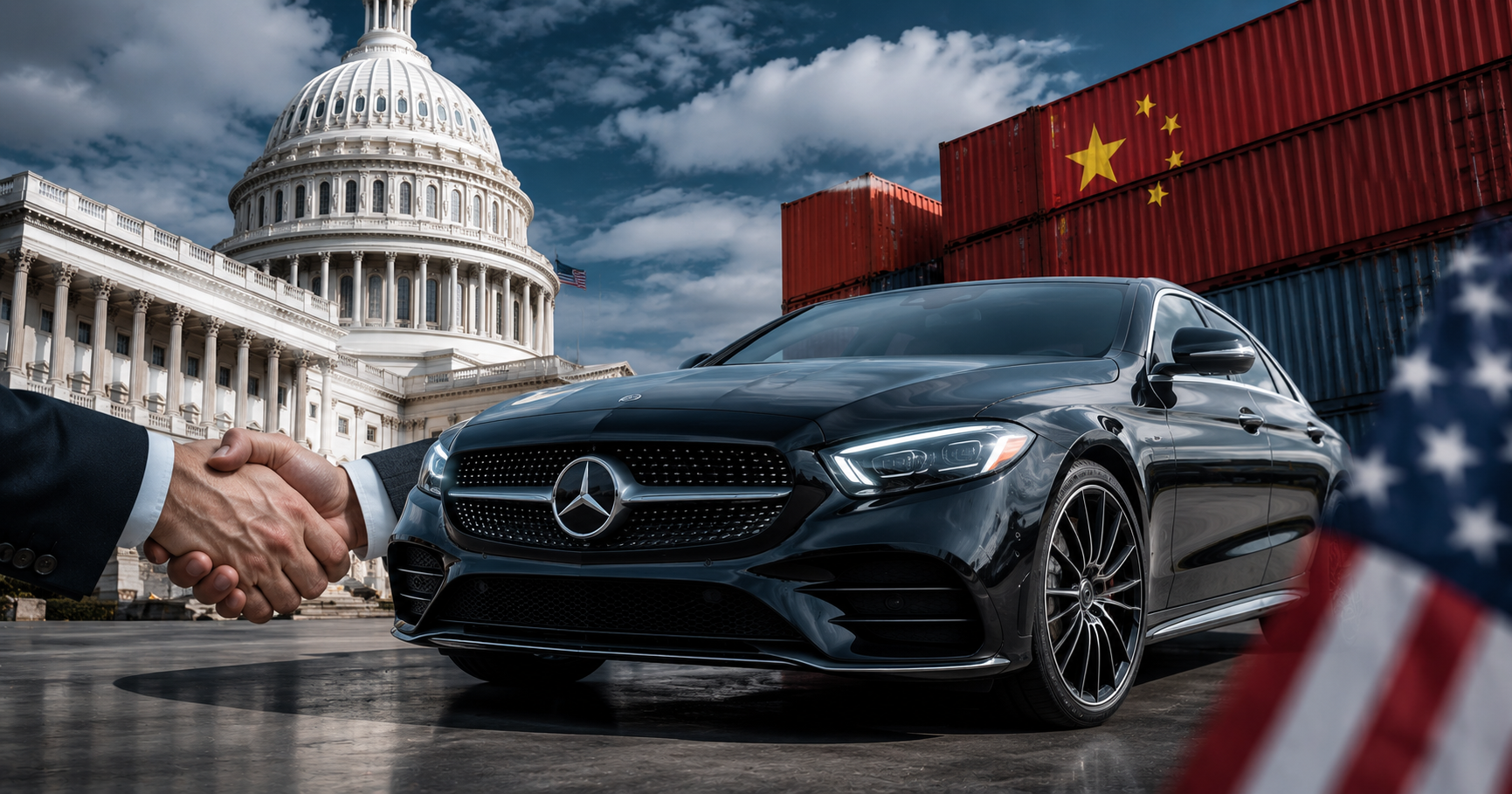
Mercedes-Benz is lobbying U.S. lawmakers to modify a bipartisan Senate proposal that could prevent automakers with significant Chinese ownership ties from selling connected vehicles in the United States. The proposed legislation would establish ownership thresholds aimed at addressing national security and consumer data concerns, potentially affecting several global automotive manufacturers.
Senate Bill Targets Chinese Ownership in Connected Vehicles
The proposed legislation, sponsored by Senators Bernie Moreno and Elissa Slotkin, would prohibit connected vehicles from manufacturers with more than a 15 percent Chinese corporate or state ownership stake from being sold in the United States.
According to the bill, the measure is intended to protect national security and consumer data. The proposal has drawn attention across the automotive industry because of the extensive international ownership structures that exist among major vehicle manufacturers.
Mercedes-Benz Ownership Structure Draws Scrutiny
The German luxury automaker’s concern centers on its shareholder makeup. Chinese state-owned manufacturer BAIC owns approximately 10 percent of Mercedes-Benz, while Geely chairman Li Shufu controls nearly another 10 percent through an investment firm.
Together, those holdings total about 20 percent, exceeding the bill’s proposed 15 percent ownership threshold. As a result, Mercedes-Benz could face restrictions on selling connected vehicles in the U.S. market if the legislation becomes law in its current form.
Company Seeks Changes to Proposed Legislation
According to Automotive News, Mercedes-Benz representatives are actively engaging with lawmakers on Capitol Hill in an effort to revise the bill before it advances.
Company lobbyists are advocating for an increase in the foreign ownership threshold from 15 percent to 25 percent, matching proposed limits for component suppliers. They have also suggested replacing fixed ownership caps with federal security reviews that assess operational control rather than equity ownership percentages.
Industry Faces Broader Impact From Trade Restrictions
The potential effects of the legislation extend beyond Chinese automakers. Industry figures, including Ford’s chairman, have warned that separating the U.S. automotive market from deeply interconnected global supply chains would be extremely difficult.
Mercedes-Benz is not the only automaker navigating these challenges. Volvo previously received federal approval to continue selling connected vehicles despite ownership by Geely, using specific operational exemptions.
Mercedes-Benz is seeking similar regulatory assurances as it works to protect its manufacturing operations in Alabama and South Carolina.
Debate Over Global Automotive Ownership
The proposal has intensified discussion about the global nature of modern automotive manufacturing. The industry relies on international partnerships, joint ventures, and shared investment structures that often cross national boundaries.
The article argues that major automakers operate within complex global ownership networks, making strict ownership-based restrictions difficult to apply across the sector.
As lawmakers continue considering the proposal, Mercedes-Benz remains engaged in efforts to revise the bill while seeking regulatory certainty for its U.S. operations and connected vehicle business.