
Hyundai and Kia sell more than seven million vehicles each year, making them the world’s third-largest carmaker. Now, Hyundai wants to turn that global fleet into a major source of driving data as it works to advance its delayed driver-assistance technology, using an approach similar to Tesla’s Full Self-Driving strategy.
Hyundai’s Driver-Assistance Plans Face Delays
Hyundai’s data strategy is not fully operational yet. According to a Reuters report, the company’s own driver-assistance software is now expected to arrive in late 2029, two years later than the original proposed 2027 rollout.
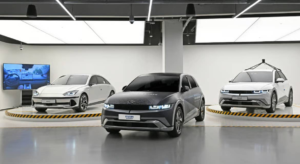
To help close the gap, Hyundai is working with Nvidia on Level 2+ and Level 2++ self-driving technology planned for 2028. Level 2+ is designed to handle highways, while Level 2++ is intended for more complex city driving.
Both systems still require a human to monitor the road. Hyundai also says Nvidia will not be solely responsible for the technology, with Hyundai co-designing the systems.
Hyundai’s Approach Mirrors Tesla’s Full Self-Driving Strategy
The first Nvidia-powered systems will rely on cameras, radar and ultrasonic sensors without LiDAR, according to Hyundai. The approach is closer to Tesla’s camera-led Full Self-Driving technology, although Hyundai is not adopting a camera-only system.
LiDAR remains an option for Hyundai’s Level 3 technology, where the vehicle takes on more of the driving task. In that case, the additional sensors would serve as a safety net.
Hyundai is therefore pursuing different sensor configurations depending on the level of driving assistance. The company is focusing on less expensive systems for the immediate future while keeping LiDAR available for Level 3 technology.
Millions of Vehicles Could Generate Driving Data
Hyundai’s strategy depends on the enormous amount of driving data that could come from its connected vehicles. But simply having millions of vehicles on the road does not automatically produce usable training data.
The data must be collected from connected cars, cleaned, labeled and then fed into AI driving systems for training. The volume of information is therefore only the starting point of the process.
Tesla and Chinese rivals have already been collecting and using driving data for years. Hyundai’s target of “beating” them on driving data by 2033 reflects the company’s current position behind those competitors.
Hyundai’s broader goal extends beyond developing a direct Tesla rival. The company is working to build the data engine it believes can eventually support advanced driving technology.