
Buying an electric car in 2026 does not have to mean spending luxury-car money. However, finding a genuinely affordable EV requires looking beyond the sticker price. A vehicle that costs less upfront may offer limited driving range, slower charging, or less practicality than a slightly more expensive alternative.
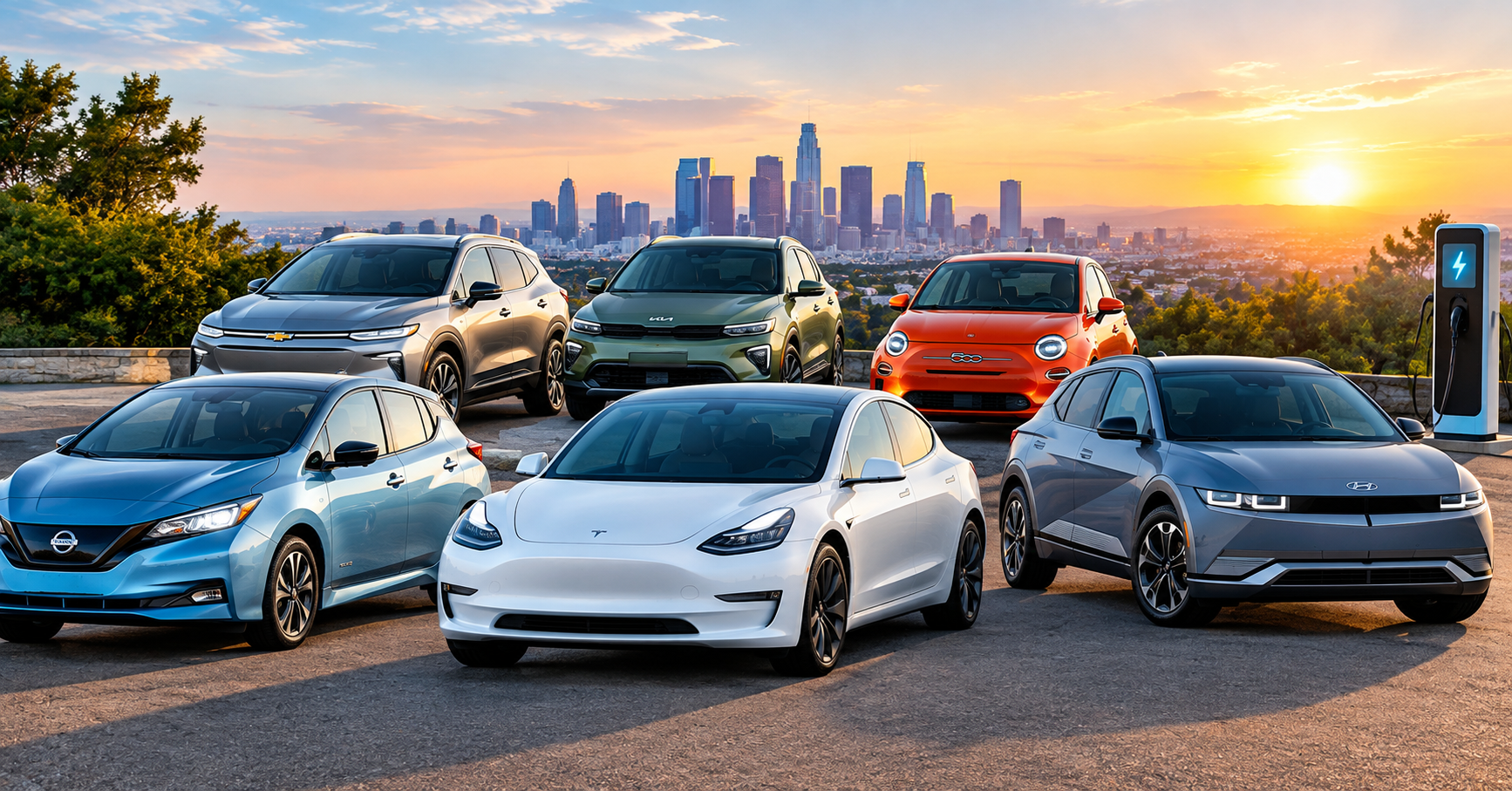
The 2026 Nissan Leaf, Chevrolet Equinox EV, Hyundai Kona Electric, Hyundai Ioniq 5, Tesla Model 3, Fiat 500e, and Kia Niro EV offer different approaches to affordable electric driving. Some emphasize a low starting price, others deliver more than 300 miles of advertised range, and a few make the most sense for drivers who spend nearly all their time in urban areas.
This guide compares these seven electric vehicles by price, range, practical strengths, and potential drawbacks. It also explains how to evaluate charging costs, financing offers, and ownership needs before deciding which EV deserves a place in your driveway.
What Makes an Electric Car a Good Buy in 2026?
The lowest-priced electric car is not automatically the best value. A better buying decision considers what the vehicle delivers for its price and whether its capabilities match the driver’s daily routine.
For example, a commuter who travels 30 miles each day may have little reason to pay extra for a long-range battery. Someone who regularly drives between cities may benefit more from additional range, dependable fast-charging access, and a comfortable cabin.
Before comparing models, shoppers should evaluate five important factors.
1. Starting Price and Actual Purchase Cost
The advertised MSRP is only the beginning. Destination charges, dealer-installed accessories, taxes, registration, and financing costs can increase the final amount substantially.
Two vehicles with similar advertised prices may have different out-the-door costs. Requesting a written purchase quote helps reveal the difference between the manufacturer’s suggested retail price and what a dealership is actually asking.
2. EPA-Estimated Driving Range
Range indicates how far an EV is expected to travel on a full battery under standardized testing conditions. It is useful for comparing vehicles, but actual results depend on speed, temperature, terrain, climate-control use, and driving habits.
Drivers who regularly travel on highways or experience cold winters may want more range than their daily commute requires. Extra capacity can provide flexibility when charging opportunities are limited.
3. Charging Speed and Accessibility
Home charging can make electric ownership convenient, particularly for drivers who park in a garage or have access to a dedicated charging space. Public charging becomes more important for apartment residents, long-distance travelers, and households without reliable home-charging access.
Buyers should compare charging connectors, supported charging equipment, charging-network access, and the time required for a typical charging stop. Maximum charging speeds alone do not tell the whole story because charging performance varies with battery temperature, charger output, and the battery’s current state of charge.
4. Practicality and Passenger Space
A small electric hatchback may be ideal for tight parking spaces and crowded streets. A compact SUV can offer more cargo flexibility, while a sedan may provide an appealing combination of efficiency, range, and highway comfort.
Consider the number of passengers, child-seat requirements, cargo needs, and parking conditions you encounter regularly.
5. Long-Term Ownership Expenses
Electric vehicles generally require less routine powertrain maintenance than comparable gasoline vehicles because they do not need engine oil changes and have fewer conventional engine components. Nevertheless, tires, brakes, suspension components, insurance, repairs, and battery-related concerns remain part of ownership.
Electricity prices also vary by location and charging method. Charging primarily at home can produce different running costs from relying on public fast chargers.
Cheapest Electric Cars 2026 USA: Price and Range Comparison
The following table summarizes the seven models covered in this guide using the supplied 2026 research figures. Prices are not perfectly comparable unless they include the same fees, so the distinction between base MSRP and destination-inclusive pricing matters.
| Electric Vehicle | Starting Price | EPA-Estimated Range | Best Suited For |
|---|---|---|---|
| 2026 Nissan Leaf | $31,485–$31,535 | Up to 303 miles | Budget-conscious commuters and longer daily drives |
| 2026 Chevrolet Equinox EV | $36,795 with destination | Up to 319 miles | Families and SUV shoppers |
| 2026 Hyundai Kona Electric | $32,975 | 200 miles | Urban and suburban driving |
| 2026 Hyundai Ioniq 5 | $36,600 | 245–318 miles | Drivers prioritizing charging and versatility |
| 2026 Tesla Model 3 | $36,990 | 321 miles | Efficient commuting and longer journeys |
| 2026 Fiat 500e | $37,695 | 149 miles | Short urban trips |
| 2026 Kia Niro EV | $41,195 with destination | 253 miles | Drivers seeking a practical small crossover |
Pricing and range figures are based on the supplied research and may vary by trim, destination charges, vehicle configuration, and market. Confirm current manufacturer pricing, EPA ratings, and local inventory before purchasing. This is a curated comparison of seven models, not a definitive ranking of every EV available in the United States.
1. 2026 Nissan Leaf: The Affordable Long-Range Choice
Starting price: $31,485–$31,535 | EPA-estimated range: Up to 303 miles
The 2026 Nissan Leaf stands out for combining a relatively accessible purchase price with a driving range that would have been considered impressive for a budget-focused EV just a few years ago.
The supplied research lists the Leaf from $31,485, while other listings put its starting price at $31,535 including destination. That small difference illustrates why shoppers should always check whether a quoted price includes delivery charges.
The Leaf’s headline advantage is its advertised range of up to 303 miles. For drivers who want an affordable electric vehicle without accepting a short-range commuter-only experience, that figure makes the Nissan worth serious consideration.
Why the Nissan Leaf Deserves Attention
- Accessible entry price: Its starting price makes it an appealing option for buyers entering the EV market.
- Useful driving range: Up to 303 miles can provide flexibility for commuting, errands, and some longer journeys.
- Everyday usability: The Leaf is worth considering for drivers who want electric transportation without moving into a substantially more expensive vehicle category.
What Buyers Should Consider
Do not assume that every Leaf configuration includes the same equipment or charging capabilities. Check the exact trim, charging specifications, connector compatibility, and standard features before signing a purchase agreement.
It is also worth comparing the Leaf directly with the Chevrolet Equinox EV and Tesla Model 3. The Nissan emphasizes affordability, while those alternatives offer different body styles and ownership advantages.
Best for: Buyers who want a relatively affordable EV with enough advertised range to accommodate more than a short daily commute.
2. 2026 Chevrolet Equinox EV: An Affordable Electric SUV
Starting price: $36,795 with destination | EPA-estimated range: Up to 319 miles
The Chevrolet Equinox EV is a strong option for shoppers who prefer an SUV body style and need room for everyday family activities. It costs more than the Leaf, but its combination of passenger utility, cargo capacity, and advertised driving range gives it a different kind of value.
The supplied research lists the 2026 Equinox EV at $36,795 including destination. Chevrolet’s stated starting price for the LT 1 front-wheel-drive configuration is $34,995 before destination charges.
Front-wheel-drive versions are rated for up to 319 miles of range, while the all-wheel-drive configuration is listed at up to 307 miles. Buyers should match the range figure to the exact drivetrain and trim they plan to purchase.
Why the Equinox EV Works for Families
Its SUV format can be more convenient for households that regularly carry groceries, sports equipment, luggage, or bulky everyday items. The supplied research also lists up to 57.2 cubic feet of maximum cargo volume.
That combination of range and cargo flexibility makes the Equinox EV worth comparing with conventional compact SUVs and other electric crossovers.
- Long advertised range: The front-wheel-drive model offers up to 319 miles.
- Useful cargo space: The SUV layout supports family errands and weekend activities.
- Multiple drivetrain choices: Front-wheel drive and all-wheel drive offer different priorities for buyers.
Potential Drawbacks
The Equinox EV has a higher starting price than the Leaf and Kona Electric. Buyers should also compare the real-world cost of the configuration they want rather than assuming the least expensive trim has every desirable feature.
For shoppers who do not need an SUV, a sedan or smaller EV could offer a better fit. Those who regularly take long road trips should investigate charging-stop locations and charging performance along their typical routes.
Best for: Families and drivers who want an electric SUV with substantial cargo flexibility and more than 300 miles of advertised range.
3. 2026 Hyundai Kona Electric: A Straightforward Urban EV
Starting price: $32,975 | EPA-estimated range: 200 miles
The Hyundai Kona Electric takes a more focused approach to affordability. Its supplied starting price is $32,975, and the 2026 lineup is described in the research as a single SE Standard Range trim with an EPA-estimated range of 200 miles.
That range is lower than the figures advertised for the Leaf, Equinox EV, and Model 3. However, a vehicle’s value depends on how it will be used rather than on range alone.
For a driver with a predictable commute, access to charging, and relatively few long-distance trips, 200 miles may be sufficient for ordinary daily travel.
Where the Kona Electric Makes Sense
Consider a suburban commuter who drives 25 to 40 miles on a typical workday. If the vehicle can recharge overnight at home, the driver may not need the additional battery capacity offered by more expensive models.
The Kona Electric’s smaller range rating becomes more limiting when daily mileage increases, cold weather reduces efficiency, or regular trips require driving between towns without convenient charging stops.
- Lower purchase price: It offers a relatively accessible entry point among the vehicles compared here.
- Simplified lineup: The supplied research describes a single-trim configuration for 2026.
- Commuter-friendly potential: Its range may suit drivers with predictable daily routines and reliable charging.
What to Check Before Buying
With one trim listed in the supplied research, shoppers should pay particular attention to the standard equipment. Check comfort features, safety systems, infotainment functions, charging specifications, and warranty terms rather than assuming higher-priced rivals are automatically better equipped.
Best for: Urban and suburban drivers who value a lower entry price and do not regularly need long-distance range.
4. 2026 Hyundai Ioniq 5: A Versatile EV With Fast-Charging Capability
Starting price: $36,600 | EPA-estimated range: 245–318 miles
The Hyundai Ioniq 5 is worth considering for shoppers who want an electric vehicle that balances everyday usability with the ability to undertake longer journeys. Its supplied starting price is $36,600, and the research lists a range of 245 to 318 miles depending on configuration.
Kelley Blue Book named the 2026 Ioniq 5 its EV Best Buy for the fourth consecutive year, according to the supplied research. The publication highlighted its pricing, range, charging capability, and other ownership considerations.
The Ioniq 5 also stands out for its fast-charging capability. Under favorable conditions, the vehicle can charge from 10% to 80% in approximately 20 minutes, according to the research. Actual charging times depend on the charger, battery temperature, and other operating conditions.
Why Charging Matters as Much as Range
A vehicle with a large advertised range is not automatically the most convenient choice for road trips. Charging speed and the availability of compatible charging stations can affect how much time a driver spends away from home.
The Ioniq 5’s charging capability can be valuable for drivers who regularly travel between cities. Its NACS-port compatibility, as described in the supplied research, is another detail buyers should investigate when comparing charging access.
- Broad range options: The listed range spans 245 to 318 miles.
- Fast-charging capability: The supplied estimate is approximately 20 minutes for a 10%–80% charge under favorable conditions.
- Recognized value: Kelley Blue Book’s award provides an additional point of reference for shoppers.
Potential Drawbacks
The starting price does not represent the cost of every Ioniq 5 configuration. Trims with longer range or additional equipment may cost more, so buyers should compare equivalent versions rather than using the maximum range of one trim against the entry price of another.
For shoppers who rarely travel far from home, a less expensive EV may meet their needs just as well. The Ioniq 5’s capabilities are most valuable when its charging performance, space, and range align with the owner’s routine.
Best for: Drivers who want a versatile electric vehicle with meaningful fast-charging capability and a range of configuration options.
5. 2026 Tesla Model 3: Efficiency and Long-Distance Potential
Starting price: $36,990 | EPA-estimated range: 321 miles
The Tesla Model 3 brings sedan practicality, a relatively efficient electric powertrain, and a 321-mile EPA-estimated range in the base configuration described in the supplied research.
At the listed starting price of $36,990 before destination and order fees, the Model 3 sits above the entry-level Leaf and Kona Electric. Its advertised range, however, is longer than the base figures listed for those vehicles.
The Model 3 is especially relevant to buyers who want an EV for both commuting and regular highway travel. Its sedan format may also appeal to drivers who prefer a lower-profile vehicle to an SUV.
Reasons to Consider the Model 3
- 321 miles of advertised range: The supplied figure gives drivers flexibility for longer daily mileage and some road trips.
- Charging-network access: Tesla’s charging ecosystem is an important consideration for drivers who travel beyond their local area.
- Sedan efficiency: Buyers who do not need SUV cargo space may prefer its format.
What to Consider Before Purchasing
The Model 3’s minimalist interior and control layout may not appeal to every driver. Prospective owners should test the interface, seating position, visibility, and storage arrangements before committing.
Its listed starting price also excludes destination and order fees. Financing terms, insurance premiums, and the cost of home-charging equipment can affect the total ownership budget.
For road trips, check the locations of compatible chargers along routes you use regularly. The advertised range should not be treated as a guarantee of the distance the car will cover in every driving condition.
Best for: Buyers who want a sedan with substantial advertised range, efficient electric driving, and access to a broad charging ecosystem.
6. 2026 Fiat 500e: A Small EV for City Life
Starting price: $37,695 | EPA-estimated range: 149 miles
The Fiat 500e is a different kind of electric-car proposition. Rather than emphasizing long-distance range or family-sized cargo space, it focuses on compact urban transportation.
The supplied research lists a starting price of $37,695 and an estimated range of 149 miles. That range is significantly shorter than the figures for the other vehicles in this guide, making the Fiat a specialized choice rather than a universal recommendation.
For drivers who spend most of their time navigating crowded streets, parking in small spaces, and making short trips, a compact EV can be appealing. But the 500e’s limitations become important when the vehicle must cover long distances regularly.
Where the Fiat 500e Works Best
Imagine a driver who lives in a dense urban neighborhood, travels a short distance to work, and has access to charging overnight. In that situation, the Fiat’s limited range may be manageable because the driver rarely needs to cover hundreds of miles in one day.
Its compact size can also be useful where parking space is limited. Buyers should nevertheless evaluate rear-seat access, luggage capacity, and passenger comfort in person.
- Compact dimensions: Well suited to drivers who value a small urban footprint.
- Short-trip capability: Its range can be sufficient for predictable daily use.
- Distinct purpose: It is an option for buyers who prioritize city convenience over all-purpose versatility.
Why Its Range Needs Careful Consideration
At 149 miles of advertised range, the Fiat 500e offers less flexibility for road trips, cold-weather driving, and unplanned detours. Drivers without reliable access to charging may find the limitation especially inconvenient.
Its listed starting price also means that shoppers should compare the overall package carefully against longer-range alternatives. A lower purchase price alone does not establish better value if the vehicle cannot comfortably meet the buyer’s needs.
Best for: Urban drivers with short, predictable trips and convenient charging access.
7. 2026 Kia Niro EV: Practical Crossover Flexibility
Starting price: $41,195 with destination | EPA-estimated range: 253 miles
The Kia Niro EV occupies the higher end of this seven-vehicle price comparison. The supplied research lists a starting price of $39,700 before destination charges, rising to $41,195 with the stated $1,495 destination fee.
Its listed range is 253 miles, supported by a 64.8-kWh battery according to the supplied research. The Niro EV’s small-crossover body style may appeal to drivers who want a practical alternative to a sedan without moving into a larger SUV.
However, its price places it above several vehicles that offer longer advertised range or a lower entry cost. That makes the Niro EV a model to evaluate for its particular combination of packaging and features rather than simply because it is an electric vehicle.
Potential Advantages
- Crossover format: The body style may provide useful flexibility for passengers and everyday cargo.
- 253 miles of range: The supplied figure is suitable for many daily-driving routines.
- Alternative to a sedan: It offers a different seating and cargo arrangement from the Model 3.
What Buyers Should Weigh
The Niro EV’s starting price is considerably higher than those of the Leaf and Kona Electric. Shoppers should compare actual equipment, warranties, range, charging capability, and local inventory before deciding whether the Kia’s packaging justifies the difference.
Because model availability can change during a model year, verify that a new 2026 Niro EV is available in your market and confirm its exact price and specifications with a Kia dealer before treating the listed figures as a current purchase offer.
Best for: Shoppers who prefer a practical small-crossover format and find that the Niro EV’s equipment and space meet their needs.
Which Affordable Electric Car Offers the Best Value?
The right choice depends on what matters most to the buyer. The seven models in this guide serve different priorities, so there is no single winner for every household.
For the Lowest Entry Price
The Nissan Leaf and Hyundai Kona Electric are the two lower-priced options in the supplied comparison. The Leaf is particularly notable because its listed range reaches 303 miles, while the Kona Electric is rated at 200 miles.
For buyers who need a combination of relatively low cost and substantial advertised range, the Leaf deserves close attention. Those who primarily drive locally may find the Kona Electric’s capabilities sufficient.
For Families and Cargo Flexibility
The Chevrolet Equinox EV offers an SUV body style, up to 319 miles of advertised range in the front-wheel-drive configuration, and up to 57.2 cubic feet of maximum cargo volume according to the supplied research.
The Kia Niro EV is another crossover option, although its listed price is higher. Comparing rear-seat space, cargo measurements, child-seat installation, and available equipment will help determine which vehicle fits a family’s needs.
For Frequent Highway Driving
The Tesla Model 3, Chevrolet Equinox EV, and Hyundai Ioniq 5 are relevant choices for drivers who regularly travel beyond their local area. The Model 3 is listed at 321 miles of range, the Equinox EV at up to 319 miles, and the Ioniq 5 at up to 318 miles depending on configuration.
Range is only one part of a road-trip decision. Charging speed, charger availability, the distance between charging stops, and the driver’s comfort during long journeys also matter.
For Short Urban Commutes
The Fiat 500e is tailored to city use, while the Kona Electric can suit drivers who want more flexibility without necessarily paying for a long-range configuration.
Before choosing a short-range EV, calculate the distance traveled on the busiest day of a normal week rather than relying solely on an average commute. Include errands, weather-related range reductions, and occasional trips that may require additional charging.
How to Calculate the Real Cost of an Electric Car
Comparing starting prices is useful, but a realistic budget should account for more than the amount advertised by a manufacturer.
Understand Destination Charges
Destination charges are a common reason different publications show different starting prices for the same model. For example, the supplied research lists the Chevrolet Equinox EV at $34,995 before destination and $36,795 with destination.
That difference matters when comparing vehicles at similar price points. Always ask whether the quoted figure includes destination, dealer-installed options, and mandatory fees.
Compare Financing Offers Carefully
Automakers and dealers may advertise promotional financing, lease offers, or other incentives. These programs can change the economics of a purchase, but the headline offer may not be available to every shopper.
Compare the annual percentage rate, loan duration, required down payment, eligibility rules, and total amount paid over the contract. For leases, review mileage allowances, due-at-signing costs, disposition fees, and purchase options.
A low monthly payment does not necessarily mean a lower overall cost. A longer loan term, a larger down payment, or a lease structure can change the comparison significantly.
Do Not Assume the Federal EV Tax Credit Is Available
The federal new clean vehicle credit and previously owned clean vehicle credit ended for vehicles acquired after September 30, 2025, under the legislation described by the Internal Revenue Service. Consequently, buyers purchasing a new EV in 2026 should not automatically subtract the former $7,500 federal credit from the advertised price.
State or local programs, utility incentives, dealer discounts, and manufacturer offers may have separate eligibility rules. Check the terms directly with the relevant program before including an incentive in your budget.
Estimate Charging Expenses
Charging costs depend on electricity rates, vehicle efficiency, charging losses, and the proportion of driving completed using home or public charging.
A simple way to estimate home-charging energy costs is to multiply the electricity price per kilowatt-hour by the energy consumed. For a more realistic estimate, include charging losses and use the vehicle’s efficiency rating as a starting point rather than assuming every mile consumes the same amount of energy.
Public fast charging may cost more than home charging, depending on the network and location. Drivers who depend on public stations should compare local rates and membership fees before choosing a vehicle.
Include Insurance and Maintenance
Insurance premiums vary by driver, location, coverage, repair costs, and vehicle. Request quotes for the exact models under consideration rather than assuming that a less expensive EV will always be cheaper to insure.
Electric vehicles do not require conventional engine oil changes, but they still need tire inspections, brake checks, cabin-filter replacements, and other maintenance specified by the manufacturer. Tire wear, replacement costs, and repair availability should also be part of the ownership calculation.
How Much Range Do You Really Need?
Range is one of the most visible EV specifications, but the most useful target is the amount that supports your actual driving routine.
- Mostly short commutes: A vehicle rated for around 150 to 200 miles may work if daily travel is predictable and charging is convenient.
- Mixed commuting and errands: A model with around 200 to 300 miles of advertised range offers more flexibility for many drivers.
- Frequent long trips: Consider vehicles rated above 300 miles, but also investigate charging performance and station availability along your routes.
These are practical planning categories, not guarantees of real-world performance. Weather, highway speeds, hills, tire choice, and cabin heating or cooling can all affect range.
For example, someone who drives 35 miles per day and recharges at home may not benefit enough from a larger battery to justify a higher purchase price. A driver who regularly travels 180 miles between cities may prefer a longer-range vehicle to preserve a comfortable margin for detours and changing conditions.
Home Charging vs. Public Charging
Charging access can determine whether EV ownership feels convenient or frustrating. Buyers should consider where the car will be parked overnight and how often it will need to recharge away from home.
Home Charging
Drivers with a private garage or suitable parking space may be able to charge overnight. A standard household outlet can provide limited charging, while a dedicated Level 2 charger can generally replenish the battery more quickly.
Installation costs vary depending on the electrical panel, wiring distance, local permits, and equipment. Renters and apartment residents should confirm whether charging is permitted and whether a suitable outlet or charging station is available.
Public Charging
Public charging is important for drivers who cannot charge at home and for those taking longer trips. Before buying, identify stations near work, shopping areas, and regular travel routes.
Check connector compatibility and charging speeds for the specific vehicle. A station’s advertised power does not guarantee that every vehicle will charge at that rate, and charging speed typically decreases as the battery approaches a high state of charge.
For long-distance travel, plan around charging stops rather than relying on the maximum EPA range alone. This is particularly important for vehicles with shorter range ratings, including the Fiat 500e.
Should You Buy an Electric Car in 2026?
An EV can be a sensible choice for drivers who have access to convenient charging, want to reduce gasoline use, and can find a model that fits their budget and daily needs. However, the decision should be based on individual circumstances rather than a general assumption that every electric vehicle costs less to own.
The end of the federal clean vehicle credit has made purchase calculations more dependent on transaction prices and available private or local incentives. That makes it especially important to compare the full cost of financing, charging, insurance, and maintenance.
For shoppers focused on affordability, the Nissan Leaf offers a compelling combination of starting price and advertised range in the supplied comparison. The Chevrolet Equinox EV is worth evaluating for family utility, while the Tesla Model 3 and Hyundai Ioniq 5 provide alternatives for drivers who prioritize longer trips and charging capabilities.
The Kona Electric and Fiat 500e may suit more localized driving patterns, while the Niro EV deserves consideration from shoppers who prefer a small crossover and can confirm current availability and pricing.
Frequently Asked Questions
What Is the Cheapest Electric Car in the 2026 Comparison?
The 2026 Nissan Leaf has the lowest listed starting price among the seven models in this guide. The supplied research places it at $31,485 to $31,535, depending on the source and whether destination charges are included. Shoppers should compare current offers and the complete out-the-door price before buying.
Which Affordable Electric Car Has More Than 300 Miles of Range?
Several vehicles in this comparison offer more than 300 miles of advertised range. The Nissan Leaf is listed at up to 303 miles, the Chevrolet Equinox EV at up to 319 miles, the Hyundai Ioniq 5 at up to 318 miles depending on configuration, and the Tesla Model 3 at 321 miles. Confirm the rating for the exact trim you are considering.
Is the Federal $7,500 EV Tax Credit Available in 2026?
The federal new clean vehicle credit ended for vehicles acquired after September 30, 2025, according to the applicable federal guidance. Buyers shopping in 2026 should not assume that the former $7,500 credit will reduce their purchase price. Other state, utility, dealer, or manufacturer incentives may have separate terms and eligibility requirements.
Which Electric Car Is Best for Road Trips?
The Chevrolet Equinox EV, Hyundai Ioniq 5, and Tesla Model 3 are worth comparing for road trips because the supplied research lists configurations with more than 300 miles of range. Charging speed, compatible charging stations, route coverage, and real-world driving conditions should also influence the decision.
Is a 200-Mile Electric Car Enough for Everyday Driving?
A 200-mile EV can be sufficient for many drivers who have predictable daily mileage and reliable charging access. However, highway speeds, cold weather, detours, and battery use for heating or cooling can reduce practical range. Drivers who frequently travel long distances may prefer a vehicle with a larger range margin.
Is the Fiat 500e Suitable for Long Road Trips?
The Fiat 500e’s listed range of 149 miles makes it better suited to short urban journeys than frequent long-distance travel. Buyers who intend to use it for road trips should carefully evaluate charging-stop frequency, station availability, and the time required to complete their routes.
Are Electric Cars Cheaper to Maintain Than Gasoline Cars?
EVs generally require fewer routine powertrain maintenance services because they do not need engine oil changes and have fewer conventional engine components. However, tires, brakes, insurance, repairs, and other maintenance remain relevant. Actual ownership costs depend on the vehicle, driving habits, local service prices, and electricity rates.
Should I Choose a Longer-Range EV Even If It Costs More?
Not necessarily. A longer-range vehicle may be worthwhile for frequent highway travel or drivers with limited charging access. For short commutes with convenient home charging, a less expensive model may meet daily needs without requiring a larger battery. Compare the extra purchase cost against the flexibility you expect to use.
What Should I Check Before Buying a 2026 Electric Car?
Confirm the final purchase price, destination charges, available incentives, financing terms, EPA range for the exact trim, charging connector and speed, warranty coverage, insurance quote, and local inventory. If possible, arrange a test drive and evaluate the charging options available at home and along your regular routes.
Final Verdict: Choosing Among the Cheapest Electric Cars in 2026
The best affordable EV is the one that fits both your budget and your routine. A low sticker price is useful, but it cannot compensate for a vehicle that lacks the range, cargo space, or charging access you need.
For a combination of entry price and range, the Nissan Leaf deserves a close look. Families may find the Chevrolet Equinox EV’s SUV format more practical, while the Tesla Model 3 and Hyundai Ioniq 5 are relevant alternatives for drivers who value longer-distance flexibility and charging capabilities.
The Hyundai Kona Electric can work for local commuting, the Fiat 500e targets compact city driving, and the Kia Niro EV offers a crossover alternative for shoppers who verify its current availability and price.
Before making a final decision, compare written dealer quotes, calculate expected charging expenses, and review the terms of any financing or incentive offer. With those figures in hand, you can choose an electric vehicle based on its real cost and usefulness—not just its advertised starting price.