
Electric vehicle range remains a major concern for American drivers, even though most say they need far less driving distance for their daily routines. A new BMW survey found that 73% of respondents could manage with 75 miles or less per day, while 42% want at least 300 miles of range before considering an electric vehicle, highlighting the gap between everyday driving needs and buyer expectations.
BMW commissioned Big Village to conduct an online survey of 1,005 U.S. adults last month to examine attitudes toward electric vehicles. The results suggest that range, charging speed and purchase price continue to shape EV shopping decisions, even as more Americans become open to buying an electric car.
Why Americans Still Want 300 Miles of EV Range
The survey highlights a clear difference between how far Americans typically drive and how much range they want from an electric vehicle. Although 73% said 75 miles or less would be sufficient for their daily driving, 42% said they would want at least 300 miles of range before considering an EV. Another 18% said they would want 400 miles or more.
Range remains an important purchasing consideration, with 72% of respondents identifying it as a deciding factor when shopping for an electric vehicle. Even drivers whose daily routines require relatively little range appear to place a high value on the flexibility to travel farther when needed.
The findings suggest that meeting everyday transportation needs may not be enough to persuade buyers. Many Americans still want the freedom to travel beyond their usual routes without having to plan their journeys around charging stops.
Faster EV Charging Could Attract More Buyers
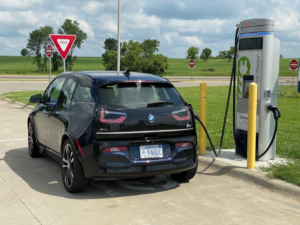
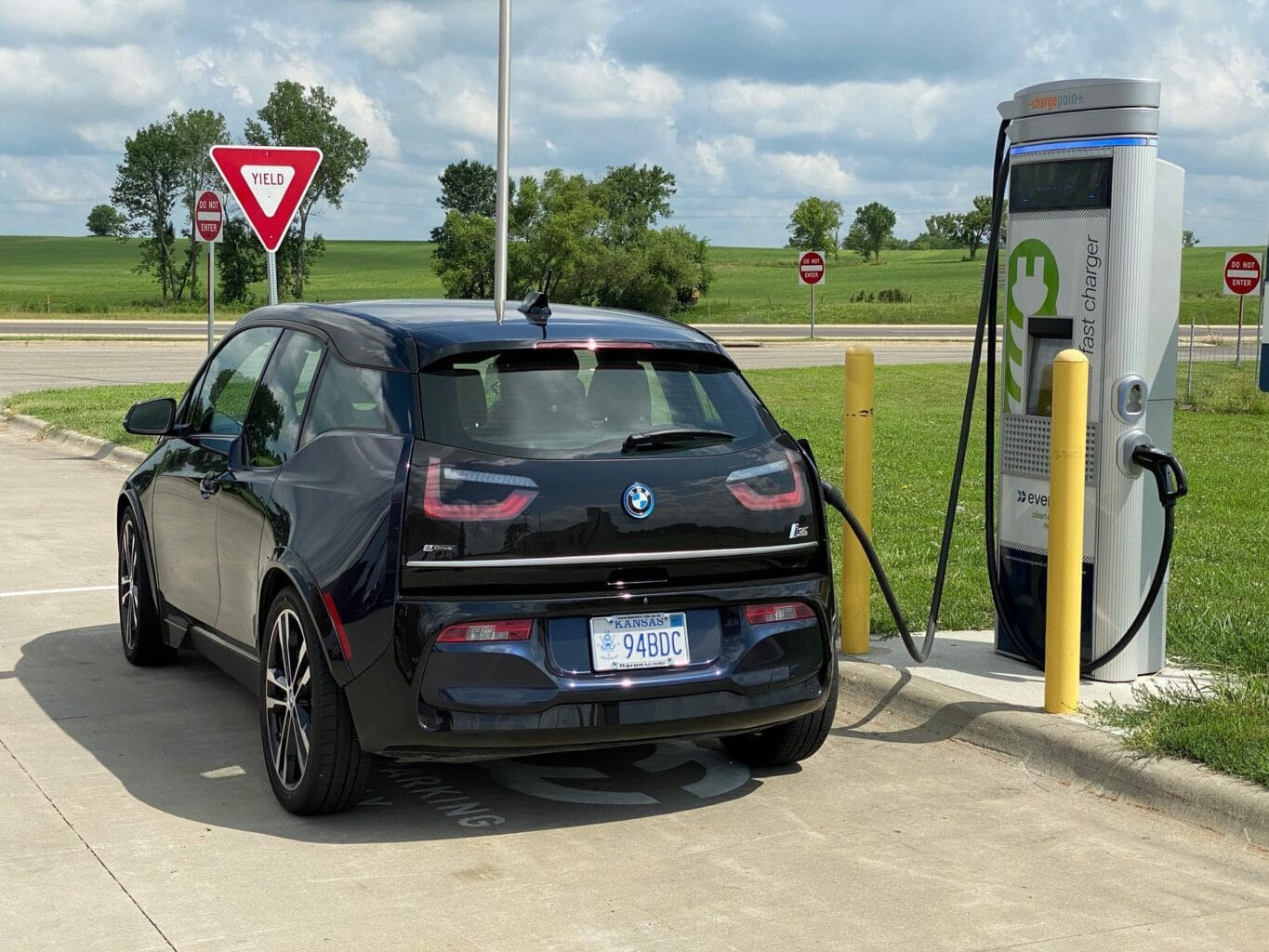
Charging speed could help ease concerns about electric vehicle range. According to the BMW survey, 53% of respondents would be more likely to consider an EV if it could add approximately 150 miles of range in just 10 minutes at a fast-charging station.
Interest in faster charging was particularly strong among younger respondents. The figure reached 70% among Gen Z and 65% among Millennials, compared with 52% among Gen X and 30% among Baby Boomers.
The results indicate that shorter charging stops could make electric vehicles more appealing, particularly to younger drivers who would prefer spending only a few minutes charging rather than remaining connected to a station for half an hour or longer.
Americans are also becoming more accepting of charging times that extend beyond a brief stop. The survey found that 55% now consider 30 minutes or less an acceptable charging time, up from 48% in 2025. Meanwhile, 76% said they would accept a charging stop of up to an hour, compared with 71% last year.
BMW iX3 Exceeds the Survey’s Fast-Charging Benchmark
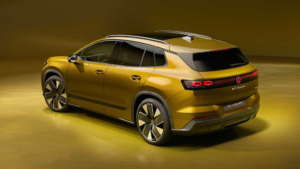
BMW’s new iX3 offers a charging capability that exceeds the benchmark many respondents said would make an EV more attractive. At an 800-volt DC fast-charging station, the electric SUV can add an estimated 185 miles of range in 10 minutes.
That figure surpasses the 150 miles of range in 10 minutes that would make an electric vehicle more appealing to 53% of surveyed Americans.
The findings underscore the importance of charging performance alongside battery range. For potential buyers, the ability to replenish driving range quickly could help make longer trips more convenient.
Purchase Price Remains the Biggest Barrier to EV Ownership
Despite the importance of range and charging speed, the upfront cost of an electric vehicle remains the most frequently cited obstacle to adoption. In the BMW survey, 51% of respondents identified purchase price as a barrier to EV ownership.
Battery longevity and replacement costs ranked second, cited by 31% of respondents. Charging time followed at 26%, while driving range and public charging availability each concerned 24%. Another 23% pointed to a lack of convenient access to home charging.
Lower ownership and operating costs could encourage more Americans to consider making the switch. The survey found that 27% of respondents would be motivated by these savings, while performance, advanced technology and environmental benefits each appealed to 19%.
These findings indicate that potential buyers consider several factors when evaluating electric vehicles, extending beyond environmental benefits. However, the initial purchase price remains a substantial obstacle.
Used Electric Cars Could Help Expand Adoption
The used-car market may offer another route for attracting buyers who are concerned about the cost of a new electric vehicle. According to the survey, 55% of respondents would consider a certified pre-owned or used EV if the savings were substantial enough.
Despite concerns about affordability and charging, 68% of Americans surveyed said they would consider buying an electric vehicle.
The results also suggest that EV ownership is becoming more familiar to consumers. Only 56% of respondents now view electric vehicle buyers as early adopters, down from 62% in 2025.
That change points to a gradual shift in perceptions, with electric vehicles increasingly seen as an option beyond a relatively narrow group of technology enthusiasts.
More Americans Recognize EV Performance Advantages
Performance is another factor shaping attitudes toward electric vehicles. The survey found that 38% of respondents believe EVs accelerate faster than comparable gasoline-powered cars.
That perception was more common among younger generations. Among Gen Z respondents, 47% believed electric vehicles accelerate faster than comparable gasoline-powered models, while the figure reached 49% among Millennials. Among Baby Boomers, it fell to 25%.
The findings suggest that acceleration and technology can contribute to EV appeal alongside practical considerations such as range, charging access and operating costs.
What Americans Would Do During an EV Charging Stop
BMW also asked respondents how they might spend a 20- to 30-minute public charging stop. Calling or texting friends and family was the most popular answer, selected by 43% of respondents.
Another 41% said they would grab coffee or something to eat, while 36% would relax or read. Streaming entertainment or playing a game appealed to 29%.
The survey also found interest in using electric vehicles as a source of backup power. Some 57% of respondents said they would be more likely to consider an EV if it could supply electricity to their home during a power outage.
BMW’s new iX3 supports bidirectional charging, including Vehicle-to-Home functionality, when paired with suitable home-charging equipment.
BMW’s Upcoming Electric Vehicles Focus on Range and Technology
BMW’s findings come as the automaker continues to expand its electric vehicle lineup. The Spartanburg-made electric iX5 is expected to deliver up to 435 miles of EPA-estimated range in the United States, while the iX3 demonstrates the company’s charging capabilities.
The electric i3 sedan and the recently revealed iX4 are also on the way. BMW’s i3 Touring is expected to launch in 2027, although its availability in the United States remains uncertain.
As an automaker with a growing electric lineup, BMW has a commercial interest in the results of a survey about EV adoption. Nevertheless, the findings highlight the challenges manufacturers face in balancing consumers’ expectations for range and convenience with the cost of electric vehicles.
EV Range Expectations Remain Higher Than Daily Driving Needs
The central finding of the BMW survey is that the range Americans want from an electric vehicle often exceeds what they say they need for everyday driving. While most respondents reported that 75 miles or less would cover their daily trips, many still want 300 miles or more before considering an EV.
That difference reflects the importance of flexibility when choosing a vehicle. Consumers may want the ability to take longer trips without carefully planning every stop around a charger, even if their typical commute requires much less range.
For automakers, the challenge remains making electric vehicles affordable and convenient while delivering the range and charging performance buyers expect. The survey suggests that faster charging, lower ownership costs and greater flexibility could all influence how Americans approach their next vehicle purchase.