
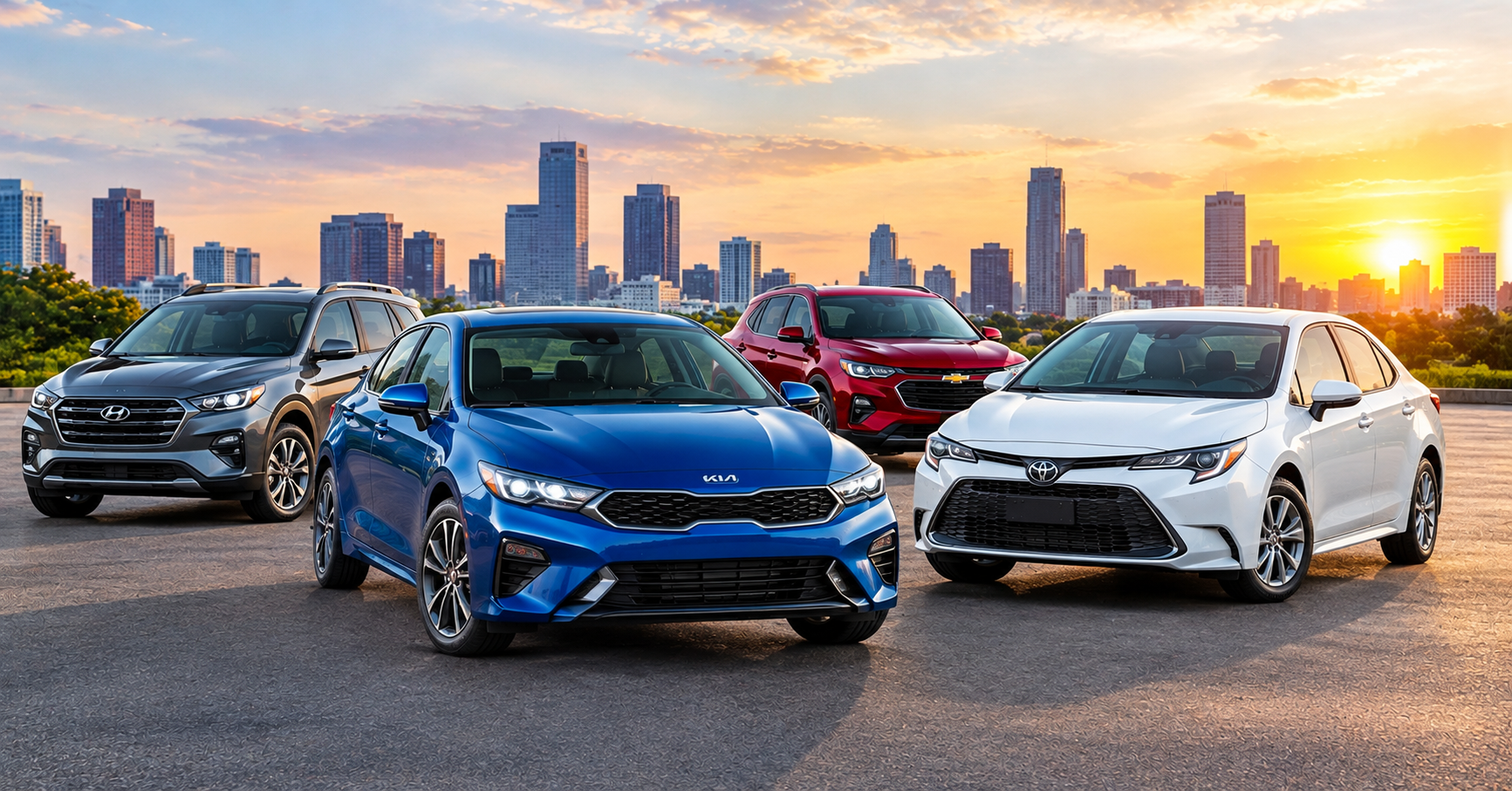
Buying a new car in 2026 without spending more than $25,000 has become a serious challenge. With average new-car listing prices hovering around $50,000, budget-conscious shoppers face a much smaller selection than they did just a few years ago. Yet affordable transportation has not disappeared. A carefully chosen compact sedan or subcompact SUV can still deliver modern safety technology, useful features, respectable fuel economy, and everyday practicality without crossing the $25,000 threshold.
There is one important limitation: only seven distinct new 2026 models start below $25,000, according to the supplied research. Reaching a list of 10 smart buys therefore requires including additional trims of qualifying models, rather than suggesting that 10 completely different vehicles meet the same price limit.
This guide compares the leading choices, explains their strengths and compromises, and highlights what shoppers should know before visiting a dealership. Prices represent the starting figures in the supplied research, including destination where specified, but generally exclude taxes, registration, dealer fees, and optional equipment.
Best Cars Under 25000 2026: The Top 10 Smart Buys
The following rankings consider starting price, fuel economy, engine output, practical features, body style, and the type of buyer each vehicle is best suited to. They are recommendations based on the supplied research, not a substitute for comparing individual trims and current dealer offers.
1. Kia K4 LX: Best Overall Value
Starting price: $23,535
The Kia K4 LX earns the top position because it combines a competitive price with a modern design, useful everyday performance, and a well-rounded package. Its 2.0-liter four-cylinder engine produces 147 horsepower, while its combined fuel economy is listed at 33 mpg.
For shoppers who want a new sedan without paying for a higher trim, the K4 provides a compelling starting point. Its styling gives it a contemporary appearance, and its price leaves more room in the budget for insurance, registration, and other ownership expenses than some alternatives near the $25,000 ceiling.
The K4 also gives buyers room to move up one trim level. The LXS starts at $24,635, according to the supplied research, keeping it below the threshold while offering additional equipment.
Why it makes the list
- 147-horsepower 2.0-liter four-cylinder engine.
- 33 mpg combined fuel economy.
- Modern styling and a competitive starting price.
- An additional qualifying trim for shoppers seeking more equipment.
Best for: Buyers seeking a balanced compact sedan with contemporary styling and strong value.
2. Toyota Corolla LE: Best for Long-Term Ownership
Starting price: $24,320
The Toyota Corolla LE is a strong candidate for buyers who prioritize efficiency, practical transportation, and a model with an established reliability reputation. Its 2.0-liter engine produces 169 horsepower, the highest output among the vehicles highlighted in this comparison, and the supplied research lists combined fuel economy at 35 mpg.
That combination makes the Corolla appealing to commuters who want good fuel economy without choosing the lowest-powered vehicle in the category. Its price also remains below $25,000, although the limited difference between the starting price and the budget ceiling leaves less room for optional equipment and additional charges.
The Corolla’s long-standing reputation can make it attractive to buyers planning to keep their vehicles for several years. However, reputation alone does not guarantee trouble-free ownership. Maintenance, driving habits, service history, and the individual vehicle’s condition all matter when assessing long-term costs.
What buyers should consider
- 169 horsepower, according to the supplied research.
- 35 mpg combined fuel economy.
- A starting price of $24,320.
- Only the LE sedan qualifies under the stated price ceiling; the Corolla hatchback starts above it.
Best for: Commuters and budget-conscious drivers who want an efficient sedan with a strong reputation for long-term ownership.
3. Hyundai Elantra SE: Best Fuel Economy Among the Sedans
Starting price: $23,870
The Hyundai Elantra SE is one of the strongest choices for drivers who want to reduce gasoline spending without moving into a hybrid or electric vehicle. Its 147-horsepower engine is paired with a listed combined fuel economy of 35 mpg, matching the Toyota Corolla LE in this comparison.
The Elantra’s starting price is $450 below the Corolla’s listed price. That difference may be useful to shoppers working with a strict budget, particularly when the final transaction includes taxes, registration, and other expenses.
For someone with a long daily commute, fuel economy can make a meaningful difference over time. Still, the financial benefit depends on annual mileage, local gasoline prices, driving conditions, and how long the car remains in service.
The Elantra SEL Sport is also listed below the threshold at $24,995. Buyers should compare its equipment with the SE before deciding whether the extra cost is justified.
Best for: Drivers who cover regular commuting distances and want a fuel-efficient sedan at a relatively accessible price.
4. Nissan Sentra S: Best Comfort-Focused Sedan
Starting price: $23,845
The 2026 Nissan Sentra is redesigned, and the supplied research describes it as a substantial improvement over the outgoing model. Its base S trim starts at $23,845 and delivers 149 horsepower with a listed 33 mpg combined fuel economy.
The Sentra is worth considering for buyers who prefer a conventional sedan but want a cabin and overall presentation that feel more upscale than the lowest-priced alternatives. Its redesigned status also makes it particularly relevant to shoppers comparing current model-year options.
However, the trim level matters. The S and SV qualify under the $25,000 limit, while the better-equipped SR and SL exceed it, according to the supplied research.
As with any newly redesigned vehicle, buyers should evaluate the exact equipment, seating comfort, visibility, and controls during a test drive instead of relying entirely on a specification sheet.
Best for: Shoppers who want a refreshed compact sedan with a balance of comfort, efficiency, and everyday usability.
5. Chevrolet Trax LS: Best Budget SUV
Starting price: $23,495
Drivers who prefer an elevated seating position and the practical layout of an SUV should take a close look at the Chevrolet Trax LS. Its starting price is below those of several competing sedans, and its subcompact SUV body style provides a different approach to passenger and cargo space.
The Trax uses a 137-horsepower turbocharged engine and is listed at 29 mpg combined. That figure is lower than the 35 mpg combined ratings of the Corolla and Elantra, but fuel economy is only one part of the buying decision. Body style, cargo needs, seating position, and personal comfort can be equally important.
The supplied research identifies three Trax trims below $25,000. The LT reaches $24,995, giving shoppers an opportunity to consider additional equipment without exceeding the stated starting-price ceiling.
The Kelley Blue Book assessment cited in the research also highlights the Trax’s space and standard content. Buyers should nevertheless verify the exact features included in the LS and LT rather than assuming all trims offer identical equipment.
Best for: Budget-minded buyers who prefer an SUV-style vehicle over a traditional sedan.
6. Nissan Kicks S: Best Technology-Focused Small SUV
Starting price: $24,275
The Nissan Kicks S is another option for shoppers who want SUV styling, practical everyday packaging, and modern technology. Its 141-horsepower engine is paired with a listed combined fuel economy of 31 mpg.
The Kicks is a particularly important option for buyers considering all-wheel drive. It is the only SUV among the listed choices with an AWD option, but the AWD version starts at $25,775 and therefore exceeds the budget. The sub-$25,000 configuration is front-wheel drive.
That distinction matters for shoppers in regions with regular snow or difficult road conditions. Buyers who require AWD will need to increase their budget, consider a used vehicle, or explore alternatives outside this group.
The latest-generation Kicks is described in the supplied research as offering improved technology and efficiency. Its value will depend on the equipment included in the specific trim and whether its interior and driving characteristics suit the buyer.
Best for: Drivers who want a small SUV with modern technology and are comfortable with front-wheel drive.
7. Hyundai Venue SE: Lowest-Priced New Vehicle
Starting price: $22,650
The Hyundai Venue SE is the least expensive new vehicle in the supplied 2026 comparison, with a listed starting price of $22,650 including destination. For buyers whose primary goal is to minimize the initial purchase cost, that makes it an important option.
The Venue has a 121-horsepower engine and a listed combined fuel economy of 31 mpg. Its relatively modest power output is one of the compromises associated with choosing a low-cost vehicle. Drivers who frequently merge onto fast highways or carry several passengers should assess acceleration and driving comfort during a test drive.
All three Venue trims are listed below $25,000. That gives buyers more flexibility than some competing models, although upgrading trims can reduce the savings that initially made the vehicle attractive.
The Venue’s small footprint may also appeal to drivers who regularly park in tight spaces or navigate crowded urban streets. Before purchasing, check passenger comfort and cargo capacity against your daily needs.
Best for: First-time buyers and shoppers who place the lowest possible starting price ahead of power or premium features.
8. Kia K4 LXS: Best-Equipped K4 Under $25,000
Starting price: $24,635
The Kia K4 LXS provides an alternative for shoppers who like the K4 but want additional equipment beyond the base LX. It retains the 147-horsepower engine and 33 mpg combined rating listed for the model in the supplied research.
The LXS is a useful example of why buyers should compare trims rather than focusing exclusively on a model’s lowest advertised price. A base vehicle may offer the lowest entry cost, but a slightly more expensive version can be a better fit if it includes features the buyer would otherwise add through optional packages.
At $24,635, the LXS remains below the $25,000 threshold on its listed starting price. Its proximity to that limit makes it important to confirm destination charges, dealer fees, and optional equipment before signing a purchase agreement.
Best for: Buyers who want the K4’s overall value proposition with additional trim-level equipment.
9. Chevrolet Trax LT: Best-Equipped Trax Under the Limit
Starting price: $24,995
The Chevrolet Trax LT sits at the very top of the sub-$25,000 price range. It offers an option for shoppers who want more equipment than the base LS while keeping the listed starting price below the threshold.
The trade-off is straightforward: there is almost no room between its starting price and the budget limit. Taxes, registration, dealer fees, accessories, and other charges can push the final purchase cost well above $25,000.
That does not automatically make the LT a poor choice. It simply means shoppers should decide whether its additional features justify spending nearly the entire budget before considering the remaining transaction costs.
Compare the LT directly with the less expensive LS. If the added equipment is not important to your daily driving, the lower-priced trim may be the more sensible purchase.
Best for: SUV shoppers who want a higher Trax trim and can accommodate costs beyond the advertised starting price.
10. Hyundai Elantra SEL Sport: Best-Equipped Elantra Under $25,000
Starting price: $24,995
The Hyundai Elantra SEL Sport completes this list by offering an additional trim choice for shoppers who prefer the Elantra’s efficiency but want more equipment than the base SE. The supplied research lists the same 147-horsepower engine and 35 mpg combined fuel economy.
Its starting price matches the Trax LT at $24,995, leaving virtually no room under the $25,000 mark. That makes it essential to distinguish between the advertised vehicle price and the actual out-the-door total.
For buyers who spend considerable time commuting, the Elantra’s fuel economy may be attractive. But the SEL Sport is worth the additional cost only if its specific features offer enough value over the SE to justify the difference.
Best for: Drivers who want an efficient compact sedan with additional trim-level features.
Best Cars Under 25000 2026 by Category
Not every shopper has the same priorities. Some want to spend as little as possible, while others care more about fuel economy, passenger space, or SUV practicality. This quick comparison helps narrow the field.
| Buyer Priority | Recommended Vehicle | Starting Price | Key Advantage |
|---|---|---|---|
| Best Overall Value | Kia K4 LX | $23,535 | Balanced price, power, and efficiency |
| Long-Term Ownership | Toyota Corolla LE | $24,320 | 169 hp and 35 mpg combined |
| Best Sedan Fuel Economy | Hyundai Elantra SE | $23,870 | 35 mpg combined |
| Comfort-Focused Sedan | Nissan Sentra S | $23,845 | Redesigned 2026 model |
| Best Budget SUV | Chevrolet Trax LS | $23,495 | Subcompact SUV packaging |
| Technology-Focused SUV | Nissan Kicks S | $24,275 | Modern technology and an AWD option above budget |
| Lowest Starting Price | Hyundai Venue SE | $22,650 | Lowest-priced new vehicle in this comparison |
| Higher-Trim Sedan | Kia K4 LXS | $24,635 | Additional equipment while staying below $25,000 |
| Higher-Trim SUV | Chevrolet Trax LT | $24,995 | More equipment at the price ceiling |
| Higher-Trim Efficient Sedan | Hyundai Elantra SEL Sport | $24,995 | 35 mpg combined with additional trim features |
These prices are starting figures from the supplied research. Actual inventory, destination charges, dealer fees, taxes, registration, and optional packages can affect the final transaction.
What Makes the Best Cars Under 25000 2026 Worth Buying?
Affordable new vehicles are not simply older designs sold at lower prices. The qualifying models in this comparison offer useful modern features, but their equipment and performance vary by model and trim. Buyers should look at the full package rather than assuming that a higher price automatically means a better vehicle.
Modern Safety Features Are Available
One of the most important findings in the supplied research is that even the least expensive qualifying vehicle includes several driver-assistance technologies. These include forward collision warning with automatic emergency braking, pedestrian protection, and lane-departure steering assistance.
Such features can provide additional support in everyday driving, but they do not replace attentive driving. Availability and functionality can differ by model and trim, so buyers should verify the standard equipment on the exact vehicle they intend to purchase.
Fuel Economy Can Reduce Running Costs
The Toyota Corolla LE and Hyundai Elantra SE are listed at 35 mpg combined, giving them an advantage for drivers who cover substantial distances. The Kia K4 and Nissan Sentra are listed at 33 mpg combined, while the Chevrolet Trax is listed at 29 mpg combined.
Consider a driver who travels 12,000 miles per year. At 35 mpg, that driver would use approximately 343 gallons of gasoline. At 29 mpg, the same distance would require approximately 414 gallons. The difference is about 71 gallons annually.
Actual consumption will vary with traffic, weather, road conditions, vehicle load, and driving style. The example illustrates why fuel economy should be considered alongside purchase price when estimating total ownership costs.
Compact Sedans and Small SUVs Serve Different Needs
A sedan may be a better choice for drivers who prioritize fuel economy and conventional passenger-car handling. The Corolla, Elantra, K4, and Sentra all fit this role.
Small SUVs such as the Trax, Kicks, and Venue appeal to buyers who prefer a higher seating position and a more versatile cargo area. However, the exact amount of usable space varies by vehicle, and an SUV badge alone does not guarantee that a model will carry more luggage or provide more rear-seat room than a sedan.
Before choosing, consider the items you regularly transport, the number of passengers you carry, and whether parking space or fuel consumption is more important to your daily routine.
The Biggest Compromises of Buying a New Car Under $25,000
Staying below $25,000 is possible, but the budget comes with trade-offs. Understanding them can help buyers avoid choosing a vehicle that looks affordable in an advertisement but does not meet their needs.
No New AWD Model Qualifies Under the Price Limit
The supplied research identifies no new vehicle in this group with all-wheel drive at a starting price below $25,000. The Nissan Kicks offers AWD, but its starting price rises to $25,775 when that drivetrain is selected.
Drivers in snowy regions should consider whether front-wheel drive is appropriate for their conditions and driving habits. Tires, road conditions, and driving technique also matter. If AWD is essential, shoppers may need to increase their budget or consider a used vehicle.
Hybrid and Electric Options Are Missing
None of the qualifying models in the supplied research is a hybrid or fully electric vehicle. The Toyota Corolla Hybrid and Hyundai Elantra Hybrid both start above $25,000.
That does not mean a gasoline-powered car is automatically cheaper to own. A buyer should compare purchase prices, fuel costs, insurance, maintenance, and expected mileage. However, shoppers who require a new hybrid or EV will likely need to raise their spending limit or consider the used market.
Engine Power Is Generally Modest
Most vehicles in this category prioritize affordability and everyday efficiency rather than high performance. The Hyundai Venue produces 121 horsepower, and the Chevrolet Trax produces 137 horsepower. The Toyota Corolla leads this group with 169 horsepower.
For ordinary commuting, these power levels may be sufficient. But drivers who frequently travel on steep roads, merge into fast-moving traffic, or carry a full load of passengers should test-drive their leading options before making a decision.
Interior Materials and Standard Equipment May Be Basic
Manufacturers keep prices competitive by limiting some comfort features and using less expensive materials in lower trims. Hard plastics, basic cloth upholstery, smaller infotainment systems, and fewer convenience features may be part of the package.
These compromises do not necessarily make a car a bad buy. A buyer who values low cost and dependable everyday transportation may prefer a simpler interior over equipment that adds to the purchase price. The important point is to know what comes standard and what requires an upgrade.
Transmission Feel Deserves a Test Drive
The supplied research notes that continuously variable transmissions, or CVTs, are common among affordable vehicles. They can help support fuel efficiency, but some drivers find their response different from that of conventional automatic transmissions.
Take each shortlisted vehicle on a route that resembles your normal driving. Pay attention to acceleration, engine noise, low-speed response, and how naturally the transmission behaves in traffic.
How to Buy a New Car Under $25,000 Without Overspending
The starting price is only the beginning of the buying process. A disciplined comparison can help shoppers stay within budget and avoid paying for features they do not need.
- Set your real spending limit. Decide whether $25,000 is your vehicle-price target or your maximum out-the-door budget. If it is the total limit, leave room for taxes, registration, and other fees.
- Choose the right body style. Decide whether a sedan or subcompact SUV better suits your passengers, cargo, parking conditions, and driving habits.
- Compare fuel economy. Estimate your annual mileage and local gasoline costs. A more efficient vehicle may reduce operating expenses over time.
- Compare trims carefully. Identify which safety, comfort, and technology features are standard and which require an upgrade.
- Get insurance quotes. Request estimates for your preferred models before committing. Insurance premiums can vary by vehicle and driver.
- Test-drive at least two vehicles. Compare seating position, visibility, acceleration, braking feel, cabin noise, and ease of using the controls.
- Request written out-the-door prices. Ask dealers to itemize taxes, fees, accessories, and optional products. Compare offers on the same basis.
- Check available inventory. Confirm the model year, exact trim, included equipment, and vehicle availability before traveling to a dealership.
Should You Buy a New Base Model or a Used Higher Trim?
A new base model can provide new-vehicle warranty coverage and a known starting history. A used vehicle may offer more power, more comfort features, or a larger body style for a similar amount of money.
The better option depends on the individual vehicle. For a used car, review maintenance records, accident history, overall condition, remaining warranty coverage, and the results of an independent inspection. Compare those factors with the new car’s final purchase price rather than relying on the model year alone.
Frequently Asked Questions
What Is the Cheapest New Car in 2026?
The Hyundai Venue SE is listed as the cheapest new vehicle in the United States in the supplied research, with a starting price of $22,650 including destination.
What Are the Best Cars Under 25000 2026?
The leading choices in this comparison are the Kia K4 LX, Toyota Corolla LE, Hyundai Elantra SE, Nissan Sentra S, and Chevrolet Trax LS. The best option depends on whether you prioritize overall value, fuel economy, sedan comfort, or SUV practicality.
How Many New Cars Start Under $25,000 in 2026?
The supplied research identifies seven distinct new 2026 models that start below $25,000: the Hyundai Venue, Chevrolet Trax, Kia K4, Nissan Sentra, Hyundai Elantra, Nissan Kicks, and Toyota Corolla.
What Is the Best SUV Under $25,000?
The Chevrolet Trax LS is a leading option in this comparison, with a listed starting price of $23,495 and 29 mpg combined. The Nissan Kicks S and Hyundai Venue SE are alternatives for buyers seeking a small SUV at a similar price point.
Which Car Under $25,000 Gets the Best Gas Mileage?
The Toyota Corolla LE and Hyundai Elantra SE are tied in the supplied research at 35 mpg combined. Real-world fuel economy will vary depending on driving conditions and habits.
Can I Buy a New AWD Car Under $25,000?
Not among the qualifying vehicles in the supplied research. The Nissan Kicks offers all-wheel drive, but its AWD starting price is listed at $25,775, above the threshold.
Are There Any Hybrid Cars Under $25,000?
No qualifying new hybrid is included in the supplied research. The Toyota Corolla Hybrid and Hyundai Elantra Hybrid both start above $25,000.
Is the Kia K4 Better Than the Toyota Corolla?
The Kia K4 LX starts at $23,535 and is listed at 33 mpg combined, while the Toyota Corolla LE starts at $24,320 and is listed at 35 mpg combined. The K4 may appeal to shoppers prioritizing value, while the Corolla offers higher listed fuel economy and more horsepower. A test drive and comparison of standard features can help determine which is better for an individual buyer.
Does a $25,000 Starting Price Include Taxes and Dealer Fees?
Generally, no. The starting prices in this comparison do not necessarily include taxes, registration, dealer fees, and optional accessories. Buyers should request a written out-the-door quote before agreeing to a purchase.
Should I Buy a Sedan or an SUV?
A sedan may suit buyers who prioritize fuel economy and conventional passenger-car handling. A subcompact SUV may be more appealing to shoppers who prefer a higher seating position and a different cargo layout. Compare actual passenger space, storage capacity, visibility, and fuel economy before deciding.
Final Verdict: Which Affordable Car Should You Buy?
The best cars under 25000 2026 show that budget-conscious shoppers still have meaningful choices, even as the number of affordable new vehicles continues to shrink. The Kia K4 LX is the strongest all-around value pick in this comparison, while the Toyota Corolla LE and Hyundai Elantra SE stand out for their listed 35 mpg combined fuel economy.
Buyers who prefer an SUV should consider the Chevrolet Trax LS, Nissan Kicks S, and Hyundai Venue SE. The Venue offers the lowest starting price, while the Trax provides an alternative for shoppers who prioritize SUV-style packaging. The Nissan Sentra S deserves consideration for buyers interested in the redesigned 2026 sedan.
For shoppers who want additional features while remaining below the listed price ceiling, the Kia K4 LXS, Chevrolet Trax LT, and Hyundai Elantra SEL Sport expand the range of available choices. However, the two models priced at $24,995 leave almost no room for additional transaction costs.
Ultimately, the right purchase is not necessarily the cheapest vehicle or the one with the highest fuel-economy rating. It is the car that meets your daily needs, offers the features you value, and remains affordable after all costs are considered.
Compare the exact trims, test-drive your leading choices, check current inventory, and request written out-the-door quotes. With careful planning, you can find a practical new vehicle without automatically moving into a much higher price bracket.