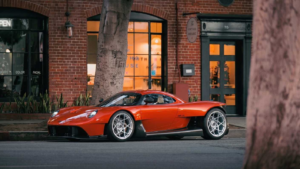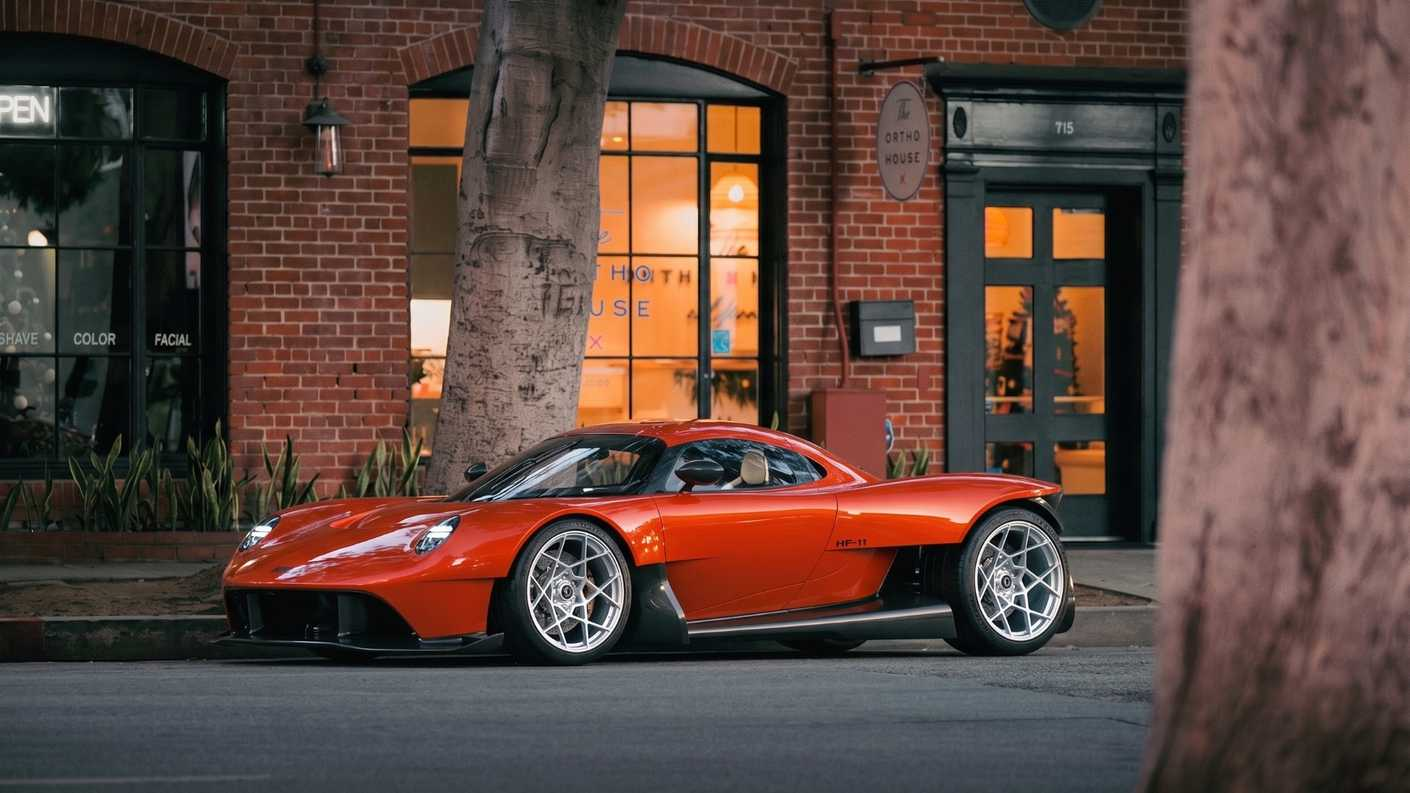
American hypercar startup Oilstainlab is developing a six-figure sports car that aims to combine electric power with a genuine manual transmission. Twin brothers Nikita and Ilya Bridan want to apply lessons learned from developing their HF-11 hypercar to a more affordable vehicle that could compete in the established sports car market while retaining its appeal as a collectible.
The planned model would move beyond the million-dollar-plus hypercar segment, with Nikita Bridan targeting a six-figure price and hoping the first digit will be one. Although the company has not announced a launch date or performance targets, its vision centers on an unusual combination of electric power, a real manual gearbox and lightweight construction.
Oilstainlab Wants to Make Exclusive Sports Cars More Affordable
Founders Nikita and Ilya Bridan each spent more than a decade working for automakers around the world before launching Oilstainlab, also known as OSL. The company’s first vehicle, the HF-11, is approaching the final stages of development.
Nikita has discussed the HF-11’s progress, the challenges the company has overcome and the lessons learned during development. He has also outlined plans for a more affordable sports car that would bring the company’s engineering experience to a vehicle priced significantly below even a Ferrari or Lamborghini.
Nikita believes buyers are experiencing fatigue with hypercars priced at $4 million, $5 million, $6 million or $8 million. Rather than focusing exclusively on that market, Oilstainlab wants to develop a vehicle that appeals to a broader range of customers.
“I think there’s a general fatigue over four-, five-, six-, eight-million-dollar hypercars,” Nikita said. “And how relevant are they, really? So for us, we’re keen to start, and we are, developing a car that is much more attainable for the regular person. So we’re taking everything that we’re basically learning and developing with HF-11 and sort of bringing it down market.”
Moving downmarket does not mean abandoning exclusivity. Nikita describes the company’s goal as creating something “more attainable, aspirational,” offering a lower price point without sacrificing the qualities that make a vehicle desirable.
The Goal Is an Affordable Sports Car That Retains Its Value
Balancing affordability with exclusivity presents a central challenge for the Bridan brothers. They want to build a car that more people can afford while maintaining the value and desirability associated with collectible vehicles.
“The products will always remain exclusive, even the cheaper car. Our goal is to build something that’s very collectible, but at the lower end of the market,” Nikita said.
He believes this segment has been neglected, arguing that cheaper cars typically depreciate rather than retain their value. Oilstainlab wants to rethink the business model and strategy behind producing collectible vehicles at a more accessible price.
The company’s ambitions also extend beyond limited production numbers. Nikita said Oilstainlab believes it could eventually scale production to between 5,000 and 8,000 vehicles annually worldwide while preserving a significant degree of value.
“I think it’s scalable to probably up to five- to 8,000 units a year, eventually, globally. I think you can still retain quite a bit of value,” he said. “I think there are cars that have proven that, but it needs to be built sustainably off a very good sort of platform. Otherwise, yeah, you’ll be in a deep mess.”
Oilstainlab Is Exploring an Electric Sports Car With a Manual Gearbox
Oilstainlab is targeting the $150,000-to-$200,000 market, where it would face competition from sports cars such as the Chevrolet Corvette, Porsche 911 and Lotus Emira. The forthcoming electric Porsche 718 is also among the vehicles in this price segment.
To distinguish its planned model, Nikita wants Oilstainlab to develop an electric sports car with a genuine manual transmission rather than a simulated gearbox designed to replicate traditional gear changes.
“We’re exploring basically a lightweight electric car with a manual transmission,” Nikita said, emphasizing that the concept involves a real mechanical setup rather than a digital simulation.
The idea builds on one of the company’s key lessons from developing the HF-11: pairing an electric motor with an actual manual transmission can deliver an engaging driving experience. According to Nikita, the setup offers authentic driver involvement and genuine mechanical noise.
The Half-11 Prototype Tested an Electric Manual Transmission
Oilstainlab has already experimented with the concept using the original Half-11, a handbuilt prototype displayed at the Goodwood Festival of Speed that preceded the production HF-11.
The company converted the prototype to electric power, using lightweight batteries and a manual transmission instead of a single-speed reduction gearbox. The resulting vehicle weighed about 1,850 pounds and featured a real clutch.
“We ran it with a manual transmission. We ran it with ultra lightweight batteries, so the car was about 1,850 pounds, [had a real] clutch, made noises. So we were actually really happy with that…” Nikita said.
Nikita contrasted the approach with electric vehicles that attempt to recreate traditional driving sensations through simulated gear changes. He argues that such features do not address what he sees as persistent problems with vehicle weight and reduced driver engagement.
He described the simulated experience as an illusion, noting that many electric vehicles weigh around 3,700 pounds and characterizing them as extremely heavy and numb.
The brothers initially favored combustion power during HF-11 development, although they also wanted to offer an electric option for the hypercar. As development progressed, however, the appeal of a lightweight electric vehicle with a manual transmission grew for both the founders and their customer base.
Power and Performance Figures Remain Unconfirmed
Despite progress with the electric manual concept, Oilstainlab still has development work ahead. Nikita has not provided target figures for power or performance, and the company has yet to detail the planned sports car’s final specifications.
The manufacturing strategy is also taking shape. Nikita said Oilstainlab is working on plans involving manufacturing partners and components, suggesting the new model will follow a different production approach from the HF-11.
“Right now we’re basically putting together the entire strategy on manufacturing partners, components, etc. Obviously, this needs to be a little bit more of a kind of OEM play, as opposed to every component being crafted from scratch, like with the HF-11,” he said.
Oilstainlab Has Not Set a Launch Date
Oilstainlab has not announced when its planned sports car will launch. The company is still developing its manufacturing strategy and determining how manufacturing partners and components will fit into the production process.
The proposed model reflects the company’s broader ambition to apply lessons from the HF-11 to a more attainable sports car without abandoning exclusivity. Its planned combination of electric power, a genuine manual transmission and lightweight construction would set it apart from the simulated driving experiences Nikita criticizes, although the final specifications, production plans and launch timeline remain unconfirmed.