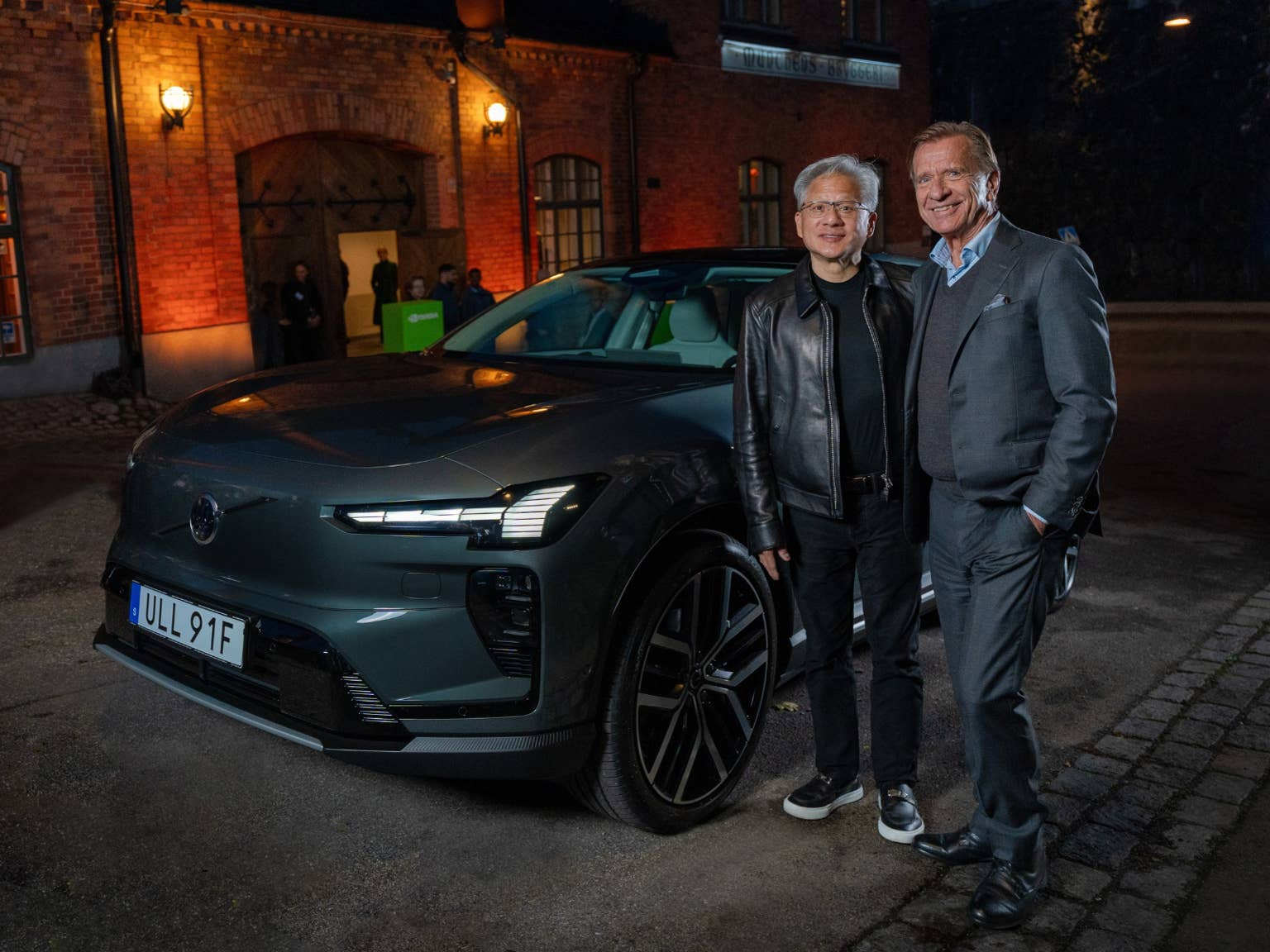
Volvo is expanding its partnership with NVIDIA to develop next-generation automated driving systems designed to operate in complex real-world conditions, including highways, busy urban streets and parking scenarios. The collaboration will use NVIDIA’s artificial intelligence and accelerated computing technologies to support safer, more advanced driving capabilities, with the Swedish automaker expected to introduce the system before 2030, according to a Reuters report.
The expanded partnership comes as automakers accelerate their efforts to develop increasingly autonomous vehicles. Volvo’s focus on safety could play an important role in the initiative as the company works toward automated driving technology designed to be safe, convenient and worthy of customer trust.
How NVIDIA Technology Will Power Volvo’s Automated Driving
According to Volvo, the expanded collaboration aims to improve automated driving functions and make them safer across a range of challenging environments. These include highway driving, congested city streets and parking situations, where vehicles must respond to changing conditions.
The system will be developed with eyes-off and mind-off capabilities in mind for future releases. Its technology foundation will include NVIDIA’s Hyperion sensor and compute architecture, Halos OS and Alpamayo Stack driving software, alongside the company’s AI and accelerated computing technologies.
These technologies are also part of Mercedes-Benz’s recently announced plans for its automated driving systems. Their use will support the development of SAE Level 4 systems, which can operate without driver intervention under specific conditions, as demonstrated by robotaxi operations.
General Motors, another automaker working with NVIDIA, is scheduled to introduce its first eyes-off driving system in the Cadillac Escalade IQ in 2028.
Volvo’s Automated Driving Timeline and Model Plans
Volvo has not announced a specific launch date for its next-generation automated driving system in its press release. However, a Reuters report indicates that the company expects to introduce the technology before 2030.
That timeline would align with Volvo’s broader product plans for the end of the decade. The automaker aims to deliver 13 all-new models by then, including seven developed for Western markets such as the United States and Europe. The remaining models are intended for China.
Volvo has not yet identified which vehicles will receive the automated driving system first. Details about the initial rollout remain undisclosed.
Volvo Sees Safety as a Key Advantage
Volvo believes its automated driving technology could establish a new benchmark for the industry by combining safety and convenience with customer confidence. The company has described its goal as delivering a system that is “safe, convenient and worthy of customer trust.”
Although automated driving technology continues to attract interest for its potential to reduce driver fatigue and distraction, some motorists remain skeptical about allowing computers to take control of a vehicle. Automation is also intended to address human factors associated with impaired driving and other safety risks.
Volvo’s established focus on vehicle safety provides important context for its expanded work with NVIDIA. The partnership is intended to bring more advanced automated driving capabilities to real-world conditions while maintaining an emphasis on safety.
U.S. Security Scrutiny Adds Context to the Partnership
The expanded collaboration comes as U.S. authorities increase scrutiny of vehicle technology linked to China. That scrutiny will prevent Volvo’s sister brand Polestar from selling new model-year 2027 vehicles in the American market.
Volvo, however, received U.S. government authorization in May 2026 to continue selling its vehicles despite its Chinese ownership. The automaker’s expanded use of NVIDIA technology, developed by an American company, could also help address security concerns surrounding its future automated driving systems.
Volvo has yet to disclose a launch date or identify the first models that will receive the technology. Its partnership with NVIDIA is focused on developing more advanced automated driving functions as the automaker pursues its broader product expansion through the end of the decade.