Ferrari has built its reputation on exclusivity, carefully limiting production while maintaining control over how its vehicles are manufactured and customized. The Italian automaker completes final assembly at its Maranello factory, where skilled technicians and advanced manufacturing systems work together to produce its sports cars, SUVs and electrified models. A factory walkthrough from FRAME on YouTube offers a closer look at the production process behind the iconic Prancing Horse brand.
Why Ferrari Prioritizes Exclusivity Over Volume
Among the world’s most recognizable sports car brands, Ferrari holds a distinctive position, alongside Lamborghini and Porsche. Rather than pursuing maximum sales volume, the company has built its identity around exclusivity, even taking issue with certain customer modifications to its vehicles.
Last year, Ferrari shipped 13,640 vehicles, including the Purosangue SUV. However, the company intends for the Purosangue to account for less than 20% of its average annual shipments over the model’s lifecycle, helping prevent the SUV from becoming too dominant in the lineup.
Every Ferrari vehicle undergoes final assembly at the company’s factory in Maranello, Italy. Keeping production centered at the site allows the automaker to maintain close oversight of its manufacturing operations while preserving the exclusivity associated with the brand.
Inside Ferrari’s Manufacturing Process
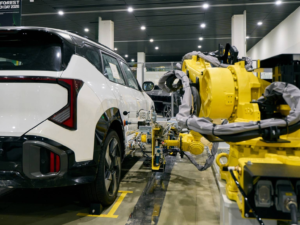
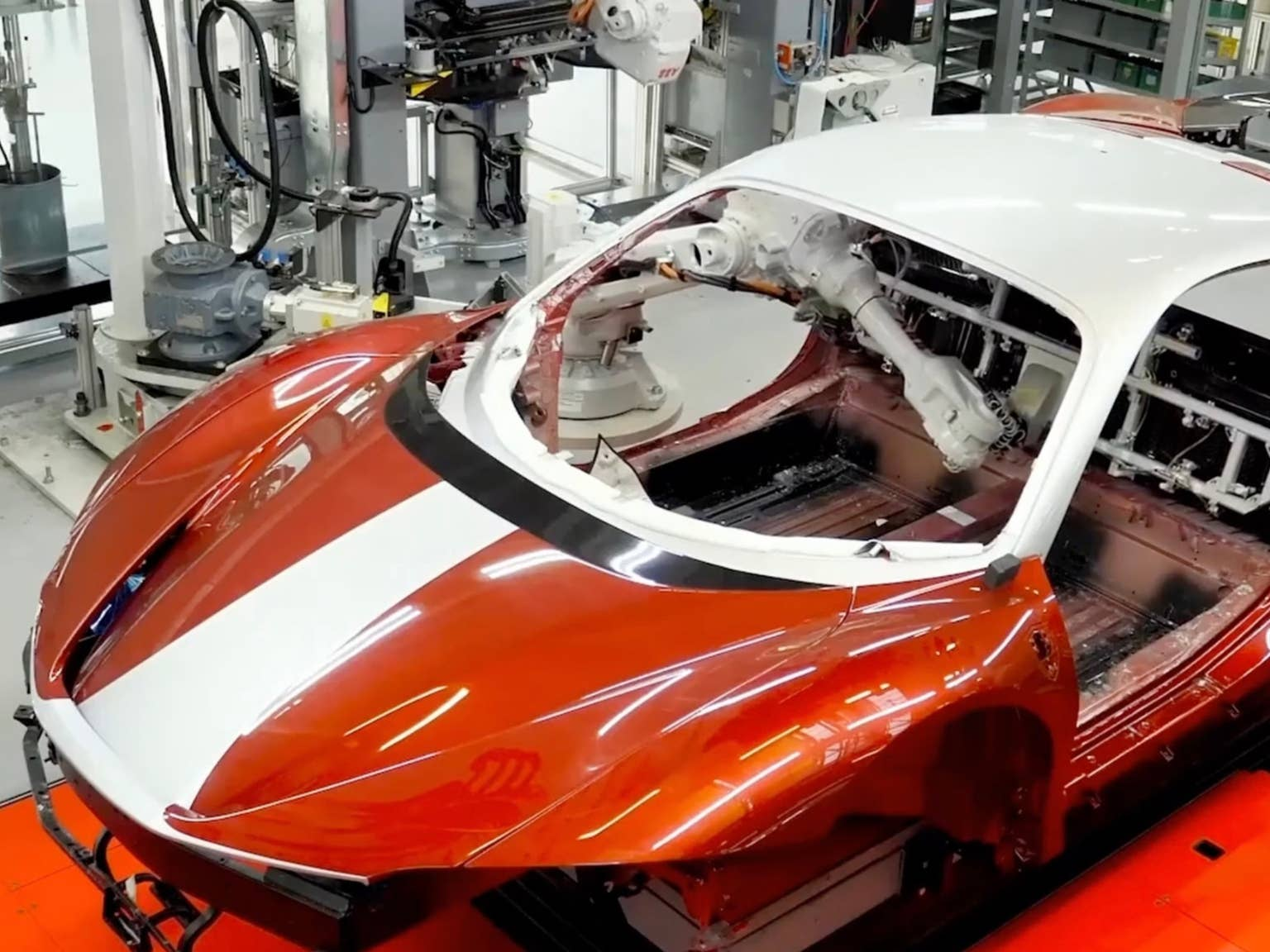
Like many automotive manufacturers, Ferrari relies on robotic systems to weld and assemble structural components into the body-in-white (BIW). This work takes place at the company’s nearby Modena facility, where automated equipment operates alongside skilled technicians dressed in red uniforms reminiscent of the race suits worn by Ferrari drivers and pit crews.
The Maranello factory complex also manufactures Ferrari’s range of engines, including V8s, V12s and, more recently, V6 engines used in models such as the 296 GTB.
In 2024, Ferrari inaugurated its e-building, a facility dedicated to producing electrified components for hybrid supercars such as the F80. The company’s first all-electric model, the Luce, also joined the lineup this year.
Engine Testing and In-House Craftsmanship
Ferrari tests its engines on benches in-house before they are used in its vehicles. Automated Guided Vehicles (AGVs) also play a role in the manufacturing process, transporting heavy components between production stations.
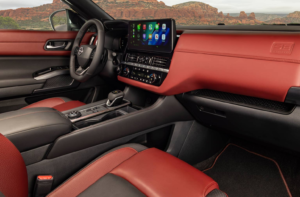
The factory walkthrough also shows that Ferrari manufactures leather upholstery in-house to maintain consistent quality. However, the automaker continues to source leather from external suppliers, including Poltrona Frau.
By combining automated manufacturing systems with specialized craftsmanship, Ferrari maintains oversight of multiple stages of production, from engine development and testing to interior materials.
Ferrari’s Revised Electrification Strategy for 2030
Ferrari plans to reshape its vehicle lineup by 2030, targeting a mix of 40% gas-only models, 40% hybrids and 20% fully electric vehicles. The revised plan represents a significant change from the company’s previous target of 20% gas-only models, 40% hybrids and 40% fully electric vehicles.
The updated powertrain mix reflects changing market trends. Ferrari is not the only automaker adjusting its electrification plans, as direct rival Lamborghini has also abandoned plans for an all-electric version of its fourth core model. That vehicle will instead use a plug-in hybrid powertrain.
Ferrari’s approach combines continued investment in electrified technology with a commitment to its existing production operations in Italy. Its manufacturing strategy continues to center on maintaining control over how its vehicles are built as its powertrain lineup evolves.
The Benefits and Risks of Concentrating Production in Italy
Keeping Ferrari production in Maranello allows the company to preserve its brand exclusivity rather than manufacturing vehicles in other parts of the world to meet regional demand. Concentrating operations in one location can also support stronger quality control and make coordination between departments easier.
However, relying on a concentrated production base also creates potential vulnerabilities. Local disruptions and trade restrictions can affect the company, particularly in export markets such as the United States, where imported European cars face a 15% tariff.
Ferrari’s manufacturing model remains closely tied to its Maranello operations, combining controlled production volumes, specialized craftsmanship and increasingly electrified powertrains. As the company works toward its 2030 lineup targets, its ability to maintain that approach will remain central to how it produces and positions its vehicles.