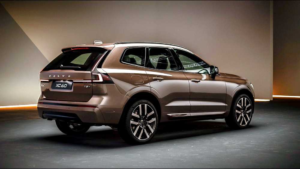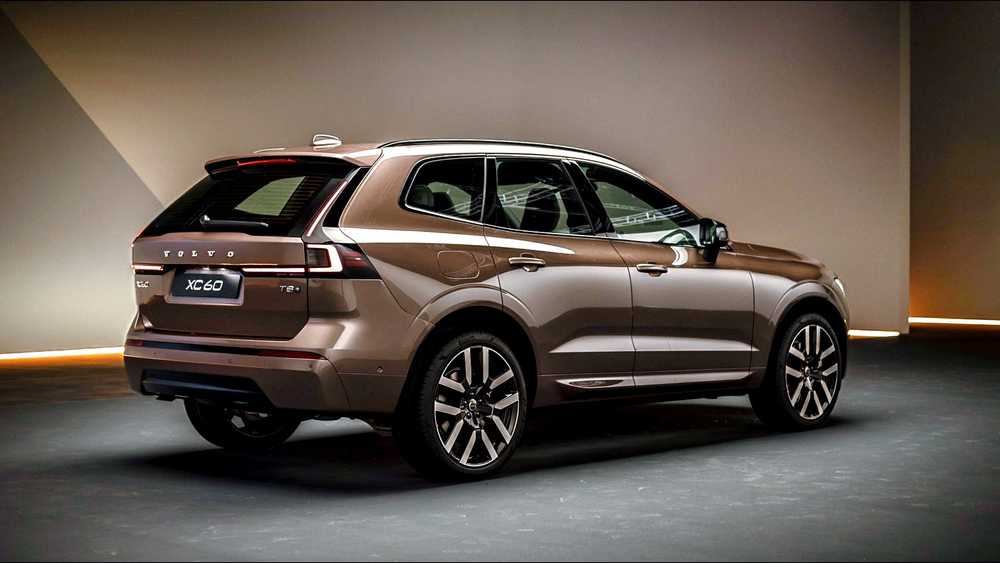
Volvo is betting on plug-in hybrid electric vehicles (PHEVs) to help accelerate the transition to electric cars, with its latest models offering significantly more electric range. The updated Volvo XC60 can travel up to 78 miles on electric power, while the larger XC90 is expected to deliver 73 miles. But despite the improved capability, limited market demand could challenge the automaker’s strategy.
Volvo’s New Plug-In Hybrids Offer More Electric Range
Automakers face an increasingly difficult task in determining which powertrains will deliver long-term success. Changing government regulations, rapidly evolving technology and shifting customer preferences have made it harder to predict whether gasoline engines, hybrids, plug-in hybrids, extended-range electric vehicles or fully electric cars will dominate the near future.
Volvo appears to view plug-in hybrids as an important transitional technology while electric vehicle sales continue to develop. The company has offered PHEVs for several years, but its latest models bring a major improvement in battery capacity and electric driving range.
The Volvo XC60 provides the clearest example. Its battery capacity has increased to 41.2 kWh, compared with 18.8 kWh in the previous version. That change more than doubles its electric range, from 35 miles to 78 miles.
The larger Volvo XC90 will receive the same battery, giving it an electric range of 73 miles. Both models offer more electric driving range than the Toyota RAV4 Plug-In Hybrid and Mercedes-Benz GLC 350e, which deliver 54 miles.
Volvo Sees Plug-In Hybrids Supporting Its Electrification Goals
Volvo’s expanded plug-in hybrid lineup is part of its strategy to increase the share of electrified vehicles in its sales. Luis Rezende, the company’s president in the United States, said Volvo is relying on these hybrids to help achieve its goal of having 60% electrified vehicles by 2030, a target that includes fully electric cars.
Rezende also suggested that plug-in hybrids could appeal to customers who are not yet ready to switch entirely to electric vehicles.
“Customers who were not there yet in their minds to go electric, they will jump to this.”
The strategy could also help Volvo introduce more buyers to fully electric vehicles over time. Peter Nagle, an analyst at Mobility Global, said the company’s approach could support future EV sales.
According to Mobility Global, 25% of plug-in hybrid buyers will switch to an electric vehicle for their next purchase. That finding suggests PHEVs could serve as a stepping stone for some customers who eventually move to fully electric transportation.
Plug-In Hybrid Market Share Remains a Major Challenge
Despite the potential benefits, plug-in hybrids represent a relatively small part of the automotive market. The current market share for PHEVs stands at just 1%.
Mobility Global expects that share to increase to only 4% over the next decade, suggesting that demand for plug-in hybrids could remain limited even as manufacturers improve their electric range and battery technology.
The modest market share presents a challenge for Volvo as it expands its PHEV offerings. Longer electric range may make its vehicles more appealing, but the broader market’s expected growth indicates that plug-in hybrids could remain a relatively small segment.
Other Automakers Are Scaling Back Plug-In Hybrids
Decisions by other automakers provide another indication of the difficulties facing the plug-in hybrid market. Rather than expanding their PHEV lineups, some manufacturers are discontinuing models or removing plug-in hybrid options from existing vehicles.
Hyundai is dropping the plug-in hybrid version of the Tucson, citing limited demand, while continuing to offer the conventional hybrid. Nissan is making the same move with the Rogue.
Jeep and Chrysler have also discontinued plug-in hybrid variants of the Wrangler, Grand Cherokee and Pacifica. Those changes came notably after the federal electric vehicle and plug-in hybrid tax credit ended.
However, these discontinued models had notably less electric range than Volvo’s latest plug-in hybrids, making the comparison different from a direct assessment of the Swedish automaker’s newer offerings.
Volvo’s PHEV Strategy Faces an Uncertain Market
Volvo’s latest plug-in hybrids offer substantially more electric range than their predecessors, and the company sees them as a way to attract customers who are not yet prepared to buy fully electric vehicles. Its electrification target for 2030 also gives the technology a defined role in the company’s plans.
Still, the limited current market share of PHEVs, modest growth expectations and decisions by other automakers to discontinue plug-in models highlight the challenges Volvo faces as it pursues that strategy.