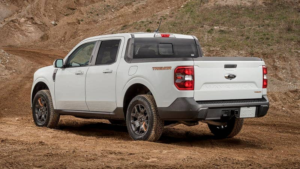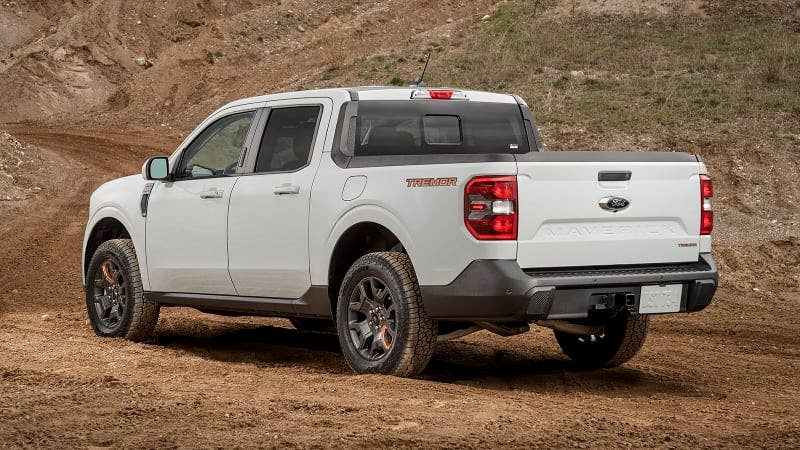
Ford is facing a new investigation into whether a previous recall successfully fixed rearview camera problems in the Maverick pickup. The National Highway Traffic Safety Administration (NHTSA) is reviewing approximately 273,301 Ford Maverick and Maverick Hybrid trucks from the 2022–2024 model years after reports alleged that rearview camera images could freeze even after the original repair was completed.
The investigation follows a September 2024 recall that addressed defective rearview camera displays through a software update. If the original fix proves inadequate, the review could lead to another safety recall.
NHTSA Reviews Ford Maverick Rearview Camera Recall
Rearview cameras help drivers see behind their vehicles while reversing and are also required to comply with U.S. safety regulations. Ford previously addressed camera display defects in the Maverick under NHTSA recall 24V684 in September 2024.
The remedy involved updating the Connected Touch Radio (CTR) software. However, questions have emerged about whether that update completely resolved the problem.
NHTSA has opened a Recall Query, identified as RQ 26004, to evaluate the effectiveness of the earlier repair. The agency estimates that the investigation covers approximately 273,301 Maverick and Maverick Hybrid vehicles from the 2022–2024 model years.
The affected vehicles could experience frozen rearview camera images while reversing. A frozen image may provide drivers with inaccurate information about what is behind the vehicle, potentially increasing the risk of a crash.
Five Reports Raise Questions About the Original Repair
The investigation does not establish that all 273,301 vehicles still have the defect. Instead, it examines whether the 2024 recall remedy adequately addressed the underlying software problem.
The original recall identified a memory leak as a potential cause of frozen rearview camera displays. A memory leak occurs when software fails to release memory that is no longer being used.
NHTSA has received five Vehicle Owner Questionnaires (VOQs) alleging that rearview camera images continued to freeze after the recall repair was performed. The current investigation lists no crashes associated with the issue.
However, the original recall report stated that Ford was aware of two accident reports related to the defect. No injuries were reported in connection with those incidents.
Could Ford Issue Another Maverick Recall?
If NHTSA determines that the original repair did not adequately resolve the camera problem, another safety recall could follow. Owners could then be required to take their pickup trucks back to dealerships for additional repairs.
The possibility of another campaign adds to Ford’s recent history of frequent recalls. The automaker has led the industry in recall counts in recent years, drawing attention to its efforts to identify and correct vehicle defects.
Ford has maintained that its high recall numbers reflect a commitment to identifying potential problems and addressing them as early as possible.
Ford’s Quality Record and Other Camera Recalls
Despite concerns surrounding its recall record, Ford earned the top honor in the mass-market category of the 2026 J.D. Power Initial Quality Study. The recognition measures vehicle quality during the first 90 days of ownership and suggests that the company’s quality improvement efforts are showing results in that period.
The Maverick investigation is also not the only recent Ford recall involving rearview camera displays. Earlier this year, the company recalled approximately 1.74 million vehicles across two separate safety campaigns involving camera display problems.
One campaign addressed overheating of the Accessory Protocol Interface Module (APIM), while the other involved displays that could flip or invert the camera image.
Investigation Into Ford Maverick Cameras Continues
NHTSA’s review will determine whether the software update introduced in September 2024 effectively corrected the frozen-image defect in affected Maverick and Maverick Hybrid trucks. For now, the investigation remains focused on the effectiveness of the original remedy, and another recall has not been confirmed.