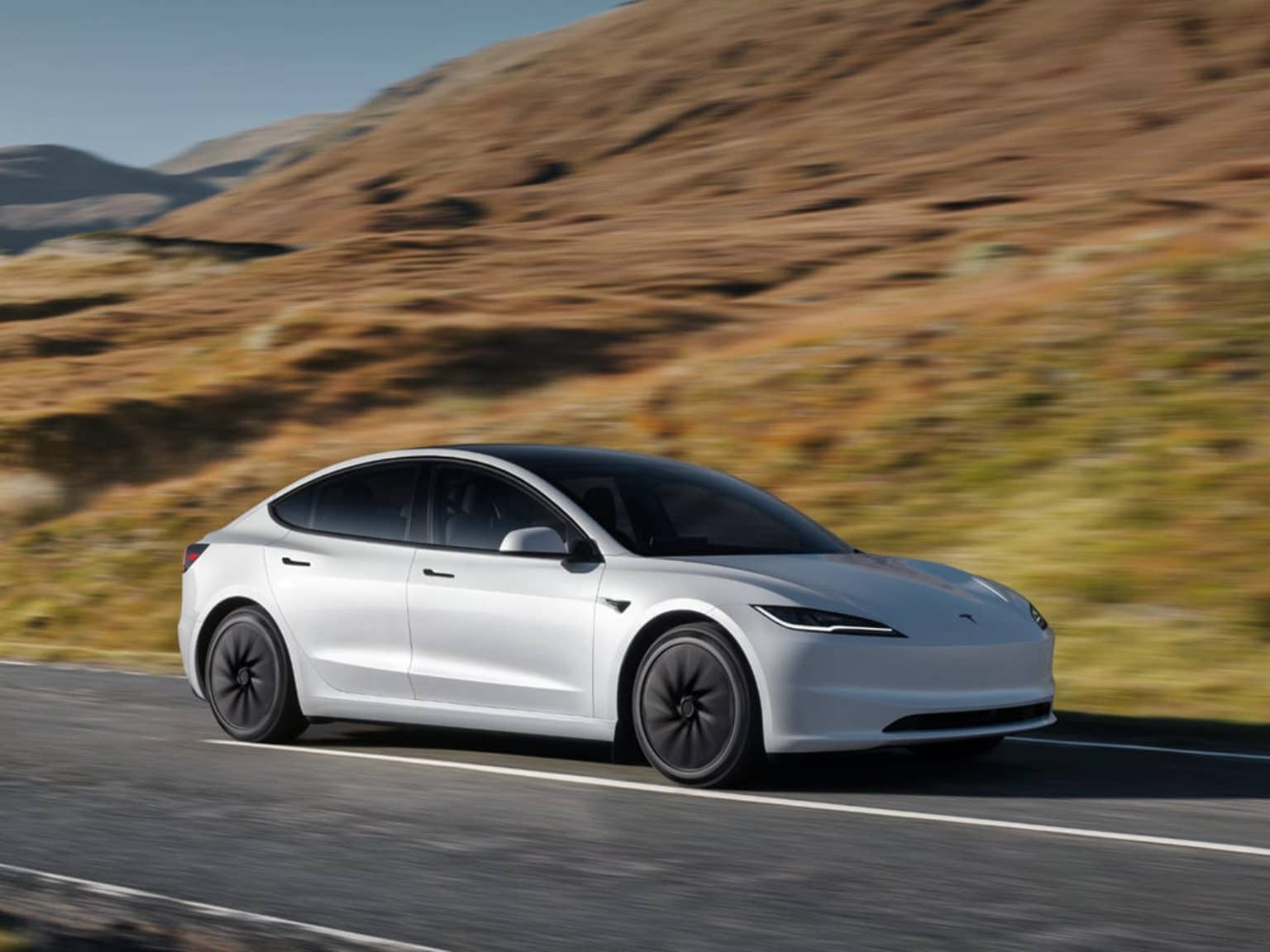
Tesla plans to bring key Cybercab technology to the Model 3 in 2026, introducing a redesigned inverter with fewer electronic components as the automaker looks to simplify vehicle production and reduce manufacturing costs. The changes could eventually benefit other Tesla models, although no broader rollout has been announced.
What Tesla Is Changing in the Model 3
Nick Verzini, Tesla’s head of drive unit engineering, said a new printed circuit board assembly and power stage will enter Model 3 production in 2026.
The components come from the inverter Tesla designed for the Cybercab, which the company has begun building. The development reflects Tesla’s effort to incorporate hardware from its robotaxi program into passenger vehicles.
An inverter converts a vehicle’s battery power from direct current (DC) into alternating current (AC) to drive the motor, making it an important component for efficiency and manufacturing costs.
Verzini said the redesigned inverter has substantially fewer electronic components than the current Model 3 unit, although he did not provide a specific reduction figure. The new design also supports components from multiple suppliers.
When asked whether the entire unit could fit into a Model Y drive unit, Verzini said, “We kept the entire interface.” Tesla has not announced any corresponding changes for the Model Y.
What the Cybercab Technology Means for Tesla Owners
The upcoming Model 3 hardware changes are not currently expected to deliver a noticeable increase in driving range. Reported efficiency, range and pricing figures remain unchanged.
However, using fewer components and allowing parts to come from multiple suppliers could help Tesla build vehicles more simply and at a lower cost. The approach could also reduce the company’s exposure to supply chain volatility, although Tesla has not promised those outcomes.
For the Cybercab, Tesla’s 2025 Impact Report reportedly targets an efficiency level of at least 6.1 miles per kilowatt-hour. That figure is particularly important for a vehicle designed to operate throughout the day.
Cybercab Hardware Changes That May Not Carry Over
Not all of the Cybercab’s engineering changes are confirmed for Tesla’s passenger vehicles.
The robotaxi’s front-mounted motor uses an 11:1 gear ratio, compared with approximately 9:1 in many other Tesla vehicles. It also replaces an electric oil pump with a mechanical one.
Additionally, the motor’s cooling channels are integrated into a lower-cost aluminum housing. Tesla has not confirmed whether these specific design changes will be introduced in other models.
What to Watch as Tesla Introduces the New Design
The Model 3’s planned 2026 inverter update will bring selected Cybercab hardware into a vehicle available to consumers, with a focus on simplifying components and manufacturing.
Whether the changes translate into measurable improvements in real-world reliability, pricing or efficiency remains to be seen.