The competition in the high-performance automotive market is entering an interesting new phase. While Tesla continues to attract attention with ambitious performance claims for its next-generation Roadster, Porsche is taking a different approach to defining what makes a supercar truly special.
Porsche CEO Michael Leiters believes that genuine automotive excellence should come from engineering innovation, mechanical performance, and the connection between a driver and a vehicle. Rather than relying on dramatic demonstrations and attention-grabbing technology, the German automaker wants its future performance cars to stand out through their engineering foundations.
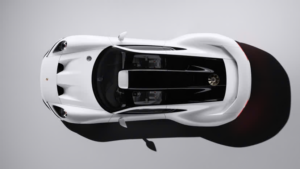
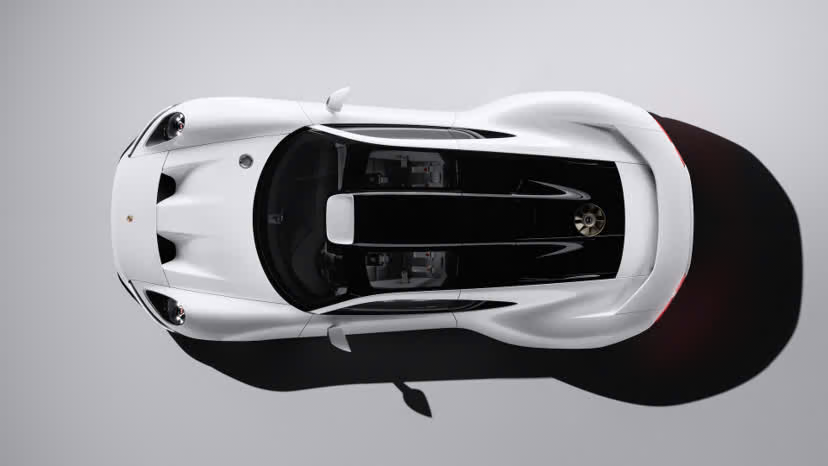
The debate has gained additional attention following Porsche’s unveiling of the Mission S concept, a vehicle that signals the company’s ambitions to compete in a more exclusive segment of the supercar market.
Porsche Believes Engineering Matters More Than Spectacle
For Porsche, building an exceptional supercar involves much more than delivering impressive acceleration figures or creating a memorable launch presentation. The company wants its vehicles to demonstrate their capabilities through carefully developed engineering and an engaging driving experience.
Leiters has made it clear that Porsche does not want to depend on spectacular effects to establish the identity of its future performance models. His position appears to contrast with Tesla’s approach to promoting the upcoming Roadster, particularly its proposed rocket-assisted acceleration technology.
Tesla’s demonstration attracted considerable attention because of its unusual concept and ambitious performance promises. However, Porsche appears more interested in traditional performance fundamentals, including vehicle dynamics, powertrain development, handling, and the relationship between the driver and the machine.
This difference reflects two distinct philosophies about the future of high-performance cars. One emphasizes technological spectacle and extraordinary acceleration, while the other prioritizes engineering depth and the overall driving experience.
Porsche Mission S Signals a New Supercar Ambition
The Mission S concept represents an important part of Porsche’s strategy to move further into the premium supercar segment.
The concept previews a potential new mid-engine performance family positioned above the iconic Porsche 911. This would give the company an opportunity to compete more directly with established exotic-car manufacturers, particularly Ferrari.
Porsche is reportedly targeting a significantly higher price category for this new range. Ferrari’s average selling price, estimated at close to $500,000, provides an indication of the exclusive market Porsche hopes to enter.
The Mission S is therefore more than an exercise in futuristic design. It represents a broader ambition to strengthen Porsche’s position among manufacturers producing some of the world’s most desirable performance vehicles.
A mid-engine layout is particularly important in this context. Positioning the engine behind the driver and ahead of the rear axle can help improve weight distribution and vehicle balance, creating a foundation for the precise handling expected from a serious supercar.
Although the Mission S remains a concept, its direction suggests that Porsche wants to build its next generation of flagship performance vehicles around recognizable sports-car engineering principles.
Michael Leiters Brings Experience From Ferrari and McLaren
Porsche’s current direction is closely connected to the professional background of CEO Michael Leiters.
Before returning to Porsche, Leiters developed extensive experience in the performance automotive industry. He spent approximately 13 years at Porsche, contributing to projects that included the Cayenne Hybrid.
He subsequently joined Ferrari as chief technology officer, spending eight years with the Italian manufacturer. During that period, Ferrari introduced important performance models, including the SF90, 296 GTB, and Purosangue.
Leiters later became CEO of McLaren, where several vehicles were introduced during his leadership, including the 750S.
He returned to Porsche in January 2026 with an ambitious objective: strengthening the brand’s desirability and refining its product strategy.
His experience across Porsche, Ferrari, and McLaren gives him a valuable perspective on what separates an ordinary fast car from a genuinely desirable supercar.
That background also helps explain why Porsche’s latest strategy places considerable emphasis on engineering substance rather than promotional spectacle.
Tesla Roadster Takes a Different Approach to Performance
Tesla’s next-generation Roadster represents a very different vision of the high-performance automobile.
The electric sports car has been associated with extraordinary acceleration targets, including a claimed zero-to-60-mph time of less than 1.6 seconds. Tesla has also discussed the possibility of reducing that figure to under 0.9 seconds through the use of optional thruster technology.
These figures would put the Roadster in an extraordinary performance category if Tesla can achieve them under clearly defined testing conditions.
The company has also presented multiple configurations, including a more extreme Rocket version described as a single-seat model that is not intended for public-road use.
However, the Roadster’s development history has created questions about when customers will actually receive the vehicle.
The project has experienced repeated delays since its original announcement. Production has been discussed for 2028, while earlier expectations for driving range have also changed considerably. Initial claims exceeding 600 miles have given way to figures slightly above 300 miles in later discussions.
The proposed thruster system is another unusual feature. Rather than functioning as a conventional powertrain component, the technology is intended to deliver additional performance in short bursts.
For Tesla, these features demonstrate how electric vehicles could push performance beyond the traditional limits of combustion-powered sports cars.
For Porsche, however, impressive demonstrations alone are not enough to establish a vehicle’s long-term significance.
Porsche Mission S vs Tesla Roadster: Two Different Supercar Philosophies
Although the Porsche Mission S and Tesla Roadster target different approaches to performance, both vehicles highlight how quickly the supercar market is evolving.
Porsche appears committed to a philosophy built around mechanical engagement, precise handling, and carefully engineered powertrains. The Mission S is expected to follow a mid-engine layout and could offer gasoline or hybrid propulsion.
Early information also points toward a driver-focused interior featuring physical controls, fewer touchscreen-dependent functions, and a tachometer capable of displaying engine speeds up to 8,000 rpm.
These details suggest that Porsche wants to preserve the emotional connection traditionally associated with high-performance sports cars.
Tesla, on the other hand, is pursuing extreme acceleration through electric propulsion and experimental technologies. Its Roadster aims to challenge conventional expectations about how quickly a production-oriented performance vehicle can accelerate.
Neither philosophy necessarily represents the only correct direction for the future of supercars.
Electric propulsion offers immediate torque and significant performance potential, while hybrid and combustion-powered systems can deliver different forms of engagement through engine response, sound, and mechanical character.
The real distinction is what each manufacturer believes customers should value most when purchasing an exclusive performance vehicle.
Can Porsche Challenge Ferrari in the Supercar Market?
The Mission S could become an important step in Porsche’s effort to expand beyond its established sports-car lineup.
The Porsche 911 remains one of the most recognizable performance vehicles in the world, but a dedicated mid-engine supercar family would allow the company to explore a different market segment.
Competing with Ferrari requires more than producing a powerful engine or achieving impressive acceleration figures. Brand prestige, exclusivity, design, driving characteristics, and customer experience all contribute to the appeal of an expensive supercar.
Porsche already possesses substantial engineering credibility and a long history of performance development. The challenge will be translating that experience into a vehicle capable of attracting customers who traditionally consider Ferrari and other exotic manufacturers.
The Mission S concept offers an early indication of how the company intends to approach that challenge.
The Future of Supercars Will Depend on More Than Speed
The comparison between Porsche and Tesla highlights a broader question facing the automotive industry: What should define a modern supercar?
For some buyers, extraordinary acceleration and advanced technology represent the ultimate expression of automotive progress. Others place greater importance on handling, engineering precision, driver involvement, and the emotional experience of operating a high-performance machine.
Porsche CEO Michael Leiters appears firmly committed to the second philosophy, even as the company explores new technologies and powertrain possibilities.
Tesla’s Roadster could still become a remarkable performance vehicle if its ambitious specifications translate into a production-ready product. However, Porsche believes that a truly exceptional supercar must deliver more than impressive numbers or spectacular demonstrations.
Ultimately, the Mission S and the next-generation Roadster will need to prove their capabilities on real roads and tracks. Their actual performance, engineering quality, and driving experiences will determine whether their respective philosophies can redefine the supercar market.