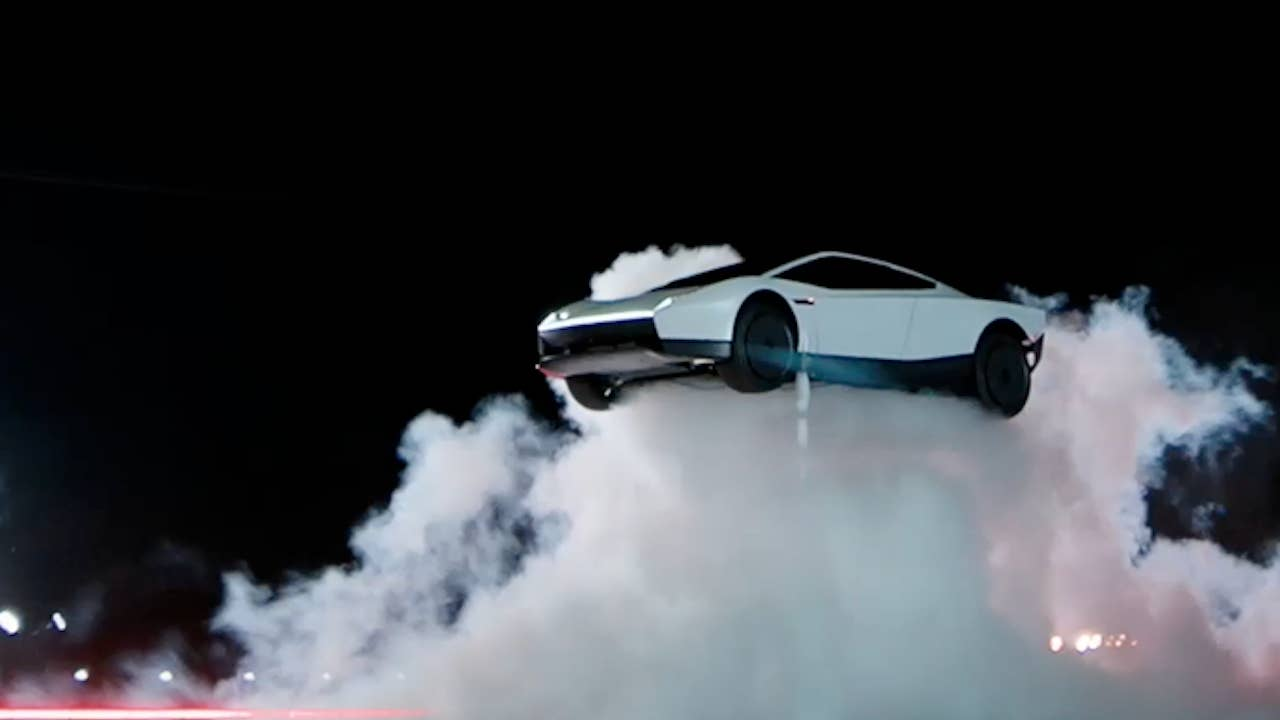
The upcoming Tesla Roadster’s controversial thruster system is facing serious engineering questions after a challenge to Elon Musk’s claim that the electric sports car will be able to recharge its high-pressure thruster tanks without external equipment. The argument centers on whether the Roadster can actually deliver one of its most publicized features, given the enormous energy requirements, hardware limitations and additional weight.
The challenge includes a personal wager that the self-recharging system will never make it into production. The bet involves a full J.C. Penney photoshoot wearing Tesla gear and focuses on the technical feasibility of the feature rather than the company’s production schedule.
Why Tesla’s Roadster Thruster System Faces an Energy Problem
The main challenge involves the enormous amount of electricity required to compress nitrogen for the vehicle’s high-pressure thrusters.
Compressing 550 pounds of nitrogen to 10,000 PSI requires a theoretical minimum of 35.5 kilowatt-hours of energy.
That figure does not account for real-world compressor inefficiencies, friction and heat generation. Once those factors are included, the required energy could reach 70 kilowatt-hours or more.
Such consumption would use a substantial portion of the Roadster’s battery capacity simply to recharge the system for another five seconds of thrust.
These energy requirements raise serious questions about the practicality of independently replenishing the thruster system while driving.
An Onboard Compressor Could Add Significant Weight
Energy consumption is not the only obstacle. The physical size and weight of the equipment needed to compress nitrogen at such high pressures present another major engineering challenge.
Recharging the storage tanks within 30 minutes would require an industrial compressor capable of drawing approximately 70 kilowatts. Such equipment would be extremely large and heavy.
A smaller 15-kilowatt compressor would offer another option, but it would need to operate for approximately five hours to restore the system’s pressure.
That would mean carrying a compressor that runs for hours just to provide another few seconds of thrust, creating additional practical and engineering challenges.
Tesla Roadster Weight Could Exceed 5,200 Pounds
The proposed thruster hardware could also significantly increase the Roadster’s overall weight.
A Tesla executive previously claimed that the base Roadster would weigh less than 3,750 pounds. However, the high-pressure composite storage tanks alone are estimated to weigh 770 pounds.
Adding another 550 pounds of nitrogen, along with the required fans and piping, could push the vehicle’s total weight beyond 5,200 pounds.
That projected figure raises questions about how the additional equipment would affect the handling characteristics expected from a premium sports car.
High-Pressure Thrusters Could Create Dangerous Noise Levels
Noise is another concern surrounding the proposed system. Releasing nitrogen stored at 10,000 PSI could generate sound levels exceeding 140 decibels.
At that intensity, exposure could cause immediate hearing damage to people nearby, creating another challenge for using the system in public areas.
Given the energy, weight and equipment requirements, dedicated filling stations located away from the vehicle could become necessary instead of relying on an onboard compressor.
Questions Remain Over Tesla Roadster’s Self-Recharging System
The debate centers on the claim that the Roadster would be able to recharge its high-pressure thruster tanks independently, allowing the vehicle to “puff itself up” for additional maneuvers.
The engineering calculations highlight the challenges associated with the proposed system, particularly its electricity consumption, equipment size, added weight and noise levels.
For now, the feasibility of onboard thruster recharging remains unproven, while the technical challenges continue to raise questions about whether the feature will reach production.