BMW has revealed a little-known chapter in its performance history: a secret M7 prototype developed nearly 30 years ago but never released for production. The experimental 7 Series features the powerful V8 engine from the E39 M5, a six-speed manual transmission and subtle performance upgrades that could have made it a unique flagship sports sedan.
BMW M Developed an M5-Powered 7 Series Prototype
During the 1990s, BMW began expanding the ambitions of its M division. The second-generation M3 was followed by the third-generation E39 M5, while the BMW M Coupe was also under development.
Despite these performance projects, the full-size 7 Series never received a dedicated M version. BMW has now revealed that engineers explored the idea and developed a prototype that remained hidden for decades.
Under the hood, the experimental M7 uses the 4.9-liter S62 V8 engine taken directly from the E39 M5. The engine produces 394 horsepower, giving the large sedan a significant performance upgrade.
However, the engine choice was unusual because BMW already offered the 7 Series with a 5.4-liter V12. Although the V8 produced more horsepower, it had four fewer cylinders than the existing flagship engine.
The prototype raises questions about why engineers chose the M5’s V8 instead of developing the M73 V12 to produce more than 400 horsepower.
Subtle Exterior Changes Hide the M7’s Performance Upgrades
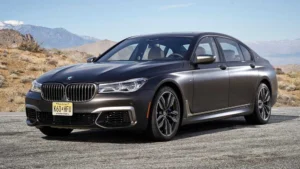
Unlike modern high-performance sedans with aggressive body kits and prominent styling details, the experimental M7 follows the understated design approach associated with BMW M models during the 1990s.
Its most noticeable exterior features include four exhaust tips and larger brakes positioned behind thin-spoke wheels. These details provide subtle clues about the car’s performance-focused engineering without dramatically changing the standard 7 Series appearance.
Most of the modifications are difficult to notice unless someone examines the vehicle closely while it is parked.
The Secret BMW M7 Prototype Has a Six-Speed Manual
One of the most surprising features of the prototype is its six-speed manual transmission. The gearbox gives the experimental 7 Series a level of driver involvement that would be unusual for a flagship luxury sedan today.
However, manual transmissions were not entirely unfamiliar to this generation of the 7 Series. BMW offered manual gearboxes in several versions, including the entry-level 143-horsepower 2.5-liter diesel.
Some higher-powered models were also available with manual transmissions, including cars equipped with the 3.5-liter V8 and certain 4.0-liter and 4.4-liter 740i engines.
BMW Later Introduced M Performance Versions of the 7 Series
Although the experimental M7 never reached production, BMW eventually introduced more powerful versions of its flagship sedan through its M Performance lineup.
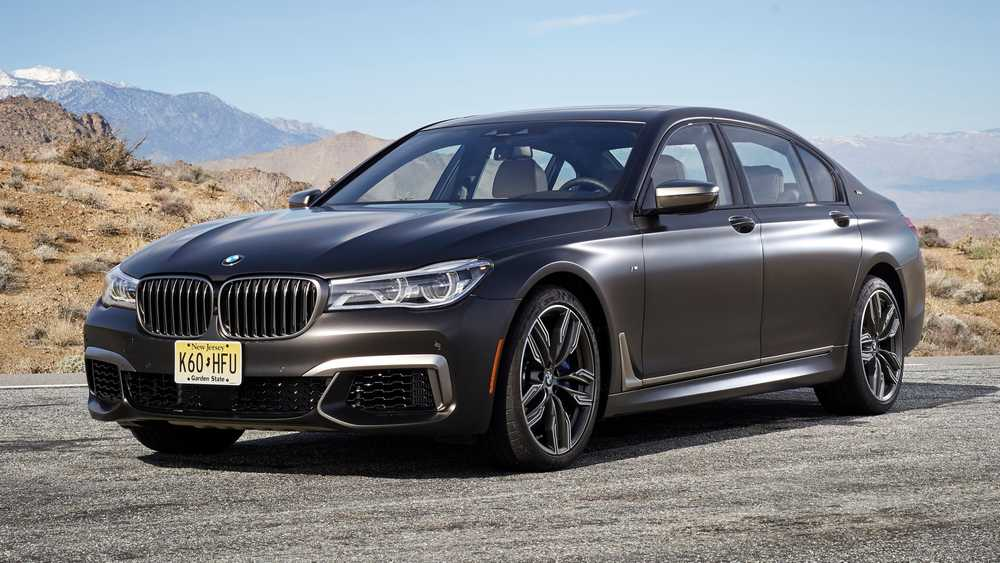
The M760Li arrived in 2017 with a 6.6-liter twin-turbocharged V12 producing 601 horsepower. It also featured an M-tuned transmission, upgraded M brakes and a sport exhaust system.
More recent versions of the 7 Series have continued the performance approach. The lineup includes the M760e, which combines an inline-six engine with a plug-in hybrid system, and the i7 M70, which produces 650 horsepower from two electric motors.
Neither model offers a manual transmission.
BMW Previously Offered a 600-HP V12 7 Series
BMW came particularly close to delivering an M-inspired flagship with the M740Li xDrive, introduced for the 2017 model year and available through the end of the 2022 model year.
Although it was not a traditional M car, the sedan featured a 6.6-liter twin-turbocharged V12 producing 600 horsepower and 590 lb-ft of torque. It lacked several conventional M upgrades, including a manual transmission and stiffer suspension.
Performance was still impressive, with acceleration from zero to 60 mph taking just 3.6 seconds. The M Performance Package also unlocked a top speed of 190 mph, compared with 155 mph without the package.
Why BMW Abandoned the V12 in Its Flagship Sedan
Stricter emissions regulations and fuel economy standards eventually led BMW to discontinue the V12 engine in its flagship sedan.
The engine has not disappeared entirely, however. It is now reserved for Rolls-Royce models rather than BMW’s 7 Series lineup.
Although the secret M7 prototype never became a production car, its unveiling reveals that BMW’s M division once explored creating a high-performance version of the flagship sedan, complete with an M5 V8 engine and a six-speed manual transmission.