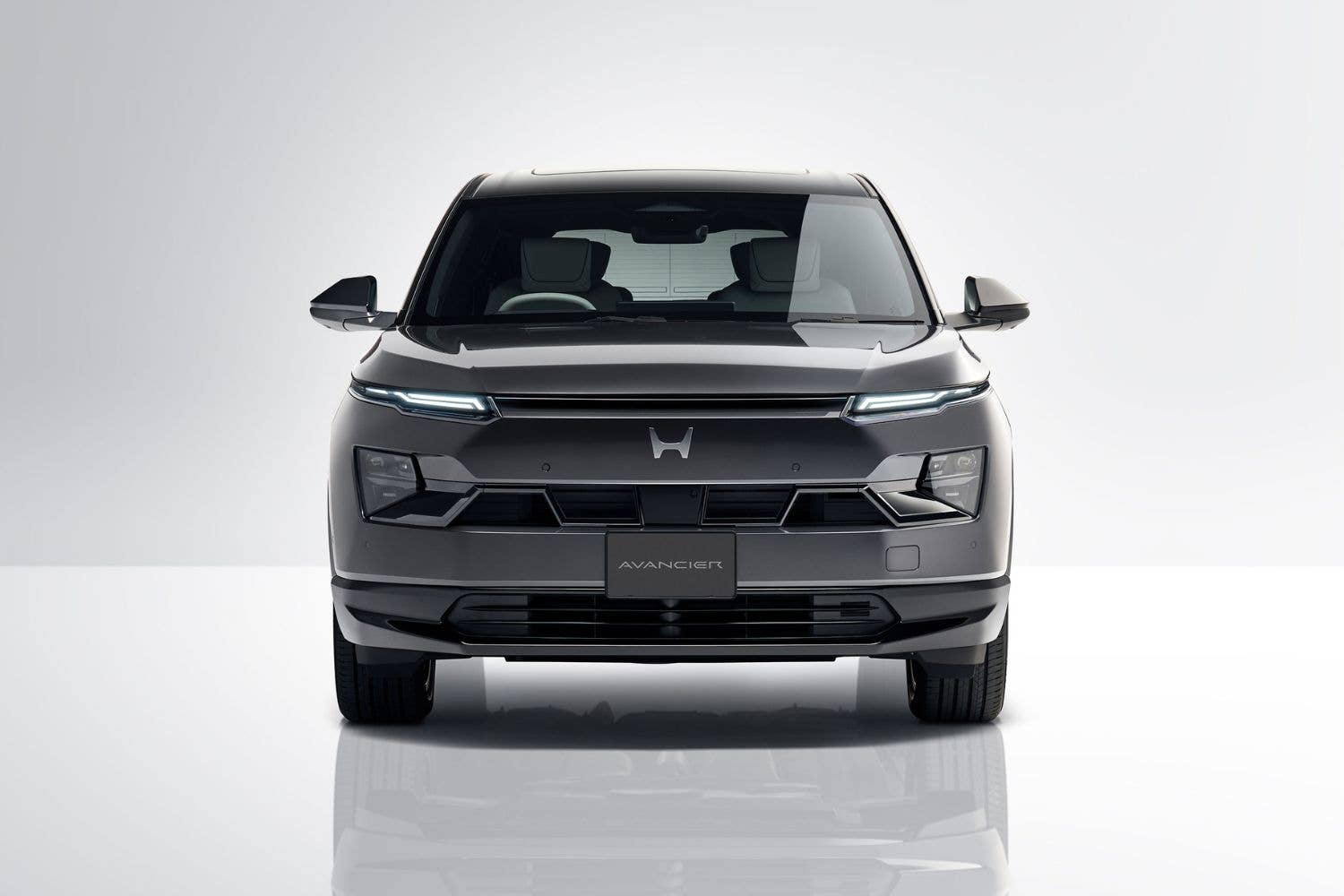
Honda is preparing a new generation of hybrid vehicles built around a flexible modular platform designed to support everything from compact SUVs to larger sedans. Scheduled to make its global debut in 2027, the architecture will introduce a shared vehicle structure alongside upgraded hybrid technology, with the returning Honda Avancier nameplate currently the only officially announced model.
The new platform represents a major part of Honda’s plans for its upcoming hybrid lineup. It is designed to simplify vehicle development and manufacturing while allowing different models to maintain their own dimensions, driving characteristics and practical features.
Honda Introduces a Modular Platform for SUVs and Sedans
Honda’s new architecture is designed to accommodate vehicles across multiple segments, including C-segment crossovers and D-segment sedans. The platform can support different ride heights and driving positions, allowing the automaker to use a common foundation for a wider range of vehicles.
The structure divides each vehicle into five modules connected through three standardized dimensions. This approach is intended to make it easier to share components and technologies across different models.
Although the next Honda Accord could potentially benefit from the shared architecture, the Avancier remains the only model officially identified for the new platform.
New Platform Aims to Reduce Weight and Manufacturing Complexity
Honda is also focusing on improving manufacturing efficiency through greater parts sharing. The platform uses a common engine bay across different vehicle types, while the battery pack is positioned beneath the second-row seats in both SUVs and sedans.
This standardized layout is intended to simplify production while helping maintain vehicle rigidity and reduce unnecessary weight.
Despite sharing major structural components, the platform is designed to give individual models distinct appearances, driving characteristics and levels of practicality.
Honda’s Next-Generation Hybrid System Targets Better Fuel Economy
The modular architecture will work alongside Honda’s next-generation two-motor hybrid system. The automaker is updating the engine, control technology and other components to improve both efficiency and performance.
Honda is targeting at least a 10% improvement in fuel economy compared with its 2018 lineup. However, that figure has not been finalized.
The combination of the new platform and upgraded hybrid technology is expected to form the foundation of Honda’s upcoming SUVs and sedans.
DualPower eAWD Could Expand to Future Honda SUVs
Another technology planned for the next generation of hybrids is DualPower eAWD, Honda’s electric all-wheel-drive system. The setup sends power to both axles, offering an additional drivetrain option for future models.
Honda has not confirmed which vehicles will receive the technology. However, some future SUVs could feature electric all-wheel drive.
Honda S+ Shift Technology Will Expand to More Models
Honda also plans to expand the availability of its S+ Shift technology, which is already featured in the Prelude and more recently the Civic.
The system simulates gear changes through coordinated engine and electric motor control. It can also reproduce downshift-like behavior during deceleration, creating a driving experience that differs from conventional hybrid acceleration.
Paddle shifters provide an additional way for drivers to select gears more conventionally, adding another element of driver involvement.
Honda Avancier Leads the Upcoming Hybrid Generation
The returning Avancier nameplate is currently the only model officially associated with the new platform. However, the architecture has been designed to support a broader range of SUVs and sedans.
With a global debut scheduled for 2027, Honda’s upcoming vehicle generation will combine a modular structure, a next-generation two-motor hybrid system and technologies such as DualPower eAWD and S+ Shift.
The new platform is intended to give Honda a shared technical foundation for future hybrid models while preserving the individual characteristics of each vehicle.