
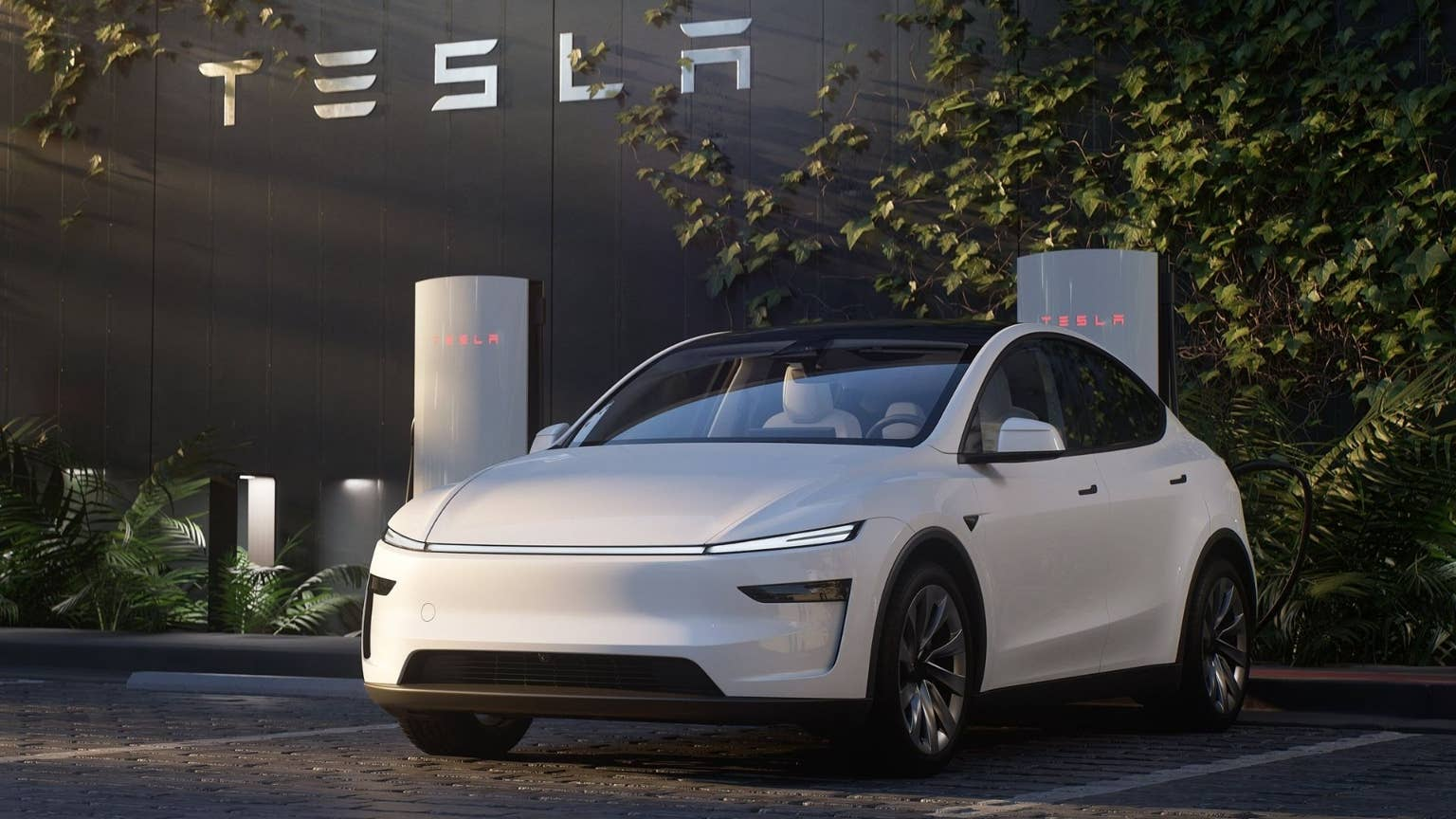
Tesla has announced Full Self-Driving (FSD) V15, introducing a redesigned Reality View that gives drivers a more detailed, game-like representation of their vehicle’s surroundings. The update also brings improvements to object detection and safety-related capabilities, while introducing technology that could benefit the company’s Robotaxi and Optimus programs.
The new interface represents a significant departure from previous FSD visualizations, replacing predominantly dark backgrounds and simplified vehicle shapes with a more realistic digital reconstruction of the surrounding environment. Tesla CEO Elon Musk compared the experience to the popular Grand Theft Auto gaming franchise.
Tesla FSD V15 Introduces a New Reality View
One of the most noticeable features of Tesla FSD V15 is its upgraded Reality View, which digitally recreates the environment around the vehicle in a highly detailed format.
Earlier versions of the system relied on darker visual backgrounds and displayed surrounding vehicles as basic, box-shaped objects. The new interface provides a more detailed representation of what the vehicle perceives.
Musk likened the redesigned visualization to Grand Theft Auto, a gaming franchise he had previously criticized because of its violent content.
The interface also introduces floating chevrons that indicate upcoming turns, creating a navigation experience similar to BMW’s Augmented View feature. According to Musk, drivers and passengers can also select specific destinations directly within the visualization, making navigation more intuitive.
Another reported improvement is reduced computing demand. Despite its more detailed graphics, the updated Reality View reportedly requires less computing power than its predecessor.
Tesla Claims Major Safety Improvements With FSD V15
Beyond the redesigned interface, Tesla says FSD V15 delivers substantial improvements in safety-related performance. The company claims the system is 25 times better at handling safety-critical situations and nine times safer than a human driver.
However, Tesla has not provided details about the specific methodology used to calculate these V15 performance claims. The reported improvements could support the company’s efforts to obtain wider approval in Europe, particularly amid scrutiny over its previous safety statistics.
Some of the improvements are attributed to an upgraded vision encoder shared across Tesla’s Full Self-Driving system, Robotaxi and Optimus programs.
Tesla also claims the updated technology improves the detection of potholes, animals, road debris, traffic signs and standing water. These enhancements are intended to improve the system’s perception of road conditions and surrounding objects.
FSD V15 Requires Tesla’s Hardware 4 Computer
Musk previously confirmed that FSD V15 would operate on Tesla’s AI4 computer, also known as Hardware 4 (HW4).
As a result, older Tesla vehicles equipped with Hardware 3 could miss out on the latest features and functionality introduced with the update.
Despite the technological improvements, Full Self-Driving remains a Level 2 driver-assistance system. Drivers must continue supervising the vehicle at all times, placing Tesla’s technology in the same classification as General Motors’ Super Cruise and Ford’s BlueCruise.
In the United States, Tesla offers FSD through a $99 monthly subscription. The company discontinued its one-time purchase option earlier this year.
How FSD V15 Could Benefit Tesla Robotaxi and Optimus
The upgraded vision encoder could have implications beyond privately owned Tesla vehicles. Because FSD, Robotaxi and Optimus share the same vision technology, improvements in visual perception could also benefit the company’s autonomous ride-hailing fleet.
Better environmental detection could potentially make the Robotaxi service safer and more reliable. The Cybercab is already commercially operational in parts of Texas, although the two-seat robotaxi continues to face federal scrutiny over its self-certification.
Tesla’s broader artificial intelligence ecosystem could become increasingly interconnected as development continues across its different programs.
The company is targeting commercial deliveries of its Optimus humanoid robot around the end of 2027, adding another major component to its planned AI ecosystem.
Tesla FSD V15 Combines New Visualization With AI Development
With FSD V15, Tesla is combining a more detailed driving visualization with reported improvements in object detection and safety-related capabilities. The shared vision encoder also connects developments in the driver-assistance system with the company’s Robotaxi and Optimus projects.
For Tesla owners, the update introduces a redesigned navigation experience reminiscent of Grand Theft Auto, while the company’s broader technology development continues across its vehicles and robotics programs.