
BMW has discontinued its Personal Pilot L3 autonomous driving option for the 7 Series and i7 following their mid-cycle facelift, citing limited customer demand. The decision reflects growing competition from advanced Level 2+ and Level 2++ driver-assistance systems, which offer more affordable hands-off driving capabilities at significantly higher speeds.
Why BMW Discontinued Its Level 3 Driving System
BMW development chief Dr. Joachim Post explained that insufficient customer interest was the main reason behind the decision. According to Post, buyers comparing the capabilities and prices of today’s Level 2+ and Level 2++ systems have little incentive to pay more for Level 3 technology.
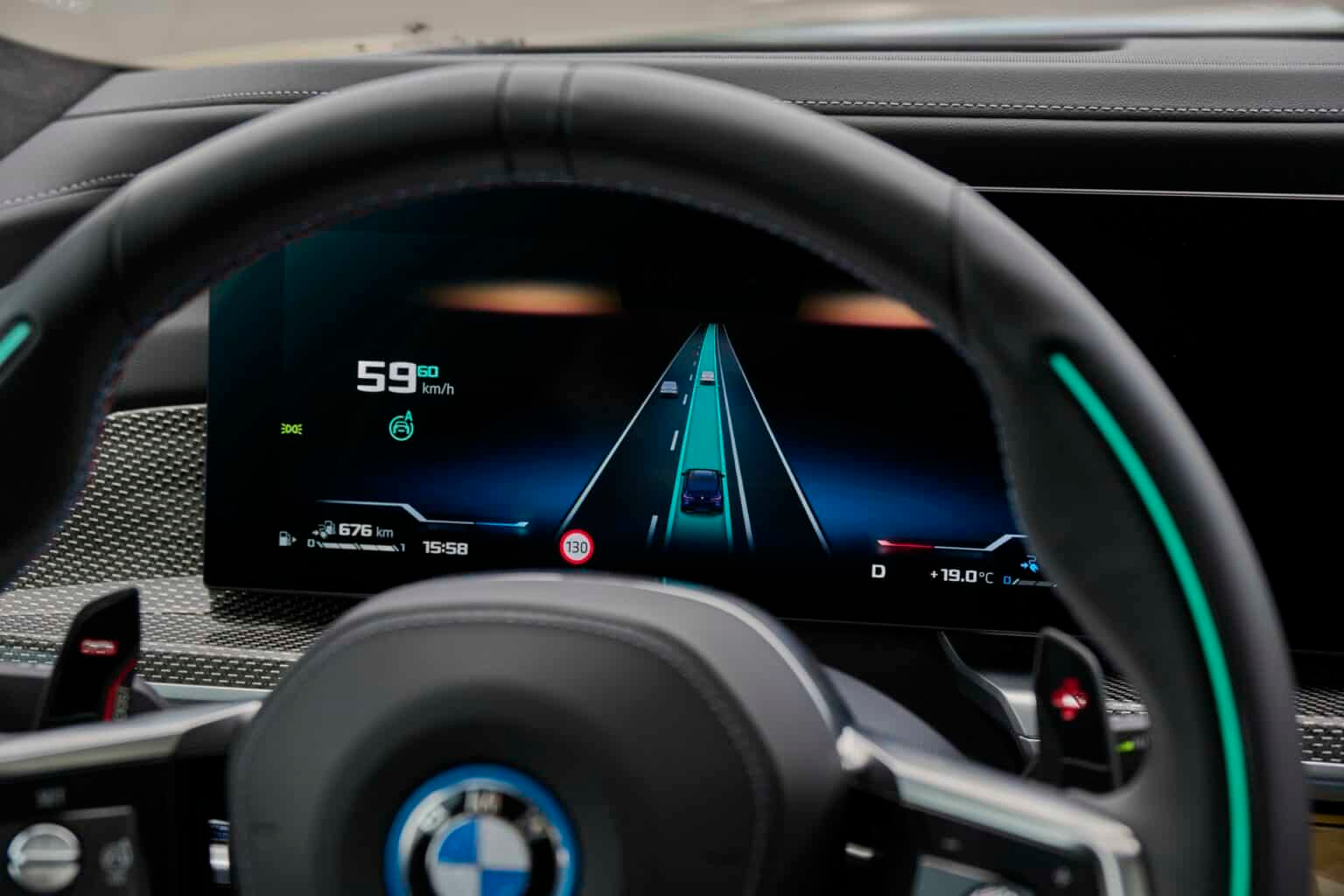
The previous Personal Pilot L3 system available for the 7 Series allowed drivers to take their eyes off the road on approved highway sections, but only at speeds of up to 37 mph (60 km/h). The option also carried a price of approximately €6,000.
By comparison, BMW’s Highway Assistant offers a broader range of capabilities. Introduced in late 2023 on the 5 Series, the system has since expanded across the lineup, allowing drivers to take their hands off the steering wheel indefinitely at speeds of up to 81 mph (130 km/h).
The system also allows drivers to confirm suggested lane changes with a simple glance at the mirror, making it a more practical option for customers seeking advanced driving assistance.
Level 2++ and Level 3 Have Different Responsibilities
Despite their similar hands-off capabilities, Level 2++ and Level 3 systems operate under different rules. With Level 2++, the driver remains legally responsible for driving and must continuously monitor traffic.
Level 3 technology, on the other hand, allows the vehicle to take over the driving task under specific conditions. However, drivers must remain ready to regain control whenever the vehicle requests it.
Although this distinction represents a significant difference in the technology’s capabilities, its practical value becomes more limited when Level 3 operates only in slow-moving traffic.
Why Level 3 Autonomous Driving Is Expensive
The cost of developing and installing Level 3 technology is another challenge for automakers. These systems require additional hardware, including LiDAR sensors, extra cameras and radar equipment.
They also need redundant braking, steering, power supply and control units to ensure that a single component failure does not result in a loss of control.
Post acknowledged that not every customer will be willing to pay for the additional hardware required to support Level 3 autonomous driving.
BMW Continues Developing Level 3 Technology
Despite removing Personal Pilot L3 from the 7 Series and i7 order books, BMW has not abandoned Level 3 autonomous driving development. The company still expects that some vehicles will eventually require the technology, although it does not anticipate widespread demand.
Regulatory challenges remain a major obstacle, while China is expected to take the lead in advancing the technology. BMW is therefore working with Chinese technology partners to remain closely connected to developments in that market.
For the broader automotive market, Post believes advanced Level 2 systems will become the standard because of their value and capabilities.
Level 2 Systems Remain BMW’s Priority for the Mass Market
BMW’s decision highlights the commercial challenges facing Level 3 autonomous driving. While the technology offers drivers the ability to transfer driving responsibilities to the vehicle under certain conditions, its limited operating range and higher costs make it less attractive compared with advanced Level 2 alternatives.
For now, BMW continues to develop Level 3 technology while focusing on the growing appeal of Level 2 systems. Lower hardware costs, regulatory progress and higher operating speed limits remain important factors in determining how widely eyes-off driving technology will be adopted.