
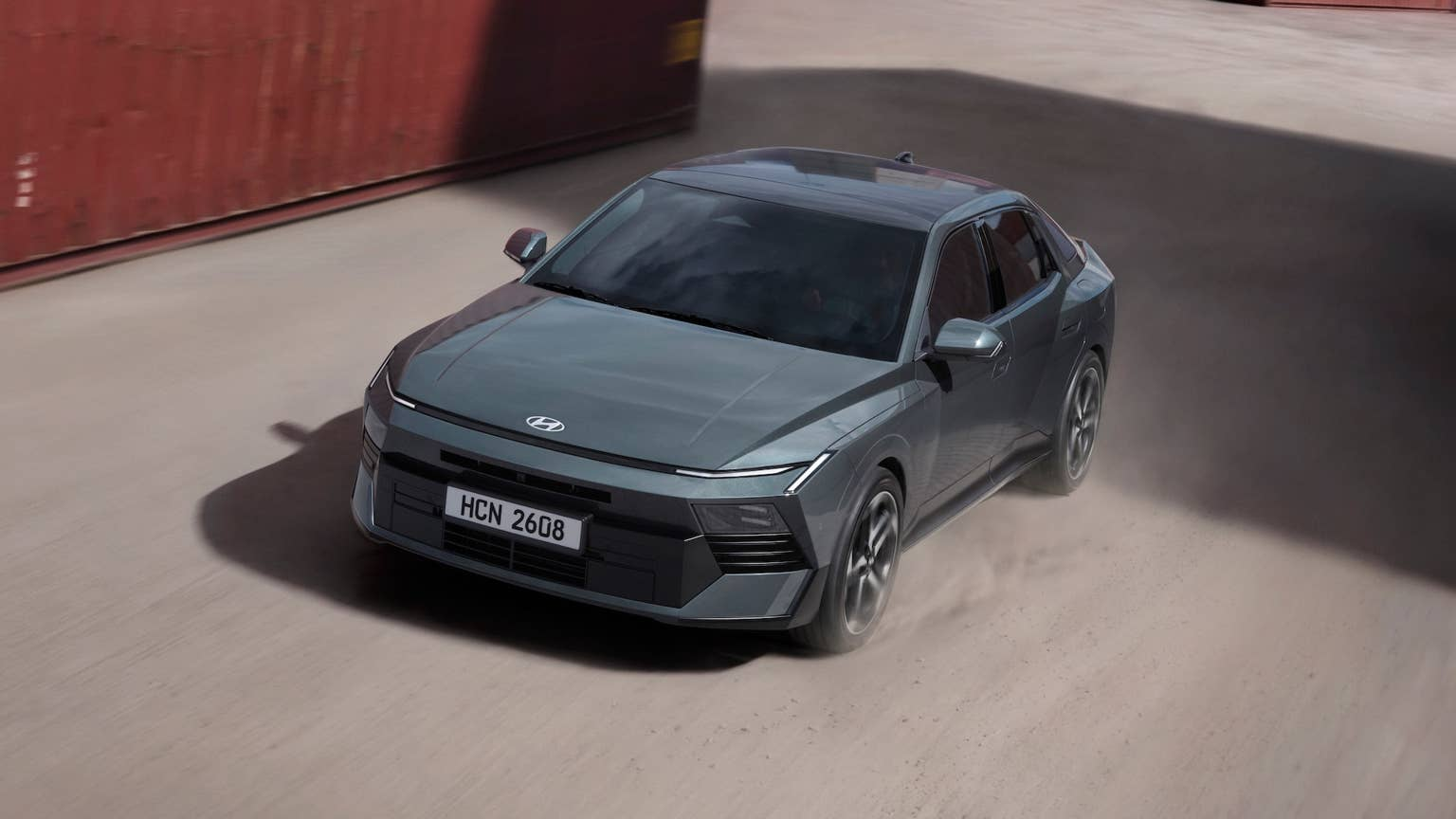
The redesigned 2027 Hyundai Elantra could have looked very different. Hyundai’s design team seriously considered giving the compact sedan a fastback profile with a full rear liftback hatch, along with a possible station wagon version. However, concerns about passenger space, added weight, structural reinforcement and production costs ultimately led the automaker to retain a conventional trunk.
Hyundai Explored Liftback and Wagon Versions
As the 2027 Elantra prepares to reach showrooms, its sweeping, coupe-like roofline raises the possibility of a more practical rear hatch. Hyundai’s designers considered that option in March 2023, exploring a fastback design with a full liftback opening.
A station wagon configuration was also discussed during the design process. However, a shorter five-door hatchback similar to the discontinued Elantra GT was never considered.
Despite exploring several body styles, Hyundai ultimately decided that a traditional three-box sedan offered the best balance of practicality, interior space and affordability.
Why Hyundai Rejected the Elantra Liftback
Hyundai Design Center head Simon Loasby explained that extending the rear hatch opening all the way to the roof would create significant packaging challenges.
The heavy hinges required for a full liftback would take up space inside the cabin, reducing rear headroom for passengers seated three across. Because Hyundai prioritized interior room in the redesigned Elantra, retaining a fixed rear deck allowed engineers to maximize rear legroom, headroom and shoulder room.
Designers still found a way to create a wider-than-expected trunk opening. They used black trim to give the rear glass the visual appearance of extending farther into the fastback-style roofline.
There were also engineering disadvantages to cutting a large opening into the rear structure. Maintaining structural rigidity would have required additional chassis reinforcement, stronger hinges to support the heavier metal-and-glass hatch, and more sound-deadening material to address road noise and sealing vibrations.
Those changes would have added weight and increased manufacturing costs, creating a challenge for a compact car expected to start below $25,000.
Affordability Takes Priority Over a Niche Body Style
A liftback or wagon version could have offered additional practicality, but Hyundai’s decision reflects the importance of keeping the Elantra affordable.
With SUV buyers returning to sedans largely to escape higher vehicle prices, maintaining the Elantra’s starting price below $25,000 became a more important priority than pursuing a less common body style.
Keeping the rear structure rigid, lightweight and quiet also offers benefits beyond affordability. A conventional sedan structure provides a stronger foundation for the upcoming next-generation Elantra N.
Although the 2027 Hyundai Elantra will not receive the liftback or wagon configurations explored during development, the decision preserves the interior space and cost targets Hyundai prioritized for the redesigned sedan.