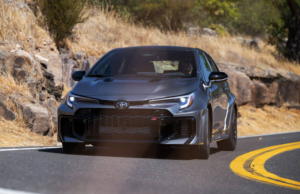

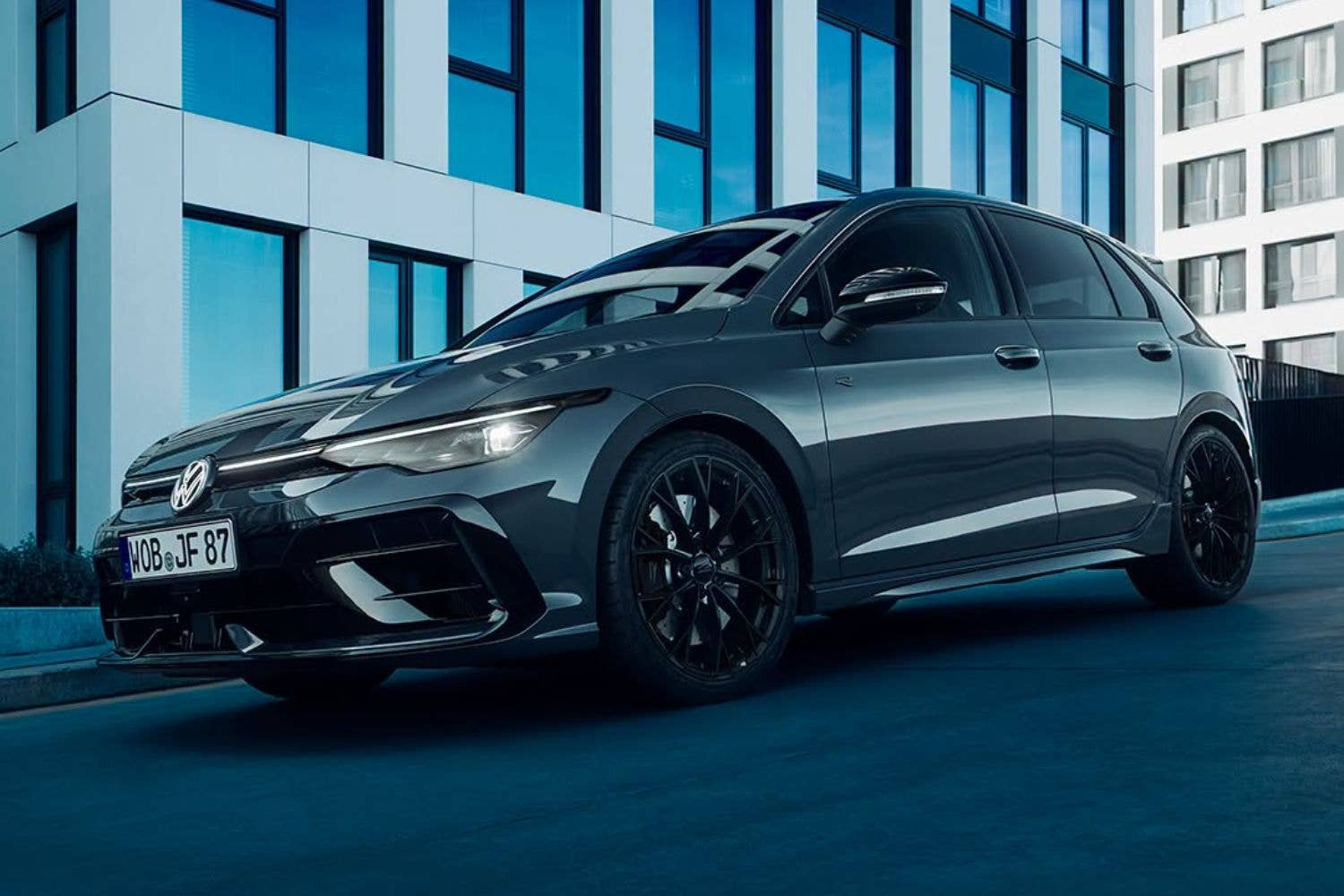
The 2028 VW Golf R is expected to deliver more torque, quicker acceleration and improved fuel efficiency as Volkswagen prepares its high-performance hatchback for stricter European emissions regulations. The updated model will retain a gasoline-powered engine, with an electrically driven supercharger and a revised turbocharged powertrain designed to improve performance while reducing emissions.
Volkswagen’s head of R products, Reinhold Ivenz, said the Golf R will change in the middle of next year to comply with Euro 7 emissions regulations. Although improving efficiency is a primary goal, Ivenz also said the new powertrain will deliver more power, referring specifically to torque, from zero rpm and outperform the current Golf R.
2028 VW Golf R: A New Turbocharged Powertrain
The revised Golf R is expected to use a 2.0-liter four-cylinder eTSI EA888 engine closely related to the evo5 powertrain recently unveiled in the T-Roc R. The updated engine is designed to deliver more torque at lower engine speeds, with an electrically driven supercharger helping reduce turbocharger lag.
The system also includes a 48-volt mild-hybrid starter-generator that replaces the conventional alternator. An electrically powered compressor works alongside a new variable-geometry turbocharger, helping the engine make better use of its increased fuel pressure.
Volkswagen is targeting fuel injection pressure of 500 bar, approximately 7,251 psi, for the revised Golf R’s engine. That figure exceeds the 350 bar, or roughly 5,076 psi, direct-injection pressure used by the 3.0-liter twin-turbo V6 in the Ferrari F80 hypercar.
High fuel pressure is an important part of improving the atomization of air-fuel mixtures, helping produce a cleaner burn in modern high-performance turbocharged engines.
What the T-Roc R Reveals About Golf R Performance
The T-Roc R provides an indication of what Volkswagen’s updated powertrain could deliver. Its peak torque arrives at 1,900 rpm, compared with 2,100 rpm in the previous evo4 engine.
The crossover produces 328 horsepower, the same peak output as before, but its 310 lb-ft of torque exceeds the Golf R’s 295 lb-ft. The Golf R is likely to benefit from a similar increase in torque, although its final specifications have not been announced.
The revised engine also features an iron block designed around the Miller combustion cycle. This approach closes the intake valves early during the intake stroke, helping cool the air inside the cylinders before compression begins.
As the air expands and cools, combustion temperatures can be reduced more efficiently than by deliberately running a rich air-fuel mixture, which involves injecting additional fuel into the combustion chamber.
Volkswagen Targets More Efficient Combustion
With these changes, Volkswagen is targeting stoichiometric combustion, represented by λ=1, or an ideal air-fuel ratio of approximately 14.7:1 for gasoline. Other fuels have different energy densities.
Also known as theoretical combustion, this process means the engine is expected to burn all the oxygen and gasoline entering the cylinder. The goal is to avoid running lean, represented by λ > 1.0, which can potentially cause engine knock, or running rich, represented by λ < 1.0, which wastes fuel.
The combination of higher fuel pressure, the Miller combustion cycle and the electrically driven compressor is intended to help Volkswagen achieve its efficiency targets while maintaining the performance expected from its R models.
Gas-Powered Golf R and GTI Set to Continue
Volkswagen’s approach is expected to keep the Golf GTI and Golf R gasoline-powered for years to come. Although emissions regulations in the United States are less stringent than those in Europe, the improvements could still benefit American buyers through stronger acceleration from a standstill and lower fuel consumption.
The expected efficiency gains could also have implications for Volkswagen’s broader Golf lineup. Greater efficiency in the regular GTI and R could potentially make room for the rumored five-cylinder Golf, although no confirmation of such a model has been provided.
For now, Volkswagen is preparing the Golf R for its next powertrain update, with the focus on combining improved emissions performance, greater low-speed torque and continued gasoline-powered performance.