

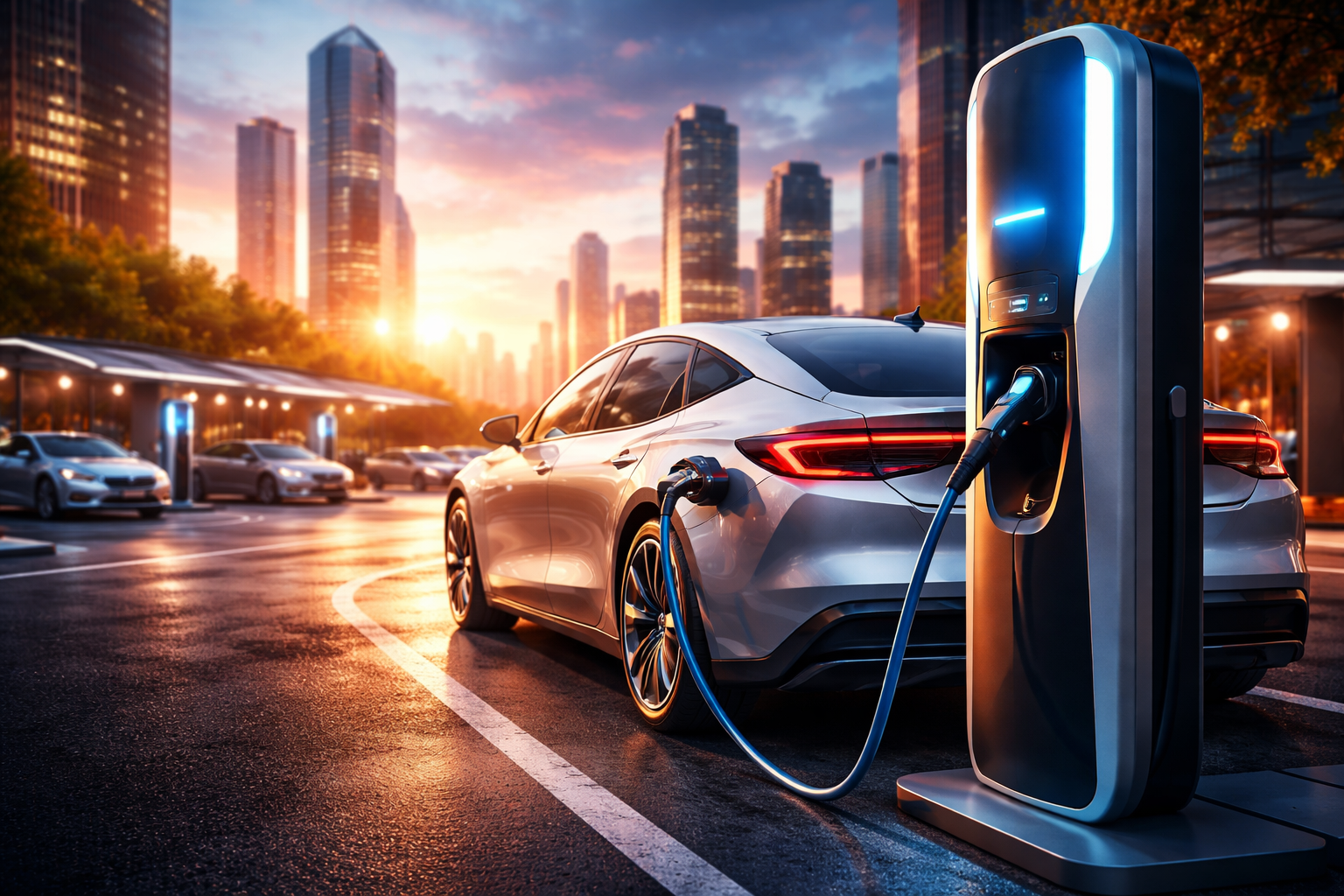
The automotive world is shifting gears faster than ever. In 2026, the impact of revolutionary electric cars is no longer a futuristic prediction—it’s a tangible force reshaping factories, roads, and consumer choices across the globe. From Tesla’s Model 3 Highland refresh to Volkswagen’s mass-market ID.2all, electric vehicles (EVs) are redefining what it means to drive, own, and design a car.
Global EV Growth: Numbers That Matter
The electric vehicle revolution isn’t hype—it’s backed by concrete data:
- Projected global EV sales in 2025: 20.7 million units, with battery-electric vehicles (BEVs) at 15.1 million.
- EVs expected to reach 27.5% of global light-vehicle sales by 2026 and over 80% by 2040.
- Europe’s BEV share of new car registrations in early 2026: 18.8%.
- China dominates the market, producing 71% of all EVs sold globally.
- U.S. EV share in 2025: ~7.5%–11%, with regional variation influenced by federal and state incentives.
Technological Innovations Driving the Revolution
Battery Advancements
Battery technology is central to EV adoption:
- Battery costs projected to drop to $80 per kWh by 2026, narrowing the price gap with gasoline cars.
- Solid-state batteries from Toyota, Nissan, and BMW promise 50% longer range, half the charging time, and lifespans exceeding one million kilometers.
Performance and Efficiency
EV drivetrains offer instant torque and smoother acceleration, while software updates and autonomous-driving integration are turning cars into connected platforms rather than mere vehicles.
Infrastructure Expansion
Charging networks are catching up with demand:
- U.S. government investing $5 billion over five years in DC fast-charging infrastructure.
- Private networks and public investments are improving accessibility, though rural and low-income areas remain underserved.
The Pros and Cons of Revolutionary EVs
Advantages
- Lower emissions: EVs reduce tailpipe CO₂, especially with clean energy grids.
- Cost efficiency: Less maintenance, no oil changes, cheaper per-mile electricity.
- Innovative design: Flexible interiors, new business models like V2G and over-the-air software updates.
Challenges
- High upfront cost: Despite falling battery prices, EVs remain pricier than ICE vehicles, with resale uncertainty.
- Infrastructure gaps: Uneven charging availability can create “range anxiety.”
- Policy volatility: Shifts in incentives, tariffs, and regulations can disrupt markets quickly.
- Supply-chain disruption: Transition threatens ICE supply chains while demanding new EV skills.
Consumer Trends and Market Insights
Buyers are now asking, “Does this EV work for me?” rather than focusing solely on sustainability. Market consolidation is underway, and automakers must compete beyond subsidies to attract mainstream buyers.
Examples in the Market
- Tesla Model 3 Highland & Model Y: Efficiency upgrades, autonomous integration.
- Volkswagen ID.2all: Affordable mass-market EV with sportier variants.
- Toyota solid-state prototypes: First production-ready models expected by late 2026.
FAQ: What Consumers Want to Know
Are EVs really cheaper to own than gas cars?
Ownership costs are approaching parity in many regions, factoring in electricity, maintenance, and insurance. Upfront prices are higher but total-cost-of-ownership is improving.
When will EVs cost the same as regular cars?
Battery-cost parity is near in some segments, though timing depends on incentives, energy prices, and market availability.
Is charging really convenient in 2026?
Urban areas now have dense fast-charging networks, but rural coverage still lags. Home charging remains a key convenience factor.
How will EVs affect jobs and the economy?
EV growth drives new jobs in software, battery production, and grid integration, but traditional ICE plants may face closures, requiring retraining programs.
Will solid-state batteries really change everything?
Next-gen batteries could drastically reduce charging times, extend range, and improve safety, marking a major technological leap if commercialized.
Conclusion
The electric cars industry in 2026 is no longer experimental—it’s transformative. From global sales growth to cutting-edge battery tech, the impact of revolutionary electric cars spans environmental, economic, and technological dimensions. As adoption accelerates, automakers, consumers, and policymakers must adapt quickly, embracing both opportunities and challenges of this new automotive era.