
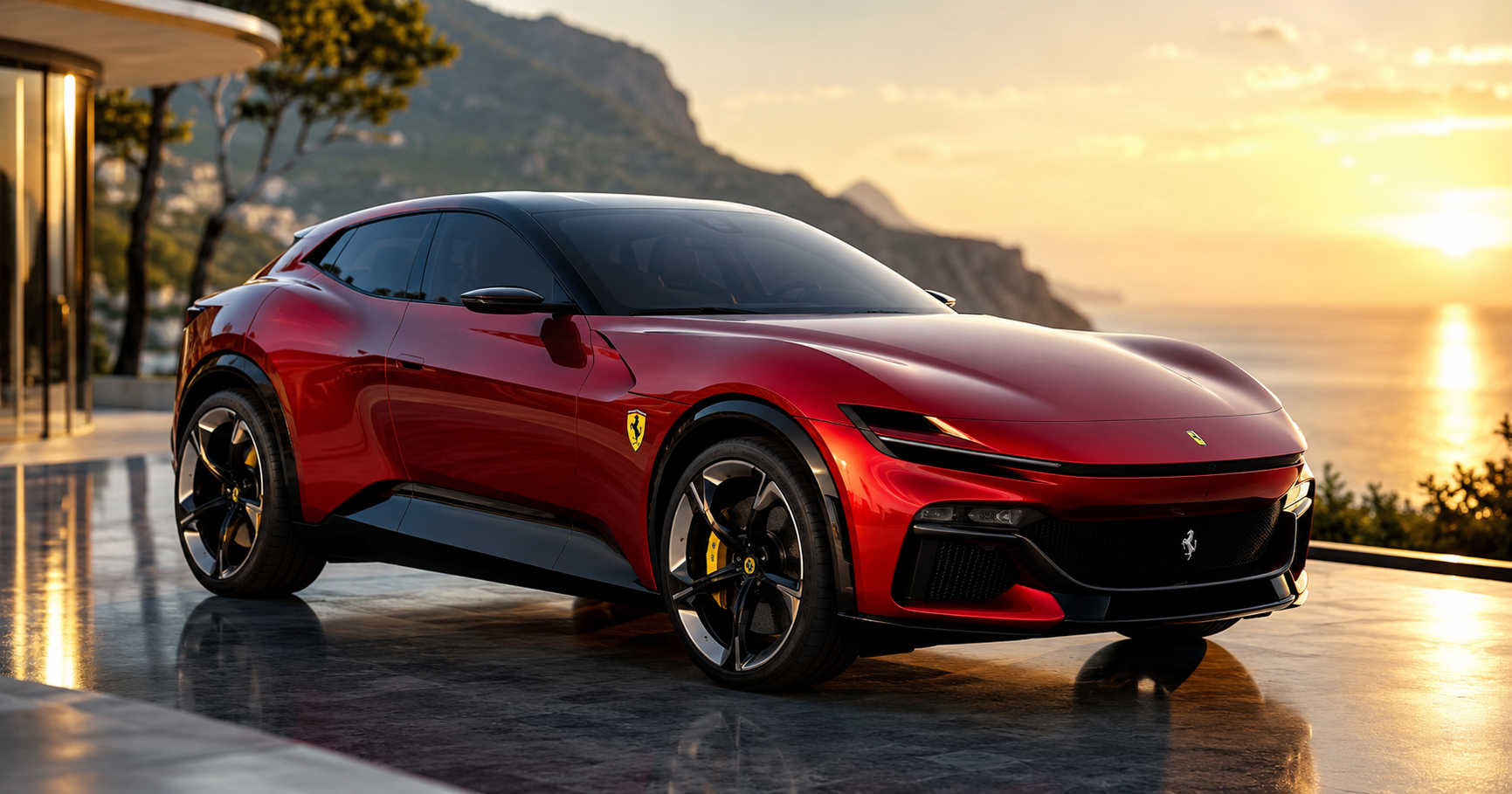
Ferrari Luce Investor Backlash has sent shockwaves through global markets, exposing deeper concerns about brand identity, electric vehicle strategy, and investor confidence in one of the world’s most iconic luxury automakers. What was meant to be a historic leap into electrification has instead triggered a sharp sell-off and a heated debate about the future of Ferrari’s legacy.
When Ferrari unveiled its first fully electric grand tourer in Rome on May 25, 2026, expectations were sky-high. Instead, the debut of the Ferrari Luce quickly became a case study in how innovation can collide with tradition—and how Wall Street reacts when luxury meets disruption.
Market Shock: What Triggered the Sell-Off?
The immediate aftermath of the launch was brutal for investors. Shares of Ferrari SpA dropped sharply across both European and U.S. markets, reflecting unease over the company’s bold strategic shift.
- Milan-listed shares fell as much as 8.5%
- U.S. trading saw declines of around 5.3%
- The stock is down roughly 30% year-over-year
The reaction was not just about numbers—it was about perception. The Ferrari Luce Investor Backlash reflects deeper uncertainty about whether Ferrari can maintain its exclusivity while embracing mass-market EV technology principles.
The Ferrari Luce: Performance vs Perception
A Technical Powerhouse
On paper, the Ferrari Luce is anything but ordinary. It delivers extreme performance metrics that align with Ferrari’s engineering reputation:
- Over 1,035 horsepower from a four-motor setup
- 0–100 km/h in just 2.5 seconds
- Top speed of 310 km/h
- 530 km driving range (WLTP estimate)
- 122 kWh battery with 800V architecture
Despite these specs, investors and enthusiasts are not reacting to performance—they are reacting to identity.
The Design Debate
Critics argue that the design language of the Luce departs too far from Ferrari’s heritage. Some analysts described it as resembling mainstream electric sedans rather than a supercar evolution.
Even former Ferrari leadership expressed concern, warning that the brand risks diluting its identity. This tension sits at the heart of the Ferrari Luce Investor Backlash.
Why Investors Are Worried
The market reaction is not based on a single factor. Instead, it reflects a combination of structural risks:
1. Brand Dilution Risk
Ferrari’s value is built on exclusivity and emotional appeal. Moving into electric vehicles raises concerns that the brand could lose its combustion-engine mystique.
2. High R&D Pressure
Developing high-performance EV platforms requires massive investment. Investors fear shrinking margins if costs are not fully absorbed by premium pricing.
3. Residual Value Uncertainty
Luxury buyers often consider long-term value. Uncertainty about how EV Ferrari models will retain value creates hesitation in high-end markets.
4. Market Timing Risk
The luxury EV segment is still evolving. Competitors like Porsche and Lamborghini have also slowed EV ambitions due to uncertain demand.
The Bull Case: Why Not All Analysts Are Alarmed
Despite the panic, several analysts believe the reaction may be exaggerated.
China Opportunity
China remains one of the most important growth markets for luxury EVs. Analysts suggest Ferrari could attract new tech-driven buyers in this region.
Historical Precedent
The Purosangue SUV faced similar skepticism at launch but ultimately became a strong commercial success with demand exceeding supply.
Controlled Exclusivity Strategy
Ferrari continues to limit production volumes, preserving scarcity—a key pillar of its pricing power.
Financial Context Behind the Backlash
While sentiment has weakened, Ferrari’s fundamentals remain relatively strong:
- Q1 2026 revenue: €1.85 billion (+3% YoY)
- EBITDA margin: 39.1%
- Order backlog extending into 2027
This creates a paradox: strong financial performance alongside rising investor anxiety.
What Investors Should Watch Next
The future of the Ferrari Luce—and the broader EV strategy—will depend on several key indicators:
- Initial order demand in Europe, China, and the U.S.
- Residual value performance after early resale cycles
- Brand perception trends across luxury buyers
- Profit margin sustainability under EV production costs
- Competitor responses in the luxury EV segment
Expert Insight: A Divided Market
Analysts remain split. Some view the Ferrari Luce Investor Backlash as an emotional overreaction driven by brand purists. Others see it as an early warning signal about structural risks in luxury electrification.
The truth likely sits in the middle: Ferrari is navigating a transition where success depends not only on engineering excellence, but also on cultural acceptance.
Conclusion: Risk or Reinvention?
The Ferrari Luce Investor Backlash highlights a defining moment for the company. Ferrari is no longer just competing in performance—it is competing in perception, technology, and the future of luxury mobility.
Whether this backlash becomes a temporary market reaction or a long-term valuation shift will depend on execution, demand, and whether Ferrari can preserve its identity while embracing electrification.
One thing is clear: the road ahead is as high-stakes as the performance of the car itself.
FAQ: Ferrari Luce Investor Backlash
What is the Ferrari Luce Investor Backlash?
It refers to the negative market reaction following Ferrari’s unveiling of its first electric vehicle, the Luce, which triggered a sharp drop in stock value and widespread debate over brand strategy.
Why did Ferrari stock fall after the Luce reveal?
Investors reacted to concerns about design criticism, brand dilution, EV transition risks, and uncertainty over demand in the luxury electric vehicle market.
Is the Ferrari Luce a success or failure?
It is too early to determine. While performance specs are strong, market sentiment remains divided between innovation optimism and brand identity concerns.
How powerful is the Ferrari Luce?
The vehicle produces over 1,035 horsepower and accelerates from 0–100 km/h in 2.5 seconds, placing it among the fastest electric grand tourers in the world.
Could Ferrari recover from this backlash?
Yes. Historical precedent suggests Ferrari models often recover after initial skepticism if demand and exclusivity remain strong.