
Electric Ferrari Luce has quickly become one of the most controversial luxury vehicle launches of 2026, triggering sharp debate across Wall Street, automotive analysts, and Ferrari enthusiasts. What was meant to be a milestone moment in the Italian marque’s electrification strategy instead turned into a market shockwave, as investors reacted with concern over pricing, brand identity, and long-term strategy.
Within hours of its unveiling, the Electric Ferrari Luce helped erase billions in market value and ignited a broader discussion about whether even the world’s most prestigious performance brands can successfully transition into the electric vehicle era without damaging their legacy.
Overview: What Is the Electric Ferrari Luce?
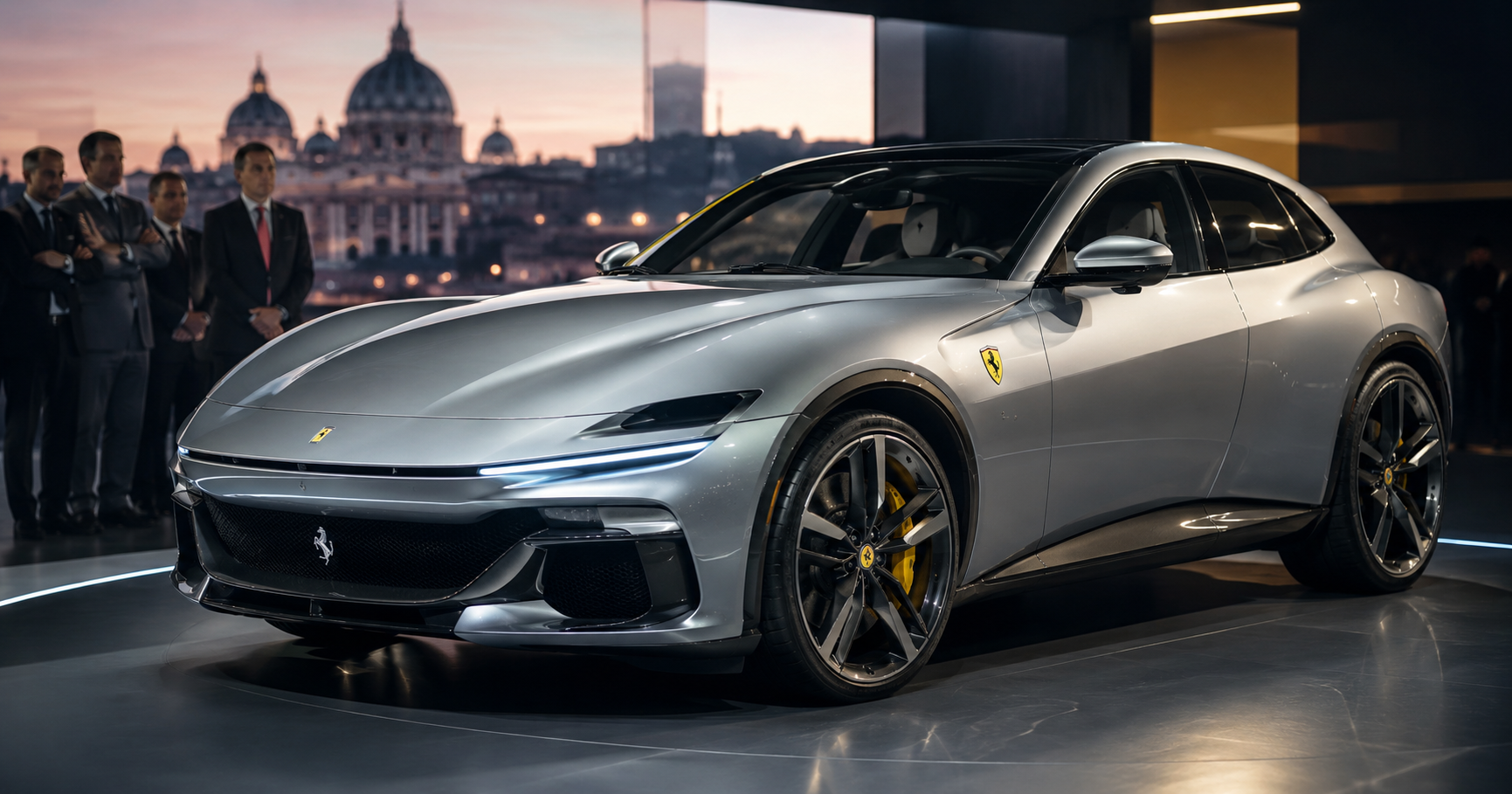
The Electric Ferrari Luce is Ferrari’s first fully electric vehicle, marking a historic shift for Ferrari. Developed over five years, the model blends high-performance engineering with a controversial new design language and a four-door, five-seat configuration—an unusual move for a brand traditionally focused on two-seat sports cars.
- Power: ~1,000 horsepower
- 0–60 mph: ~2.5 seconds
- Range: ~329 miles (530 km)
- Price: Around €550,000 (~$640,000)
- Layout: First four-door Ferrari EV
Despite these impressive specifications, the Electric Ferrari Luce has struggled to convince investors that it aligns with Ferrari’s traditional positioning in the ultra-luxury performance segment.
Market Reaction and Investor Shock
The financial reaction to the Electric Ferrari Luce was immediate. Ferrari shares dropped sharply following the unveiling event, marking one of the steepest single-day declines in recent company history.
Analysts pointed to a combination of uncertainty factors:
- Concerns about brand dilution in the EV transition
- High entry price limiting potential demand
- Design comparisons to mass-market EV competitors
- Unclear long-term EV profitability strategy
While the stock later stabilized slightly, the initial sell-off reflected deeper unease about Ferrari’s direction in the electric era.
Ferrari Luce Investor Backlash
The core of the controversy—often referred to as the Ferrari Luce Investor Backlash—centers on whether Ferrari is moving too far from its heritage too quickly.
Critics argue that the Electric Ferrari Luce resembles a strategic compromise rather than a bold evolution. Former executives and industry analysts have questioned whether the brand’s DNA—defined by V12 engines, racing heritage, and exclusivity—can survive in a fully electric environment.
Key criticisms include:
- Identity dilution: Some investors believe the design feels too mainstream for Ferrari standards
- Pricing concerns: At over $600,000, the vehicle risks a mismatch between cost and perceived uniqueness
- Residual value risk: Uncertainty over long-term resale value in the luxury EV market
- Market timing: Launching during a slowdown in EV demand among luxury buyers
The Ferrari Luce Investor Backlash has become a case study in how even iconic brands are vulnerable during major technological transitions.
Performance vs Brand Identity
On paper, the Electric Ferrari Luce delivers supercar-level performance. However, critics argue that raw specifications are no longer enough to justify Ferrari’s premium positioning.
Traditional Ferrari buyers expect more than speed—they expect emotional engineering, engine sound, and racing heritage. The shift to electric power has removed one of Ferrari’s most defining sensory experiences: the combustion engine roar.
This has created a tension between innovation and identity that sits at the heart of the Electric Ferrari Luce debate.
Comparison Snapshot
- Acceleration: Competitive with top-tier EV hypercars
- Design: More practical, but less aggressive than classic Ferrari styling
- Target audience: Expanded to include luxury executives and families
Strategic Shift Toward Electrification
Ferrari has stated that the Electric Ferrari Luce does not replace internal combustion models but instead complements them. The company continues to prioritize hybrid and ICE vehicles alongside its electrification roadmap.
However, analysts note that Ferrari has revised its EV targets downward, signaling caution in full electrification adoption. Only a minority of production is expected to be fully electric by 2030.
This cautious approach suggests Ferrari is attempting to balance innovation with heritage preservation.
Why Investors Are Concerned
The Electric Ferrari Luce investor reaction highlights broader concerns in the luxury automotive sector:
- Luxury EV saturation: Increasing competition from established EV makers
- Brand elasticity limits: Risk of stretching heritage too far
- Demand uncertainty: Wealthy buyers may still prefer combustion or hybrid supercars
- Macroeconomic pressure: High interest rates affecting luxury consumption
These factors combine to create uncertainty about whether Ferrari can maintain its premium valuation while transitioning into the EV era.
Industry Implications
The implications of the Electric Ferrari Luce extend beyond Ferrari itself. The launch has become a benchmark for how legacy performance brands handle electrification.
Other luxury automakers are closely watching the outcome, as it may influence:
- Future EV pricing strategies
- Design language decisions
- Balance between heritage and innovation
If Ferrari struggles to convince investors and buyers, it could signal broader resistance to high-end EV adoption in the supercar segment.
Future Outlook
Despite the backlash, some analysts remain optimistic about the long-term prospects of the Electric Ferrari Luce. Early skepticism is common in disruptive product launches, particularly in legacy industries undergoing structural change.
Key variables to watch include:
- First-year sales performance
- Customer adoption among Ferrari loyalists
- Residual value stability
- Expansion of Ferrari’s EV lineup
Ultimately, the success or failure of the Electric Ferrari Luce may define how luxury automotive brands navigate electrification for the next decade.
FAQ: Electric Ferrari Luce
What is the Electric Ferrari Luce?
It is Ferrari’s first fully electric vehicle, marking the company’s entry into the BEV market.
Why did investors react negatively?
Concerns over pricing, brand identity dilution, and uncertain EV demand triggered the Ferrari Luce Investor Backlash.
How much does the Electric Ferrari Luce cost?
The price is approximately €550,000, making it one of the most expensive EVs in the world.
Will Ferrari stop making gasoline cars?
No. Ferrari has confirmed that combustion and hybrid vehicles will continue alongside its EV lineup.
Is the Electric Ferrari Luce a success?
It is too early to determine. While performance is strong, market reception remains mixed due to investor concerns.