
Ferrari has spent nearly eight decades building some of the world’s most desirable performance cars. Now, the legendary Italian automaker is entering an entirely new era.
The Ferrari Luce Interior represents one of the most significant design shifts in Ferrari history, introducing the brand’s first fully electric vehicle while reimagining what a modern Ferrari cabin should be.
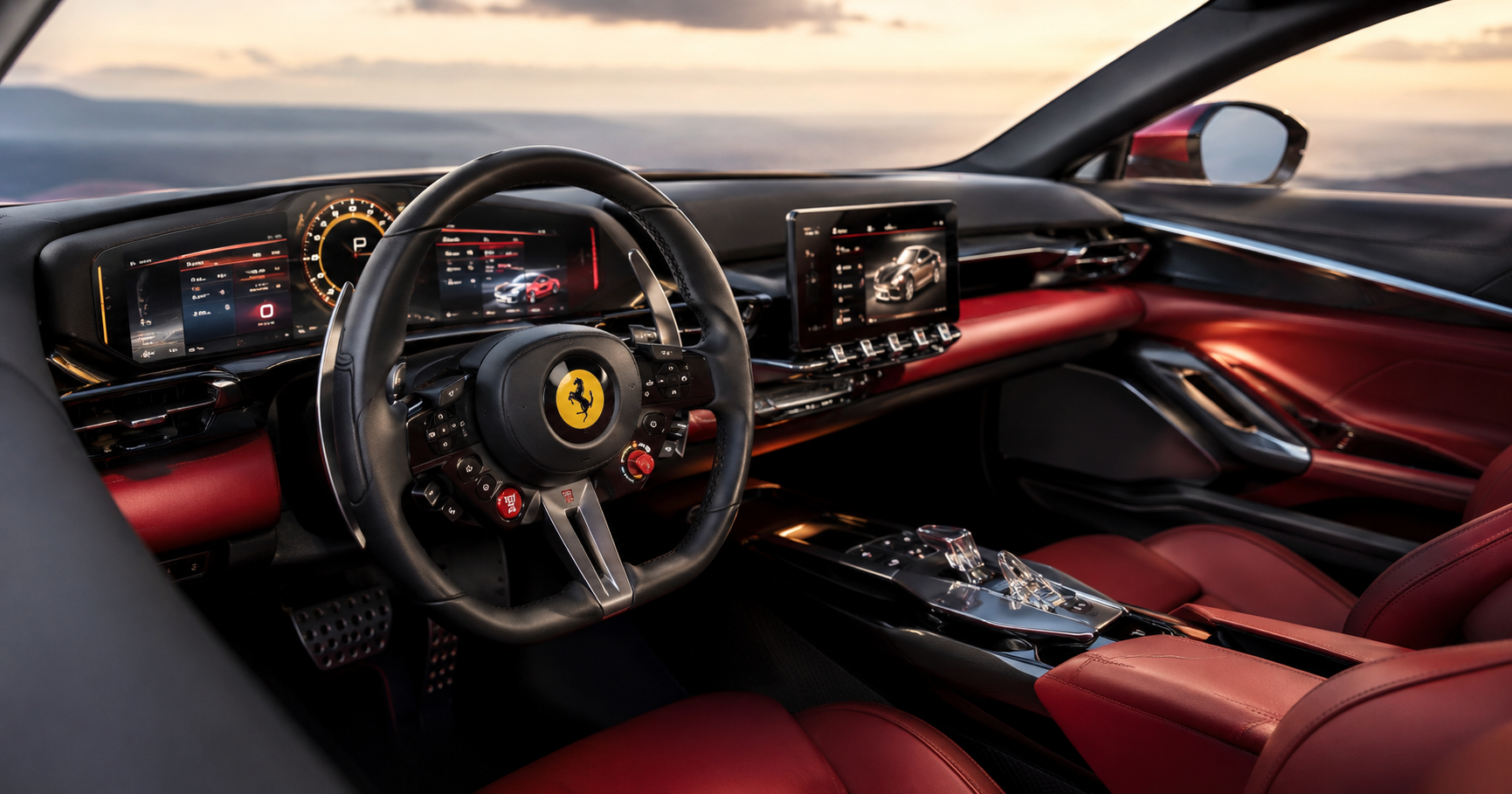
Unlike many electric vehicles that rely heavily on oversized touchscreens and minimalist interfaces, Ferrari has taken a surprisingly different path. The 2027 Ferrari Luce combines advanced digital technology with tactile physical controls, creating an interior that feels futuristic without sacrificing driver engagement.
Designed with contributions from Sir Jony Ive and Marc Newson, the cabin blends cutting-edge display technology, premium craftsmanship, and innovative ergonomics. The result is an interior that could influence luxury EV design for years to come.
In this detailed guide, we’ll explore the seven most impressive features of the Ferrari Luce Interior, examine what makes it unique among modern electric vehicles, and explain why many industry experts consider it one of the most ambitious automotive interiors ever created.
The Importance of the Ferrari Luce Interior
The arrival of the Ferrari Luce is more than just another vehicle launch. It marks Ferrari’s first step into the fully electric era, a transition that many enthusiasts once believed would never happen.
When automakers develop electric vehicles, the focus often centers on battery technology, range, charging speed, and performance figures. Ferrari certainly addresses those areas, but the company has also invested enormous resources into redefining the driver experience.
The cabin serves as the centerpiece of that strategy.
Rather than creating a sterile technology showcase, Ferrari aimed to preserve the emotional connection between driver and machine. Every switch, display, material, and control placement was carefully considered to deliver a sense of occasion every time occupants enter the vehicle.
This philosophy is especially important because electric powertrains naturally remove many traditional Ferrari sensations, including engine noise and gear shifts. To compensate, the interior creates new forms of engagement through design, craftsmanship, and interaction.
Design Philosophy: Why Ferrari Rejected the Typical EV Formula
Many premium EV manufacturers have embraced a minimalist approach. Large central screens replace physical controls, dashboards become increasingly sparse, and software dominates the user experience.
Ferrari chose a different route.
The Luce interior embraces what designers describe as analogue functionality. This concept prioritizes tactile interaction while still leveraging advanced digital technology.
Instead of forcing drivers to navigate menus for every adjustment, the Luce incorporates carefully designed physical controls that can be operated instinctively.
This approach offers several advantages:
- Reduced driver distraction
- Faster access to critical functions
- Enhanced tactile satisfaction
- Greater emotional connection with the vehicle
- More intuitive operation at high speeds
The result is an interior that feels both modern and timeless—a difficult balance that few manufacturers successfully achieve.
Feature 1: The Revolutionary Layered OLED 3D Display System
The most visually striking aspect of the Ferrari Luce Interior is undoubtedly its layered OLED display architecture.
At first glance, the system appears unlike anything currently available in production vehicles. Rather than using a conventional digital instrument cluster, Ferrari employs a sophisticated dual-layer display arrangement that creates a genuine three-dimensional visual effect.
How the Technology Works
The system utilizes two OLED screens positioned at different depths. Strategic cutouts in the front display reveal portions of the secondary screen behind it.
This layered arrangement creates visual depth that traditional flat screens cannot replicate.
The effect is especially noticeable when displaying:
- Performance data
- Navigation information
- Vehicle status indicators
- Driving mode graphics
- Energy management displays
Instead of appearing on a single flat surface, information seems to float within the cockpit.
Why It Matters
Luxury automakers have spent years trying to differentiate their digital interfaces, yet many cabins now look remarkably similar. The Luce’s layered OLED system provides a distinct visual identity while improving information hierarchy.
Critical data can appear closer to the driver’s line of sight, while secondary information occupies deeper visual layers.
This creates a cockpit experience that feels more immersive and sophisticated than traditional digital dashboards.
Comparison with Other Luxury EVs
Compared with vehicles such as the Lucid Air, Mercedes-Benz EQS, and Tesla Model S, Ferrari’s layered display architecture offers a far more theatrical presentation.
Where competitors emphasize screen size, Ferrari emphasizes depth, visual richness, and interaction.
Feature 2: The Pivoting 10-Inch Infotainment Screen
One of the most innovative elements inside the Ferrari Luce Interior is the center-mounted infotainment display.
Instead of being permanently fixed into the dashboard, the 10-inch screen sits on a sophisticated ball-and-socket mounting system.
This allows the display to physically pivot toward either the driver or front passenger.
A New Approach to Ergonomics
The adjustable display solves a problem that many vehicles overlook: viewing angles.
Drivers and passengers often have different seating positions, heights, and preferences. By allowing the screen to move, Ferrari provides a more personalized user experience.
Potential benefits include:
- Reduced glare
- Improved visibility
- Enhanced accessibility
- Better passenger interaction
- More flexible cabin functionality
Physical Controls Return
Perhaps even more important than the screen itself are the physical toggle switches integrated beneath it.
These controls allow users to interact with key functions without constantly touching the display.
In an era where many automakers eliminate physical controls entirely, Ferrari’s decision feels refreshingly practical.
Luxury Through Simplicity
The pivoting display demonstrates Ferrari’s broader philosophy throughout the Luce cabin. Technology exists to serve the occupants rather than dominate the experience.
That distinction may ultimately become one of the vehicle’s greatest strengths.
Feature 3: The Retro-Inspired Three-Spoke Steering Wheel
Steering wheels have become increasingly cluttered over the past decade. Many modern designs resemble gaming controllers, packed with dozens of buttons and touch-sensitive surfaces.
Ferrari went in the opposite direction.
The Luce features a beautifully crafted three-spoke steering wheel inspired by classic Ferrari designs from the 1960s.
Wrapped in premium leather and featuring a timeless circular form, it immediately stands out as one of the most elegant steering wheel designs in the luxury EV segment.
A Nod to Ferrari Heritage
The wheel’s proportions and styling recall legendary Ferraris from the golden age of motorsport.
Rather than abandoning its heritage in pursuit of futuristic aesthetics, Ferrari successfully blends nostalgia with modern functionality.
Integrated into the wheel are updated versions of Ferrari’s iconic manettino controls, allowing drivers to adjust:
- Powertrain settings
- Chassis modes
- Performance configurations
- Driving dynamics
This combination of heritage-inspired design and modern capability perfectly captures the spirit of the Ferrari Luce Interior.
Feature 4: Precision-Machined Aluminum Switches Bring Back True Driver Engagement
If there is one feature that perfectly summarizes Ferrari’s philosophy for the Luce, it is the extensive use of physical controls throughout the cabin.
While many electric vehicles rely almost entirely on touchscreens, Ferrari has intentionally reintroduced tactile interaction through beautifully engineered anodized aluminum switches.
Positioned on elegant black glass control pods, these switches manage some of the vehicle’s most important functions.
Functions Controlled by Physical Switches
- Cruise control settings
- Drive mode selection
- Traction management
- Suspension adjustments
- Windshield wiper controls
- Vehicle dynamics settings
Every switch delivers a distinct mechanical feel, creating a sense of precision that touchscreen interfaces simply cannot replicate.
Why Physical Controls Matter in Modern EVs
Safety experts have increasingly raised concerns about excessive touchscreen dependency in vehicles. Drivers often need to divert their eyes from the road to navigate digital menus.
Ferrari’s solution is refreshingly straightforward.
Frequently used controls remain accessible through dedicated physical interfaces, allowing drivers to make adjustments through muscle memory rather than visual confirmation.
This design not only improves usability but also enhances the emotional connection between driver and vehicle.
A Luxury Experience Beyond Screens
Premium vehicles have always been defined by craftsmanship. The cool touch of machined aluminum, the satisfying click of a switch, and the precision of mechanical operation contribute to an experience that feels genuinely luxurious.
In the Ferrari Luce Interior, technology supports craftsmanship rather than replacing it.
Feature 5: The Floating Leather-and-Glass Center Console
Few areas of the cabin showcase Ferrari’s design ambition more effectively than the center console.
Appearing to float between the front seats, the console serves as both a functional control center and a sculptural design element.
Its combination of premium leather, polished glass, and exposed structural details creates a visual centerpiece that immediately captures attention.
The Crystal-Inspired Controls
Perhaps the most striking elements are the crystal-like glass components integrated into the console.
These include:
- A glass crystal drive selector
- A premium crystal-style vehicle key
- Decorative illuminated surfaces
- Integrated storage compartments
The use of glass introduces a level of sophistication rarely seen in automotive interiors.
Balancing Luxury and Functionality
Many concept-car interiors prioritize appearance over practicality. Ferrari has avoided that trap.
The floating design creates additional storage opportunities while maintaining an open and spacious cabin atmosphere.
Passengers benefit from improved accessibility, while the driver enjoys a cockpit that feels both focused and uncluttered.
How It Compares to Competitors
Luxury EVs from Tesla, Mercedes-Benz, BMW, and Lucid often emphasize minimalist surfaces and hidden controls.
Ferrari instead embraces visible craftsmanship.
The result feels more bespoke and emotionally engaging than many of its rivals.
Feature 6: The Industry-First Roof-Mounted Launch Control Panel
Ferrari has always been willing to challenge convention, and nowhere is that more evident than the Luce’s launch control system.
In most performance vehicles, launch control is activated through steering-wheel buttons, touchscreen menus, or center-console controls.
The Ferrari Luce takes a radically different approach.
Launch control is located on the roof panel.
A Surprising Placement
At first glance, the decision may seem unconventional. However, Ferrari’s designers viewed the feature as an event rather than a routine function.
Reaching upward to activate launch control transforms the process into a deliberate ritual.
The action feels purposeful and memorable, reinforcing the emotional experience that Ferrari seeks to preserve in the electric era.
Creating Theater in an Electric Ferrari
Traditional Ferraris engage drivers through roaring engines, shifting gears, and mechanical drama.
Electric vehicles naturally eliminate many of those sensations.
Ferrari’s roof-mounted controls help create new rituals and moments of excitement that compensate for the absence of a combustion engine.
It is a small detail, but one that demonstrates the company’s attention to emotional design.
Feature 7: Ferrari’s First Five-Seat Cabin with Dedicated Rear Technology
Perhaps the most transformative aspect of the Ferrari Luce Interior is its practicality.
For the first time in Ferrari history, a production model accommodates five passengers.
This alone represents a major milestone for the brand.
A New Level of Everyday Usability
Traditional Ferraris prioritize performance and driver focus, often at the expense of passenger space.
The Luce changes that equation.
Its rear bench comfortably accommodates three occupants, making it a realistic option for families and daily use.
This expanded functionality could attract buyers who previously considered Ferrari ownership impractical.
Rear Passenger Technology
Ferrari didn’t simply add extra seats and call it a day.
Rear passengers receive their own technology experience, including:
- Dedicated rear display screen
- Physical toggle controls
- Individual comfort adjustments
- Enhanced connectivity features
- Premium seating materials
The rear cabin feels intentionally designed rather than treated as an afterthought.
Luxury for Every Occupant
Many performance vehicles focus exclusively on front-seat occupants.
The Luce extends the luxury experience throughout the cabin, ensuring every passenger benefits from Ferrari’s attention to detail.
Material Quality and Craftsmanship
Technology may dominate headlines, but material quality remains one of the strongest aspects of the Ferrari Luce Interior.
Throughout the cabin, Ferrari combines:
- Premium leather surfaces
- Machined aluminum accents
- Glass crystal components
- Soft-touch materials
- Precision stitching
- High-end structural finishes
Every contact point feels intentionally designed.
The cabin avoids the cold, gadget-focused atmosphere that characterizes some modern EV interiors.
Instead, occupants are surrounded by materials that communicate craftsmanship and exclusivity.
The Biggest Trunk Ever in a Ferrari
Another unexpected advantage of the Luce is practicality.
Reports indicate that the vehicle offers the largest luggage compartment ever seen in a Ferrari.
This increased cargo capacity reflects the vehicle’s broader mission as a high-performance luxury EV designed for real-world use.
Potential owners can now enjoy Ferrari performance without sacrificing the practicality needed for road trips, airport runs, or family travel.
How the Ferrari Luce Interior Compares with Other Luxury EVs
| Feature | Ferrari Luce | Tesla Model S | Mercedes EQS | Lucid Air |
|---|---|---|---|---|
| Physical Controls | Extensive | Minimal | Limited | Moderate |
| Five-Seat Layout | Yes | Yes | Yes | Yes |
| Layered OLED Displays | Yes | No | No | No |
| Pivoting Screen | Yes | No | No | No |
| Roof Launch Control | Yes | No | No | No |
| Ferrari Heritage Design | Strong | None | Limited | Limited |
This comparison highlights how Ferrari has pursued differentiation through design innovation rather than simply increasing screen size or software complexity.
Pros and Cons of the Ferrari Luce Interior
Pros
- Innovative layered OLED display technology
- Beautiful blend of digital and physical controls
- Exceptional material quality
- First practical five-seat Ferrari
- Largest trunk in Ferrari history
- Unique pivoting infotainment display
- Highly engaging driver-focused design
Cons
- Some critics argue the design feels more Californian than traditionally Italian
- Certain display layouts may appear unconventional to some users
- Rear-seat luxury options require additional packages
- The design language may divide long-time Ferrari enthusiasts
Final Verdict: A Bold New Chapter for Ferrari
The Ferrari Luce Interior is far more than a showcase of new technology. It represents Ferrari’s attempt to redefine what an electric performance car can feel like from behind the wheel.
Rather than following industry trends, Ferrari has embraced a philosophy centered on engagement, craftsmanship, and emotional connection.
The layered OLED displays, pivoting infotainment screen, retro-inspired steering wheel, precision-machined switches, floating center console, roof-mounted launch control, and practical five-seat layout combine to create one of the most distinctive interiors in the automotive world.
Whether the Luce becomes a commercial success remains to be seen, but one thing is already clear: Ferrari has delivered an interior that challenges assumptions about electric vehicles and sets a new benchmark for luxury EV design.
For enthusiasts, collectors, and luxury EV buyers alike, the Ferrari Luce Interior may prove to be one of the most fascinating automotive cabins of the decade.
Frequently Asked Questions
Is the Ferrari Luce Ferrari’s first electric vehicle?
Yes. The Luce is Ferrari’s first fully electric production vehicle and marks the company’s official entry into the EV market.
How many people can the Ferrari Luce seat?
The vehicle accommodates five passengers, making it the first five-seat Ferrari in the brand’s history.
Who helped design the Ferrari Luce Interior?
The interior was developed with contributions from renowned designers Sir Jony Ive and Marc Newson through LoveFrom.
What makes the Ferrari Luce Interior unique?
Key highlights include layered OLED displays, extensive physical controls, a pivoting infotainment screen, a floating center console, and a roof-mounted launch control panel.
Does the Ferrari Luce use touchscreens?
Yes, but Ferrari balances touchscreen functionality with physical switches and toggle controls to improve usability and driver engagement.
Where is launch control located?
Unlike traditional performance cars, launch control is positioned on the roof panel, creating a unique activation experience.
Does the Ferrari Luce offer good practicality?
Yes. The vehicle features five seats, generous passenger space, and the largest trunk ever offered in a Ferrari.