
Searches for “Hyundai Ioniq 3 Price” have surged as Hyundai prepares to launch its newest electric hatchback. While the vehicle is initially heading to Europe and the United Kingdom, its aggressive pricing strategy has immediately sparked interest among American EV shoppers wondering whether a similar approach could reach the U.S. market.
Hyundai has already revealed that the Ioniq 3 will start below £25,000 in the UK, with some retailers listing the entry-level version for around £22,245. Converted to U.S. currency, that’s roughly $30,000 before taxes and local pricing adjustments—a figure that would instantly place the compact EV among the most affordable long-range electric vehicles available.
Although Hyundai has not officially announced U.S. pricing or availability, industry analysts believe the automaker’s aggressive positioning could reshape the affordable EV segment if the model eventually arrives in North America.
Here’s everything buyers need to know about the Hyundai Ioniq 3 price, available trims, expected U.S. positioning, battery options, technology, charging performance, and whether this compact electric hatchback could become Hyundai’s next major success.
Hyundai Reveals Surprisingly Affordable Pricing
One of the biggest headlines surrounding Hyundai’s newest electric vehicle is its pricing.
According to Hyundai UK, the Ioniq 3 will officially start below £25,000. Even more surprising, UK retailers have already listed the entry-level Advance Standard Range model at approximately £22,245, equivalent to roughly $29,800.
That immediately places the vehicle in direct competition with affordable EVs rather than premium electric crossovers.
If Hyundai maintains a similar pricing philosophy globally, the Hyundai Ioniq 3 price could become one of the strongest selling points for consumers looking to switch from gasoline vehicles without spending luxury-car money.
Current UK Pricing
| Trim | Battery | Starting Price |
|---|---|---|
| Advance | 42.2 kWh | £22,245 (~$29,800) |
| Advance | 61 kWh | £25,745 (~$34,500) |
| Premium | 61 kWh | £27,445 (~$37,000) |
| Ultimate | 61 kWh | £29,945 (~$40,000) |
| N-Line Evo | 61 kWh | £31,945 (~$42,700) |
Why the Hyundai Ioniq 3 Price Matters
The affordable EV market is becoming one of the industry’s fastest-growing segments.
Consumers increasingly want:
- Lower monthly payments
- Long driving range
- Fast charging
- Modern technology
- Lower ownership costs
Many electric vehicles still exceed $40,000 before incentives, limiting adoption among mainstream buyers.
Hyundai appears determined to challenge that trend.
By introducing an EV below the $30,000 mark in overseas markets, Hyundai is sending a strong message that affordable electric mobility no longer requires sacrificing technology or driving range.
Will the Hyundai Ioniq 3 Come to the United States?
Hyundai has not officially confirmed U.S. availability.
However, several factors suggest the possibility remains open.
- The affordable EV segment continues expanding.
- The Chevrolet Bolt is returning.
- Tesla continues lowering prices.
- Kia’s EV3 is expected to target global markets.
- American consumers increasingly favor smaller EVs for urban commuting.
If Hyundai launches the Ioniq 3 in America, pricing would likely vary because of:
- Import costs
- Federal regulations
- Tariffs
- Safety equipment
- Market positioning
Even so, analysts expect a starting MSRP somewhere between $30,000 and $35,000 if Hyundai decides to bring the model stateside.
Record Customer Interest Before Launch
Perhaps even more impressive than the price is the demand.
Hyundai says the Ioniq 3 has generated the highest level of customer interest ever recorded for any Hyundai vehicle—electric or gasoline—before official sales have even begun.
That level of enthusiasm suggests consumers have been waiting for exactly this type of vehicle:
- Compact
- Affordable
- Efficient
- Technology-focused
- Practical
Ashley Andrew, President of Hyundai Motor UK, described the response as unprecedented, noting that the strong early interest demonstrates the model’s broad appeal before deliveries even begin.
A New Direction for Hyundai Design
The Aero Hatch Philosophy
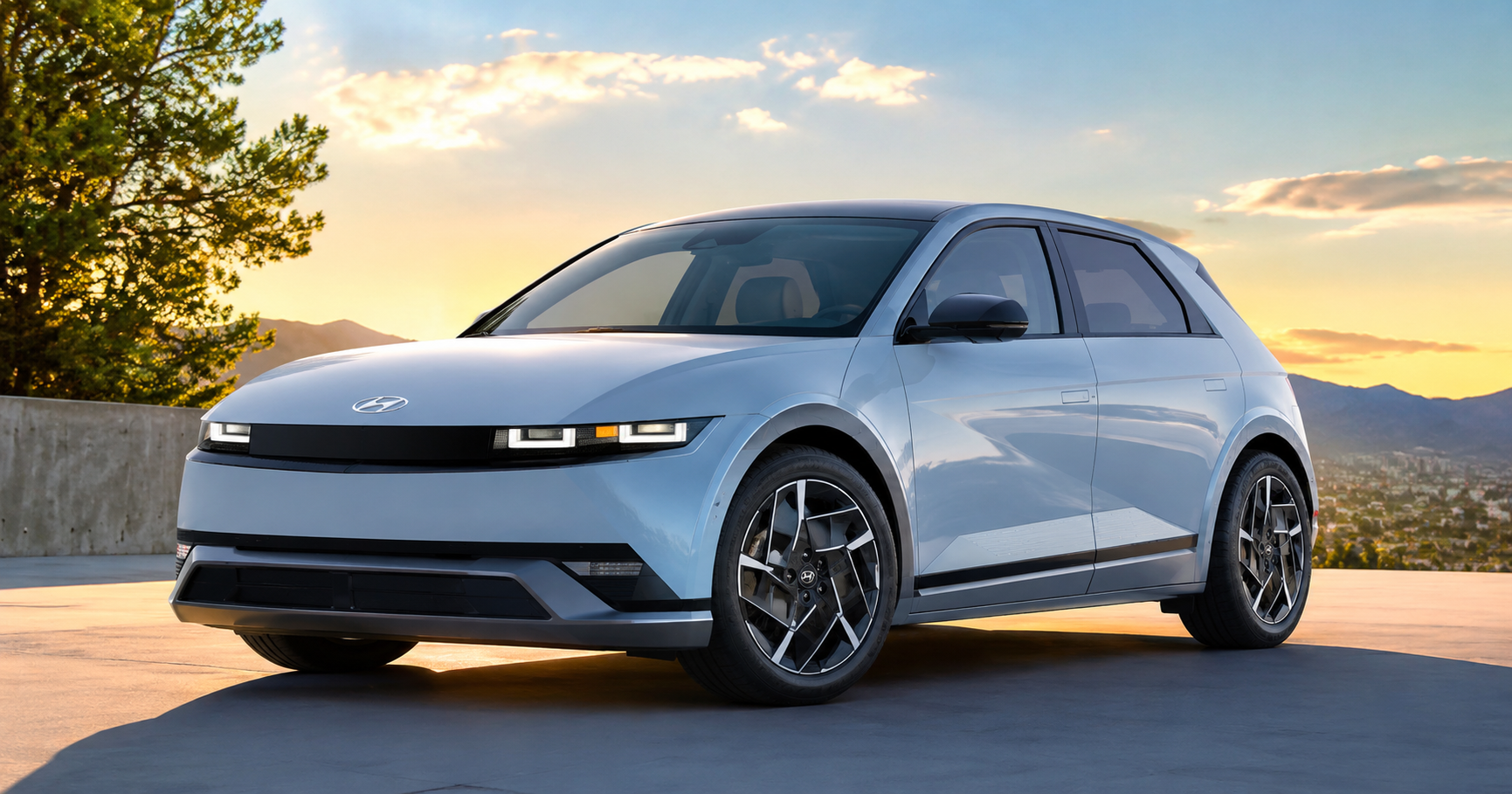
The Ioniq 3 introduces Hyundai’s new “Aero Hatch” design language.
Rather than resembling a miniature Ioniq 5, the vehicle establishes its own identity.
Its smooth profile minimizes air resistance while maintaining hatchback practicality.
The drag coefficient of just 0.263 is among the best in its class.
That aerodynamic efficiency contributes directly to:
- Improved driving range
- Lower energy consumption
- Reduced wind noise
- Better highway efficiency
Compact Outside, Spacious Inside
The numbers make the Ioniq 3 appear small:
- Length: 4,155 mm
- Width: 1,800 mm
- Height: 1,505 mm
- Wheelbase: 2,680 mm
Yet Hyundai claims the cabin offers exceptional interior packaging thanks to its dedicated electric platform.
The luggage compartment provides 441 liters of cargo space—competitive for the compact hatchback class.
This makes the Ioniq 3 attractive for:
- Daily commuting
- Weekend road trips
- Small families
- Urban drivers
Battery Options and Driving Range
Buyers will have two battery choices.
42.2 kWh Battery
- WLTP Range: Up to 213 miles
- Designed for city commuters
- Lower purchase price
61 kWh Battery
- WLTP Range: Up to 308 miles
- Better for highway travel
- Available on higher trims
Actual EPA ratings would likely differ if the vehicle reaches the U.S. market, as EPA testing standards are generally more conservative than WLTP estimates.
Charging Performance
Unlike Hyundai’s larger Ioniq 5 and Ioniq 6, which use an advanced 800-volt electrical architecture, the Ioniq 3 adopts a more affordable 400-volt platform.
This decision helps reduce manufacturing costs while still delivering competitive charging speeds.
- 42.2 kWh battery: 10% to 80% in approximately 29 minutes
- 61 kWh battery: 10% to 80% in approximately 30 minutes
For most daily drivers, that charging performance remains highly competitive within the compact EV segment.
Technology Focuses on Everyday Usability
The Ioniq 3 debuts Hyundai’s new Pleos Connect operating system.
Built on Android Automotive OS, the platform offers a smartphone-like experience with improved responsiveness and personalization.
Highlights include:
- Large center touchscreen
- Optional driver display
- Google-based ecosystem
- Over-the-air updates
- AI-powered Gleo assistant
- Voice controls
Unlike some competitors, Hyundai has also restored physical buttons for climate controls and commonly used functions, addressing one of the biggest consumer complaints about touchscreen-heavy interiors.
How the Hyundai Ioniq 3 Compares With Rivals
| Vehicle | Starting Price* | Range* | Body Style |
|---|---|---|---|
| Hyundai Ioniq 3 | ~$29,800 (UK conversion) | Up to 308 miles WLTP | Hatchback |
| Kia EV3 | Expected Similar | Competitive | Compact SUV |
| Chevrolet Bolt EV | Expected Around $30K | TBD | Hatchback |
| Tesla Model 3 | Higher | Longer | Sedan |
*Prices and specifications vary by market.
Who Should Consider the Hyundai Ioniq 3?
The Ioniq 3 targets buyers who prioritize value without giving up modern technology.
It may be an excellent fit for:
- First-time EV owners
- Young professionals
- City commuters
- Small households
- Drivers replacing compact gasoline hatchbacks
Potential U.S. Pricing Scenarios
Although Hyundai has not announced American pricing, several possible scenarios exist.
| Scenario | Estimated MSRP |
|---|---|
| Aggressive Market Entry | $29,995 |
| Likely Positioning | $32,000–34,000 |
| Premium Launch | $35,000+ |
The final price will depend on production location, exchange rates, regulatory requirements, and Hyundai’s broader North American strategy.
Why Hyundai Could Have Another EV Hit
The company already has a strong reputation for producing competitive electric vehicles through the Ioniq lineup.
The Ioniq 5 has earned praise for its design, charging capabilities, and practicality, while the Ioniq 6 has demonstrated Hyundai’s engineering strengths in efficiency and aerodynamics.
The Ioniq 3 extends that philosophy into a lower price bracket, opening the door for consumers who previously viewed EV ownership as financially out of reach.
If Hyundai eventually introduces the model in the United States with pricing close to its overseas positioning, it could become one of the most compelling values in the electric vehicle market.
Final Thoughts
The Hyundai Ioniq 3 price is attracting attention for good reason. Starting below £25,000 in the UK—and listed by some retailers at roughly the equivalent of $30,000—the compact electric hatchback delivers an appealing mix of affordability, practical driving range, modern technology, and everyday usability.
While U.S. availability remains unconfirmed, the model illustrates Hyundai’s broader strategy of making electric mobility accessible to a wider audience. Combined with record-breaking customer interest, efficient packaging, competitive charging performance, and a fresh design language, the Ioniq 3 has the potential to become one of the most influential affordable EV launches in recent years.
For American buyers watching the growing affordable EV market, the Hyundai Ioniq 3 is a vehicle worth following closely.
Frequently Asked Questions
What is the Hyundai Ioniq 3 price?
The entry-level model is listed in the UK from approximately £22,245, or about $29,800 based on current currency conversion. Final pricing varies by market.
Will the Hyundai Ioniq 3 come to the United States?
Hyundai has not officially confirmed U.S. availability or pricing.
How far can the Hyundai Ioniq 3 drive?
The extended-range model delivers up to 308 miles (496 km) under the WLTP testing cycle.
How fast does it charge?
Using DC fast charging, the battery can recharge from 10% to 80% in approximately 29 to 30 minutes depending on battery size.
What battery options are available?
Buyers can choose between a 42.2 kWh battery and a larger 61 kWh battery.
What makes the Hyundai Ioniq 3 different?
Its affordable pricing, compact dimensions, practical interior, aerodynamic design, Android Automotive-based infotainment system, and competitive driving range distinguish it from many rivals in the affordable EV segment.