
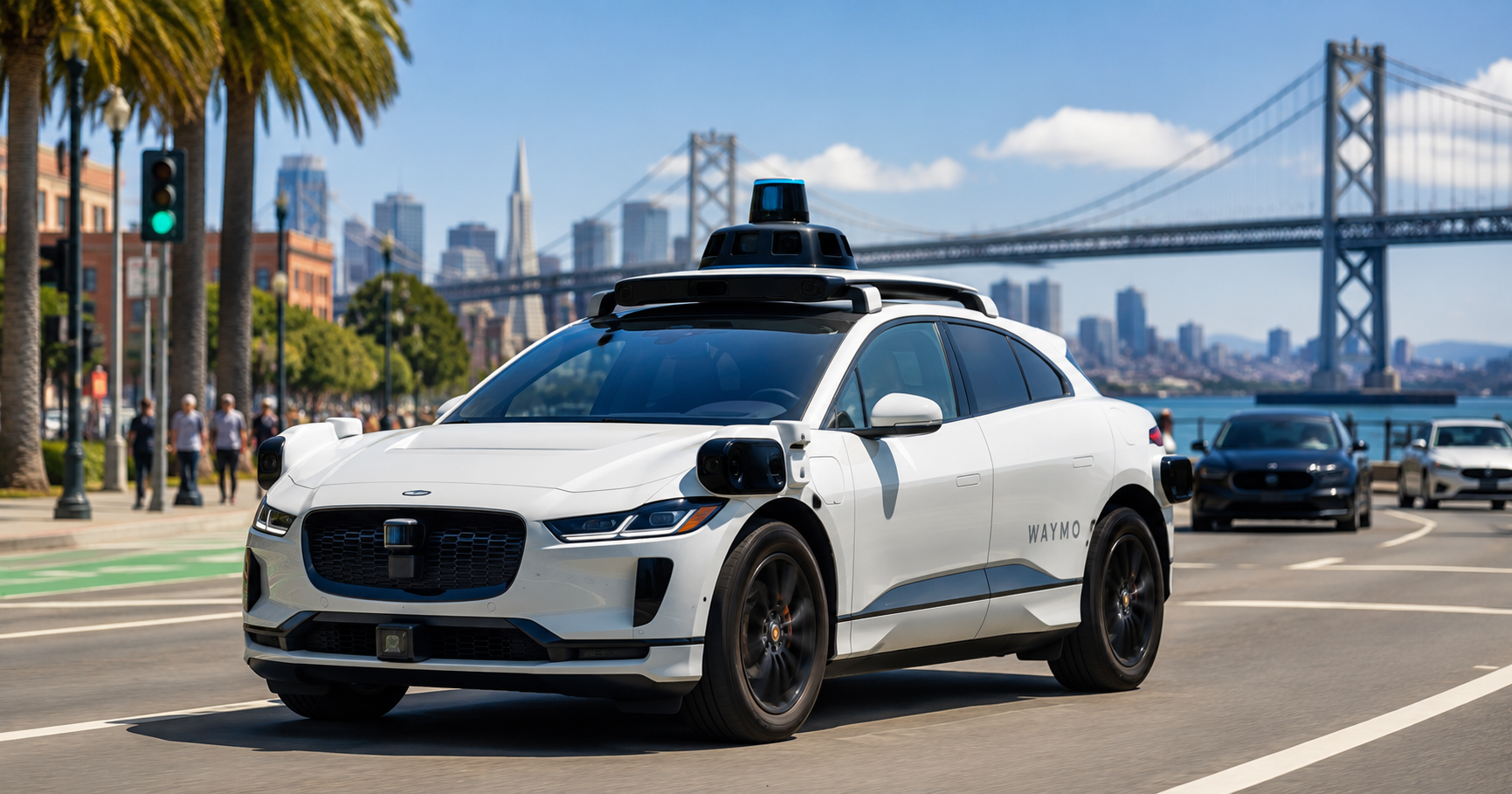
Waymo autonomous vehicles were involved in fewer crashes per vehicle mile traveled than human-driven vehicles across four U.S. cities, according to a new study by the Insurance Institute for Highway Safety (IIHS). While the findings point to lower crash rates, researchers said limited and inconsistent reporting data make it difficult to draw broad conclusions about the safety of self-driving technology.
IIHS Examines Waymo’s Safety Performance
The IIHS, a nonprofit organization backed by the insurance industry and known for its crash testing, analyzed Waymo’s operating data in San Francisco, Phoenix, Los Angeles, and Austin.
The study found that Waymo vehicles traveled approximately 50 million miles autonomously during the period examined, compared with about 222 billion miles driven by human motorists in the same locations over the same timeframe.
Based on those figures, Waymo vehicles recorded a crash rate that was 68% lower per vehicle mile traveled (VMT) than human drivers.
Crash Rates Varied by City
The study found that Waymo’s crash rate per VMT was 76% lower than human drivers in Phoenix, 35% lower in San Francisco, and 71% lower in Los Angeles.
In Austin, Waymo vehicles recorded a crash rate that was 4% higher than human drivers, although researchers noted that the sample size there was relatively small.
Overall, Waymo vehicles were involved in 85% fewer single-vehicle crashes and 81% fewer injury crashes per VMT than human-driven vehicles.
Researchers Cite Significant Data Challenges
According to an accompanying IIHS press release, comparing autonomous vehicles with human-driven vehicles remains difficult because companies operating self-driving vehicles are required to report crashes to the National Highway Traffic Safety Administration (NHTSA) and the State of California, but they are not required to report how many miles their vehicles travel or how much of that driving occurs in autonomous mode.
Waymo publishes vehicle mile traveled information that other companies do not, making it the only autonomous vehicle operator included in the study.
Researchers also adjusted for differences between reporting standards for autonomous vehicle crashes and those involving human drivers. In many states, drivers are generally required to report crashes only if they result in injuries or at least $1,000 in property damage, and the IIHS estimates that around half of crashes and one-third of injuries are never reported to police.
Filtering the Crash Data
The study notes that, until a 2025 amendment to reporting requirements, the NHTSA required companies operating self-driving vehicles to report even minor collisions. Researchers also identified duplicate reports and incidents in which vehicles may not have been operating in autonomous mode.
After removing those reports, the researchers evaluated whether each crash would likely have been reported to police if a human had been driving.
They concluded that only 22% of the 736 autonomous vehicle crashes reported during the study period were likely police-reportable. Of those, 89 involved Waymo vehicles, the highest total for a single operator, while only 64 occurred with Waymo vehicles operating in autonomous mode.
Researchers Urge Better Data Collection
The researchers said the relatively small dataset and the extensive process required to standardize the information highlight the challenges of evaluating autonomous vehicle safety.
“Those are encouraging signs for the future of driverless vehicles,” lead study author Eric Teoh said in a statement. “Now we need to get the data collection system right so that we can ensure that level of safety continues as these technologies become more prevalent.”
The IIHS concluded that Waymo’s crash rates compared favorably with those of human drivers in the available data, while emphasizing that more complete and consistent reporting will be necessary to better assess autonomous vehicle safety in the future.