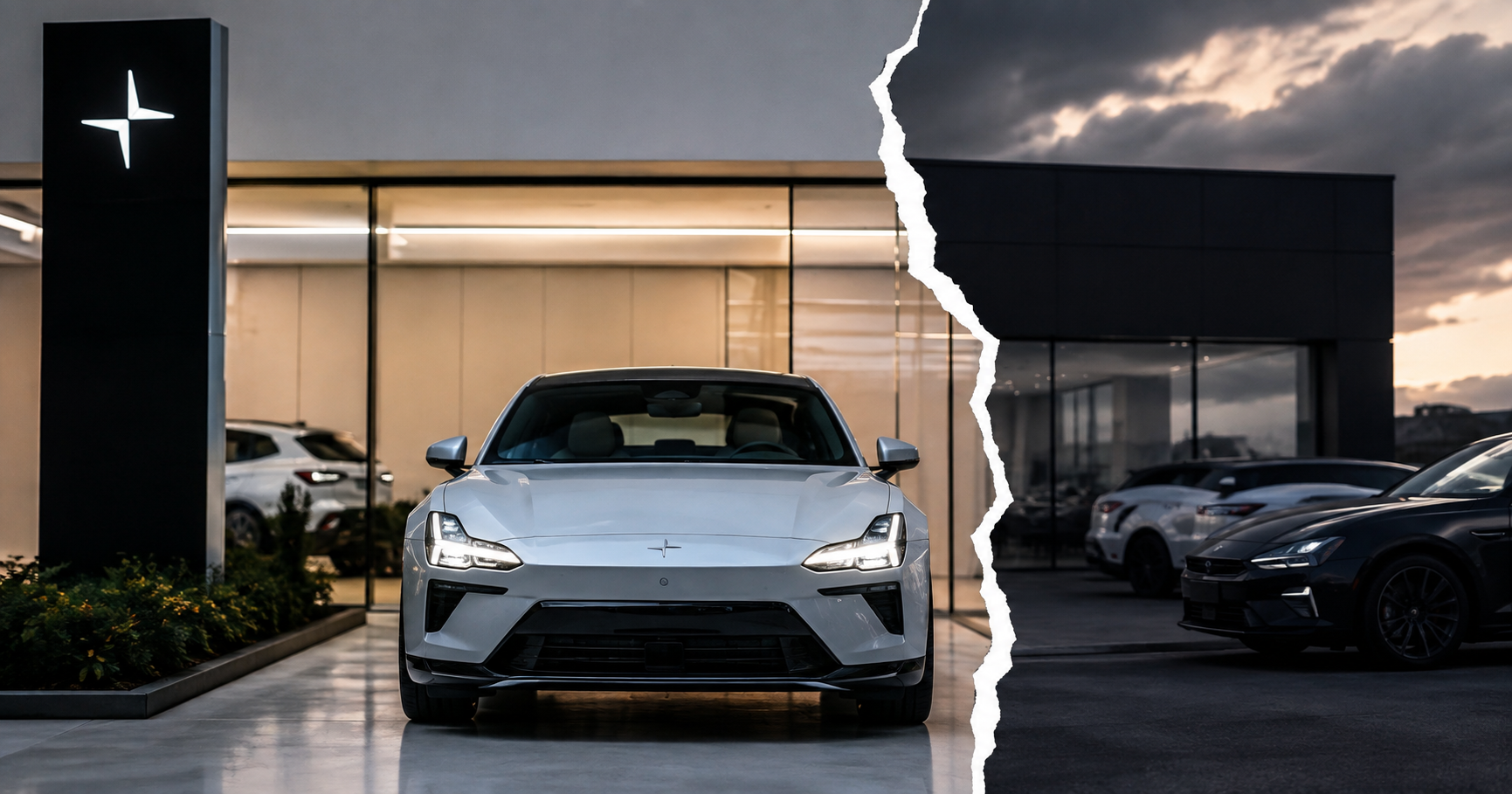
Polestar’s planned departure from the U.S. market is creating a growing dispute with its dealer network, with one New Jersey retailer accusing the automaker of using a federal connected-vehicle rule as a justification for an exit it had allegedly been preparing for years.
Polestar says it will continue selling remaining vehicles at U.S. dealerships and will maintain service and support for existing owners. However, after the 2026 model year, the company will no longer sell new vehicles in the United States.
Why Polestar Is Leaving the U.S. Market
The company’s U.S. future has been complicated by the Commerce Department’s Connected Vehicle Rule, which targets connected vehicles and related technology with ties to China and Russia.
The situation is particularly notable because Polestar and Volvo are closely connected through their relationship with Chinese automotive giant Geely. While Volvo received approval to continue selling connected vehicles in the United States, Polestar was not given the same outcome.
Polestar has argued that the government ruling effectively ended its future in the American market. But that explanation is now being challenged by one of its former retail partners.
New Jersey Dealer Sues Polestar for at Least $25 Million
Prestige Imports, which operates Prestige Polestar in East Hanover and Polestar Short Hills in New Jersey, is suing Polestar for at least $25 million.
The dealer accuses the automaker of violating New Jersey’s Franchise Practices Act. According to the lawsuit, Polestar had allegedly been considering an exit from the U.S. market for roughly two years before the government restrictions took effect, Automotive News reports.
Prestige claims Polestar eventually sent a “force majeure” letter, arguing that the sales restrictions were outside the company’s control.
The dealer disputes that explanation. According to the lawsuit, Prestige argues that the letter was effectively used to terminate its franchise without the required 60-day notice or an adequate justification, despite the dealer maintaining that it had fulfilled its obligations.
Dealer Claims Polestar Turned Down an Exemption
One of the most significant allegations involves the exemption that allowed Volvo to continue selling connected vehicles in the United States.
Prestige claims Polestar was offered a similar exemption but rejected it and did not appeal the decision. The allegation has also been echoed by Sen. Bernie Moreno, who said in July: “Polestar was screwed by Polestar. It wasn’t screwed by the US government.”
However, the dealer’s claims remain allegations. Polestar has not supported Prestige’s version of events.
Dealers Say Polestar Continued Promoting Its U.S. Future
The lawsuit also focuses on what Prestige says Polestar was telling its dealers while the company was allegedly preparing to leave the American market.
According to the complaint, Polestar continued promoting the U.S. business even after the Connected Vehicle Rule had been finalized. Dealers were reportedly told to anticipate a strong year, while the company continued discussing plans for the Polestar 7 and its future availability to American customers.
Prestige claims that as recently as February 2026, a Polestar executive continued supporting an expansion plan in Bergen County based on the expectation that the Polestar 7 would arrive in 2028.
The dealer also alleges that Polestar continued encouraging retailers to reduce inventory, promote the “Polestar Promise” program and prepare for used-vehicle opportunities extending into 2027 and beyond.
Polestar’s U.S. Exit Raises Questions for Dealers
The dispute goes beyond the impact of Washington’s restrictions on vehicles and technology connected to China. Prestige’s lawsuit raises a separate question over whether Polestar had already been planning its U.S. withdrawal and later used the federal restrictions as the mechanism to accelerate that departure.
The situation is especially significant for the roughly 32 U.S. retailers that had invested in Polestar with the expectation that the brand would remain in the American market.
Polestar has offered limited public comment on the lawsuit, saying its focus is on supporting customers.
For now, the allegations made by Prestige have not been proven. But if the dealer can substantiate its claims, Polestar’s U.S. departure could become as much a story about its relationship with American retailers as it is about the federal government’s restrictions on Chinese-linked automotive technology.