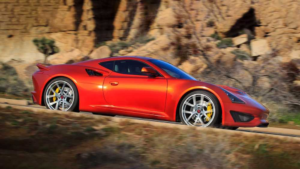


Genesis GV90 vs Cadillac Escalade IQ is shaping up to be one of the most interesting matchups in the luxury electric SUV market. One represents Genesis’ push into the ultra-luxury three-row EV segment, while the other takes Cadillac’s iconic Escalade formula and turns it into a massive all-electric flagship.
The two SUVs are chasing many of the same buyers, but they approach the job very differently. The Escalade IQ is already a production vehicle in the U.S., with Cadillac estimating up to 465 miles of range and offering 750 horsepower in Velocity Max. The GV90, meanwhile, is the more uncertain proposition: its final U.S. specifications, EPA range, pricing and equipment have not been established to the same degree.
That distinction matters. Comparing a production Cadillac with a Genesis model whose final American-market specifications remain subject to change requires separating confirmed facts from expectations.
So which one deserves the title of the best 2027 luxury electric SUV? The answer depends on what matters most to you: maximum range and towing, interior design and refinement, charging technology, technology, practicality or value.
Genesis GV90 vs Cadillac Escalade IQ: At a Glance
Before getting into the details, the biggest difference is immediately obvious. Cadillac has engineered the Escalade IQ around enormous battery capacity, long-distance range and full-size American SUV capability. Genesis appears to be taking a more design-led approach, emphasizing luxury, comfort and advanced technology.
| Specification | Genesis GV90 | Cadillac Escalade IQ |
|---|---|---|
| Model status | Expected flagship EV SUV | Production U.S. EV |
| Drivetrain | Expected dual-motor AWD | Dual-motor AWD |
| Battery | Expected approximately 100–113 kWh | 205 kWh |
| Estimated/claimed range | Expected around 300–350 miles | Up to 465 miles |
| Peak charging | Expected 250–350 kW | Up to 350 kW |
| Power | Expected around 500 hp | Up to 750 hp |
| Seating | Three rows expected | Three rows |
| Starting price | Expected around $100,000 | From about $127,405 for 2026 |
| Key advantage | Luxury design and technology | Range, power and towing capability |
Cadillac’s official specifications make the Escalade IQ’s position unusually clear. The SUV uses a 205-kWh battery, dual-motor all-wheel drive, and can produce up to 750 hp and 785 lb-ft of torque in Velocity Max. Cadillac estimates 465 miles of range.
Genesis’ figures should be treated differently. The GV90 numbers in current previews are projections rather than final U.S. EPA-certified specifications. That means the Genesis could ultimately outperform some expectations—or fall short of them.
Genesis GV90 vs Cadillac Escalade IQ: Design and Road Presence
Luxury SUVs are no longer judged purely by horsepower and cargo volume. At this price level, design is part of the product.
Genesis GV90: A More Discreet Kind of Luxury
The GV90 is expected to translate the design language of the Genesis Neolun concept into a production three-row SUV. That points toward a cleaner, more minimalist interpretation of luxury than the traditional American full-size SUV.
Genesis has built its recent identity around distinctive two-line lighting, restrained surfacing and a cabin designed to feel more like a luxury lounge than a conventional SUV interior. The GV90 is expected to take that philosophy further.
For buyers who want an expensive vehicle that does not immediately announce its price tag, the Genesis could have an advantage.
Escalade IQ: Maximum Presence
The Escalade IQ takes the opposite approach. It is unmistakably an Escalade, and its enormous dimensions give it the visual authority expected from Cadillac’s flagship SUV.
Its design also communicates the engineering underneath. This is not a small premium crossover stretched into three rows. The Escalade IQ is a huge EV with a battery large enough to deliver a claimed 465-mile driving range.
The result is impressive, but there is a trade-off: size.
Car and Driver has highlighted the Escalade IQ’s imposing presence while also pointing to its enormous footprint and difficult climb-in height. For urban drivers, parking garages and narrow streets can turn that size into a daily inconvenience.
Design winner: Genesis for understated elegance; Cadillac for sheer road presence.
Battery and Range: Cadillac Has a Huge Advantage
This is arguably the clearest category in the Genesis GV90 vs Cadillac Escalade IQ comparison.
The Escalade IQ has a 205-kWh battery, an extraordinary figure even among large electric SUVs. Cadillac estimates up to 465 miles of range. The IQL, its longer-wheelbase sibling, is rated at up to 460 miles.
That range changes the ownership experience.
Consider a driver planning a 300-mile highway trip. An Escalade IQ owner has substantially more flexibility before needing to find a charger. That is especially useful in parts of the U.S. where fast-charging infrastructure is less dense.
However, EPA estimates are not the same as real-world highway range.
Testing is affected by speed, temperature, wind, road elevation, tire choice, payload and climate-control use. In testing referenced in the research for this comparison, Car and Driver recorded 380 miles in a 75-mph highway test—still an impressive result, but considerably below Cadillac’s headline 465-mile estimate.
What About the GV90?
Current expectations put the GV90’s battery somewhere around 100–113 kWh, with an expected U.S. range in the neighborhood of 300–350 miles.
If those estimates prove accurate, the Genesis would not be competing with the Escalade IQ on maximum range. Instead, it would need to win buyers through efficiency, charging speed, comfort and overall luxury value.
A smaller battery can also have an advantage: it can reduce vehicle weight and potentially improve efficiency and handling.
But if your primary requirement is simply to drive as far as possible between charging stops, the Cadillac has a substantial head start.
Range winner: Cadillac Escalade IQ.
Charging: Both Use 800-Volt Technology
Charging is where the comparison becomes much closer.
Both vehicles are associated with 800-volt charging architectures, which allow significantly faster DC charging than many older EV platforms.
The Escalade IQ supports DC fast charging at up to 350 kW. Cadillac says the vehicle can add a substantial amount of driving range during a short charging session.
The GV90 is expected to use Genesis’ high-voltage EV architecture as well, with previews pointing toward very rapid 10–80% charging.
The important distinction is that maximum charging power does not tell the entire story.
A vehicle’s charging curve matters just as much. An EV that briefly reaches 350 kW but rapidly falls to lower power can potentially take longer to charge than a vehicle that maintains a high rate for a longer period.
Home Charging Matters Too
For most luxury SUV owners, the vehicle will spend far more time charging at home than at a DC fast charger.
The Escalade IQ’s standard onboard charger is rated at 11.5 kW, while higher trims can offer 19.2-kW AC charging. That distinction could matter to buyers with appropriate home electrical equipment who regularly drive long distances.
Charging winner: Too close to call until final GV90 U.S. charging specifications and independent tests are available.
Performance: Escalade IQ Brings Serious Muscle
The Escalade IQ may look like a luxury cruiser, but its performance numbers are closer to those of a high-performance vehicle.
Cadillac estimates up to 750 hp and 785 lb-ft of torque in Velocity Max, with a claimed 0–60 mph time of approximately 4.7 seconds.
That is remarkable considering the SUV’s enormous size.
The instant torque of electric motors also makes the Escalade IQ feel particularly strong when merging onto a freeway or overtaking slower traffic.
The GV90 is expected to deliver roughly 500 hp from a dual-motor AWD configuration, with the possibility of more powerful variants.
For normal driving, 500 hp is already more than enough. The difference is that Cadillac has engineered the IQ to deliver an unusually high level of straight-line performance for a vehicle of this size.
Handling Versus Straight-Line Speed
More power does not automatically mean a better driving experience.
The Escalade IQ’s mass is unavoidable. A vehicle weighing more than 9,000 pounds behaves differently from a lighter luxury SUV, even with sophisticated suspension and four-wheel steering.
The GV90 could therefore appeal to buyers who prioritize a more balanced luxury-SUV driving experience over maximum acceleration.
Performance winner: Cadillac for power and acceleration; Genesis could have the advantage in agility if its final weight is substantially lower.
Towing: Escalade IQ Is the Clear Choice
If you regularly tow a boat, trailer or recreational equipment, the Cadillac deserves serious consideration.
The Escalade IQ can tow up to 8,000 pounds, while the IQL is rated for up to 7,500 pounds. The combination of strong electric torque and a large battery gives the Cadillac a major advantage in this category.
There is one important caveat: towing can dramatically reduce EV range.
Heavy trailers increase aerodynamic drag and rolling resistance, meaning a vehicle rated for hundreds of miles under standard testing conditions may travel significantly less while towing.
That means buyers should consider charging locations along their towing route rather than looking only at the maximum tow rating.
Towing winner: Cadillac Escalade IQ.
Interior and Luxury: Genesis Could Be the Surprise
This is where the Genesis GV90 may fight back.
Cadillac has not ignored luxury. The Escalade IQ features a huge 55-inch Horizon Display, available premium AKG audio systems, heated and ventilated seats, an available executive second row, massaging front seats and a sophisticated suspension system.
The Escalade IQ can also be equipped with an impressive premium audio system and extensive personalization options, reinforcing its position as a technology-heavy luxury SUV.
Why Genesis Could Still Win
Genesis has increasingly positioned itself around the idea that luxury is about atmosphere rather than simply adding equipment.
The GV90 is expected to feature a spacious three-row cabin, high-end materials, advanced driver assistance systems and a more minimalist interpretation of the luxury SUV.
That difference could become important.
Some buyers want the biggest screen possible. Others want an interior that feels calm, uncluttered and genuinely special.
The GV90 appears designed for the second group.
Luxury winner: A subjective category, but Genesis may have the edge in design philosophy while Cadillac leads in available technology and personalization.
Technology and Driver Assistance
The two vehicles also represent different approaches to automotive technology.
Cadillac Escalade IQ
Super Cruise is one of Cadillac’s biggest advantages. The hands-free driver-assistance system is standard on the Escalade IQ, making long highway trips less tiring when operating on compatible roads.
The SUV also uses a massive 55-inch display spanning the front cabin and incorporates Google’s built-in software ecosystem. Cadillac does not provide Apple CarPlay or Android Auto in the conventional sense found in many vehicles, making its native infotainment system especially important.
Genesis GV90
The GV90 is expected to bring advanced driver assistance and Genesis’ next-generation technology to the flagship SUV class.
Highway Driving Pilot is expected to play an important role, while Genesis is also likely to emphasize premium audio, large displays and connected-car features.
But this is another area where buyers should wait for final U.S. specifications before making a decision.
Technology winner: Cadillac today, primarily because its system is already deployed in production and Super Cruise is a mature differentiator.
Third-Row Space and Family Practicality
For a three-row electric SUV, horsepower is not the only number that matters.
Parents will care about getting children into the third row. Road-trip buyers will care about luggage space. Larger families will care about access to the second and third rows.
The Escalade IQ offers three rows and can be configured with premium second-row seating. Cadillac also offers the longer Escalade IQL for buyers who want additional passenger and cargo space.
The standard IQ, however, does not necessarily provide the same third-row experience as a traditional gasoline Escalade. This is one of the compromises created by the vehicle’s design and packaging.
The GV90 is expected to offer three rows as well, potentially making it a direct alternative for families who want a premium EV without the enormous footprint of the Cadillac.
Until independent measurements of the production GV90 are available, however, it is too early to declare a winner based on third-row legroom or cargo volume.
Price and Value: This Could Decide the GV90 vs Escalade IQ Battle
Price may ultimately be Genesis’ most important weapon.
The 2026 Escalade IQ starts at about $127,405 for the Luxury trim, while higher trims push the price significantly beyond $140,000 before options.
That puts the Cadillac firmly in six-figure territory before buyers start adding many of the available options.
The GV90 is expected to start around $100,000, although Genesis has not published a final U.S. MSRP in the material available for this comparison.
If Genesis can deliver a highly equipped GV90 for roughly $100,000–$120,000, it could create a compelling alternative to a much more expensive Escalade IQ.
But buyers should avoid judging value strictly by the number of features.
The Cadillac’s higher price reflects its enormous battery, full-size dimensions, towing capability, advanced suspension, Super Cruise and established Escalade brand identity.
The Genesis would need to offer an exceptional cabin, strong standard equipment and a compelling ownership experience to justify its position.
Value winner: Potentially Genesis, but only if its final U.S. pricing lands near current expectations.
Reliability and Ownership Risk
There is an important difference between these two vehicles that shoppers should not overlook.
The Escalade IQ is already on sale, which means owners and independent publications are accumulating real-world experience. MotorTrend, for example, added a 2026 Escalade IQ to its long-term fleet after recognizing its combination of range, charging capability and road-trip utility.
At the same time, early-production vehicles have experienced software and recall issues that potential buyers should research by VIN and model year before purchasing.
The GV90 has the opposite problem: it is a newer model, so long-term reliability and resale performance cannot yet be established with confidence.
That does not mean the Genesis will be unreliable. It means there is less historical evidence.
What Buyers Should Check
- Open recalls and completed recall repairs.
- Battery warranty coverage.
- Roadside assistance terms.
- Availability of qualified EV service centers.
- Replacement-parts availability.
- Real-world depreciation after three to five years.
For a vehicle costing more than $100,000, ownership support can be just as important as the initial specification sheet.
Genesis GV90 vs Cadillac Escalade IQ: Pros and Cons
Cadillac Escalade IQ Pros
- Up to 465 miles of Cadillac-estimated range.
- Massive 205-kWh battery.
- Up to 750 hp and 785 lb-ft of torque.
- Up to 8,000 pounds of towing capacity.
- 800-volt charging architecture.
- Standard Super Cruise.
- Highly luxurious and technology-rich cabin.
- Strong U.S. luxury-SUV brand recognition.
Cadillac Escalade IQ Cons
- Very large and heavy.
- High purchase price.
- Third-row usability is not perfect in the standard IQ.
- Real-world highway range can be lower than the headline estimate.
- Early software and battery-related issues should be checked.
- No traditional Apple CarPlay or Android Auto integration.
Genesis GV90 Pros
- Distinctive flagship Genesis design.
- Expected three-row luxury configuration.
- 800-volt EV architecture.
- Potentially lower entry price than the Escalade IQ.
- Strong focus on interior refinement and technology.
- Potentially better maneuverability than the enormous Cadillac.
Genesis GV90 Cons
Which Is Better for Different Types of Buyers?
There is no single winner for every luxury-EV shopper. The better choice depends heavily on how the vehicle will be used.
Choose the Escalade IQ If Range Is Your Top Priority
If you frequently drive long highway distances, the Cadillac’s 465-mile estimated range is difficult to ignore. Its huge battery gives it a level of long-distance flexibility that the expected GV90 specifications are unlikely to match.
Choose the Escalade IQ If You Tow
An 8,000-pound maximum towing rating makes the Cadillac the obvious choice for buyers who regularly tow substantial loads.
Choose the GV90 If Design Matters More Than Maximum Numbers
If your idea of luxury is understated styling, an elegant cabin and a more exclusive aesthetic, the Genesis could be more appealing.
Choose the GV90 If It Undercuts the Cadillac Significantly
A well-equipped GV90 around the $100,000 mark could be one of its strongest selling points. Buyers who do not need 465 miles of range or 8,000 pounds of towing capacity may see little reason to spend substantially more on the Cadillac.
Choose the Cadillac If You Want a Proven U.S. Product Today
The Escalade IQ has a major practical advantage: you can actually buy and drive one. Its specifications, pricing, charging system and driver-assistance features are already documented by Cadillac.
Genesis GV90 vs Cadillac Escalade IQ: Which Is the Best 2027 EV?
The winner depends on the definition of “best.”
If the competition is about raw numbers, the Cadillac Escalade IQ is extremely difficult to beat. Its 205-kWh battery, 465-mile estimated range, 750 horsepower and 8,000-pound towing capability give it an unusually strong combination of long-distance capability and performance.
Cadillac also has the advantage of being a real production vehicle with established U.S. pricing and available configurations. Its 2026 lineup starts at approximately $127,405, while higher trims approach $150,000 before additional options.
The Genesis GV90 is potentially more interesting from a luxury-design perspective. If Genesis succeeds in translating its concept-driven design into a production SUV while keeping the cabin exceptionally refined, it could become one of the most compelling alternatives to established luxury EVs.
But the GV90 has an important burden to overcome: expectations are not specifications.
Until Genesis confirms the U.S. battery, EPA range, horsepower, charging curve, dimensions, seating configuration, warranty and MSRP, shoppers should treat current GV90 numbers as projections rather than promises.
Our preliminary verdict: The Cadillac Escalade IQ is the stronger choice for range, towing, power and proven availability. The Genesis GV90 could be the smarter choice for buyers who prioritize design, cabin ambiance and value—provided its final U.S. specifications live up to expectations.
In other words, the Cadillac is the safer recommendation today. The Genesis may become the more intriguing choice once every number is official.
Frequently Asked Questions
Is the Cadillac Escalade IQ better than the Genesis GV90?
The Escalade IQ currently has the advantage in confirmed range, battery capacity, power and towing. The GV90 could compete through luxury design, technology and potentially better value, but its final U.S. specifications are not yet as established.
Which has more range, the GV90 or Escalade IQ?
The Escalade IQ has the clear advantage based on currently available figures. Cadillac estimates up to 465 miles of range, while current GV90 projections generally place its expected range around 300–350 miles.
How big is the Escalade IQ battery?
The Cadillac Escalade IQ uses a 205-kWh battery pack and an 800-volt charging architecture.
How much horsepower does the Escalade IQ have?
The Escalade IQ can produce up to 750 horsepower and 785 lb-ft of torque in Velocity Max, according to Cadillac. Its estimated 0–60 mph time is approximately 4.7 seconds.
How much will the Genesis GV90 cost?
Current expectations place the Genesis GV90’s starting price around $100,000, with higher trims potentially exceeding $120,000. Final U.S. pricing should be confirmed by Genesis.
Which SUV charges faster, the GV90 or Escalade IQ?
Both are expected to use high-voltage 800-volt charging. The Escalade IQ can reach up to 350 kW under appropriate conditions, while final independent GV90 charging tests are needed for a direct real-world comparison.
Can the Escalade IQ tow 8,000 pounds?
Yes. The Cadillac Escalade IQ is rated to tow up to 8,000 pounds, although towing a heavy trailer can significantly reduce electric range.
Is the Escalade IQ a good family SUV?
The Escalade IQ can be an excellent family SUV for buyers who value space, luxury, range and towing. However, its enormous size and the standard IQ’s third-row limitations should be considered before buying.
Which is better for long road trips?
The Escalade IQ has the advantage because of its much larger battery and higher estimated range. Its Super Cruise system can also make compatible highway journeys less tiring.
Bottom Line
The Genesis GV90 vs Cadillac Escalade IQ debate is ultimately a battle between two different definitions of flagship electric luxury.
The Cadillac is the brute-force solution: huge battery, huge range, huge power and huge towing capacity. The Genesis is expected to pursue a more elegant formula centered on design, technology and premium comfort.
For buyers shopping today, the Escalade IQ has the stronger factual case because its U.S. specifications and pricing are already established. Cadillac lists up to 465 miles of estimated range, three-row seating and a starting price in the low-$127,000 range for the 2026 model year.
But the GV90 should not be dismissed. If Genesis delivers a sophisticated three-row EV with fast charging, strong performance and a starting price near $100,000, it could become one of the most important luxury electric SUVs of the next model cycle.
For now, the Cadillac Escalade IQ is the better choice for maximum range, towing and proven capability, while the Genesis GV90 may be the more compelling option for buyers seeking design, refinement and potential value.