

Toyota is using an unusual plastic-hammer inspection to diagnose V35A twin-turbo V6 engines in certain 2022-2024 Tundras. The procedure is designed to identify engines affected by manufacturing debris without replacing healthy engines unnecessarily, helping technicians determine which trucks actually require major engine work.
Why Toyota Is Using a Hammer on Tundra Engines
The unusual inspection is connected to an ongoing manufacturing problem involving debris left inside engine blocks during production. Toyota previously issued major recalls after the machining debris was linked to catastrophic engine failures.
The recall expansion recently grew to include the 2024 model year, leaving technicians with a large number of affected trucks to inspect. To handle that volume, engineers developed a method intended to quickly separate engines that are functioning properly from those that may have damaged components.
How the Toyota Tundra Impact Test Works
The problem centers on components deep inside the engine block. A recent engine teardown showed how leftover manufacturing debris can damage the main bearings, resulting in knocking, rough idling and a complete loss of motive power.
Toyota says engines produced later received an improved No. 1 main bearing designed to resist this type of debris. However, thousands of trucks remain within the affected group.
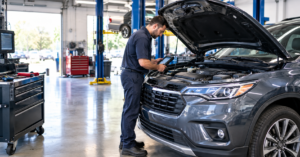
The inspection is conducted under campaign 25TA14, officially known as the V35A Crank Bearing Inspection. According to a report from Pickup Truck + SUV Talk, technicians begin by changing the oil, bringing the engine to specific operating temperatures, removing accessory belts and positioning the crankshaft precisely.
A sensitive accelerometer is then mounted directly to the crankshaft bolt. The technician strikes the crankshaft pulley at the 3 o’clock position using a specific plastic hammer.
Software Determines Whether the Engine Passes
The controlled impact sends vibrations through the metal, which the accelerometer records. That information is then processed by diagnostic software that analyzes the resonance and evaluates the quality of the strike.
The inspection data is automatically uploaded to the cloud, where the system returns a simple pass or fail result. This allows Toyota to target engine replacements toward assemblies that actually fail the acoustic inspection instead of replacing engines that remain healthy.
The Science Behind Toyota’s Hammer Test
Although the procedure may look primitive, the technique is based on an established engineering method known as experimental modal analysis. Engineers have used impact sensors for decades to study how structures respond to controlled forces.
By examining natural frequencies and damping within the crankshaft, the software can detect compromised bearings without requiring technicians to completely tear down the engine block.
A Strange-Looking but Targeted Inspection
The use of a plastic hammer on the service floor may look unusual, but the inspection is intended to provide a faster way to identify affected engines while avoiding unnecessary replacements. The approach allows technicians to evaluate the specific engine assemblies that require further action.
For Toyota Tundra owners whose trucks are undergoing the inspection, the rhythmic sound of a mechanic striking the engine may be surprising. The hammer test is part of Toyota’s effort to determine which V35A engines pass the acoustic check and which require replacement.