

The Mini Cooper could be headed for one of its biggest mechanical changes in decades. According to Autocar, Mini is considering BMW’s Gen6 platform for the next-generation Cooper, potentially moving the iconic small car from front-wheel drive to rear-wheel drive.
The potential change would mark a major departure from the formula Mini has used since the original Mini debuted in 1959. Although the brand introduced all-wheel drive with ALL4 in 2010, it has never offered a rear-wheel-drive production car.
Electric Mini Cooper Could Lead the Change
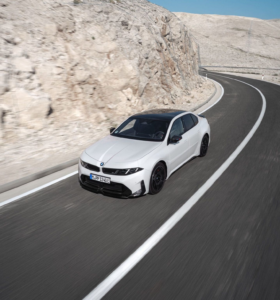
The most likely candidate for the move to rear-wheel drive is the electric Mini Cooper. BMW’s Gen6 architecture underpins its Neue Klasse EVs, beginning with the new iX3 and forthcoming i3 sedan.
Electrification has already changed the Cooper’s familiar go-kart-like driving experience, and relocating the motor to the rear could further alter its character.
Rear-wheel drive would theoretically provide better traction during acceleration while reducing the demands placed on the front tires. In a front-wheel-drive vehicle, those tires are responsible for both steering and power delivery.
The trade-off is that rear-wheel drive can be less forgiving on slippery roads. Modern stability-control systems, however, can mitigate that behavior.
Current Electric and Gasoline Coopers Use Different Platforms
The current electric Cooper uses a front-wheel-drive platform developed by Spotlight Automotive, BMW’s joint venture with Great Wall Motor in China. The same platform is also shared with the Aceman.
The gasoline-powered Cooper, meanwhile, is based on a heavily updated version of the previous-generation chassis.
For now, Mini is also using facelifts and new derivatives to establish the brand’s future direction. Mini design chief Holger Hampf said those updates will help set the tone for what comes next.
Mini Cooper Design Is Expected to Stay Familiar
Despite the potential mechanical transformation, the Cooper’s recognizable appearance is expected to remain. Hampf said maintaining the model’s general proportions is his top priority, although some downsizing could still take place without compromising practicality or safety.
Inspiration will reportedly come from the R50, the first BMW-era Mini, which launched in 2001.
Mini Faces Growing Electric Competition
The changes could be particularly important in Europe, where Mini faces increasing competition from Volkswagen, Renault, and others in the small electric-hatchback segment.
In the United States, Mini discontinued the previous Cooper SE after 2024 and deferred its China-built electric Cooper and Aceman amid steep tariffs on Chinese EVs.
The next-generation Cooper could therefore preserve the design cues that have defined Mini while potentially adopting a fundamentally different mechanical layout, with BMW’s Gen6 platform under consideration for the move to rear-wheel drive.