
Aston Martin still sees value in the three-pedal driving experience, but adding a manual transmission to its mainstream models has become a costly engineering challenge. CEO Adrian Hallmark told Road & Track that advanced driver-assistance systems, or ADAS, are the main obstacle.
Why Aston Martin Isn’t Offering a Manual Right Now
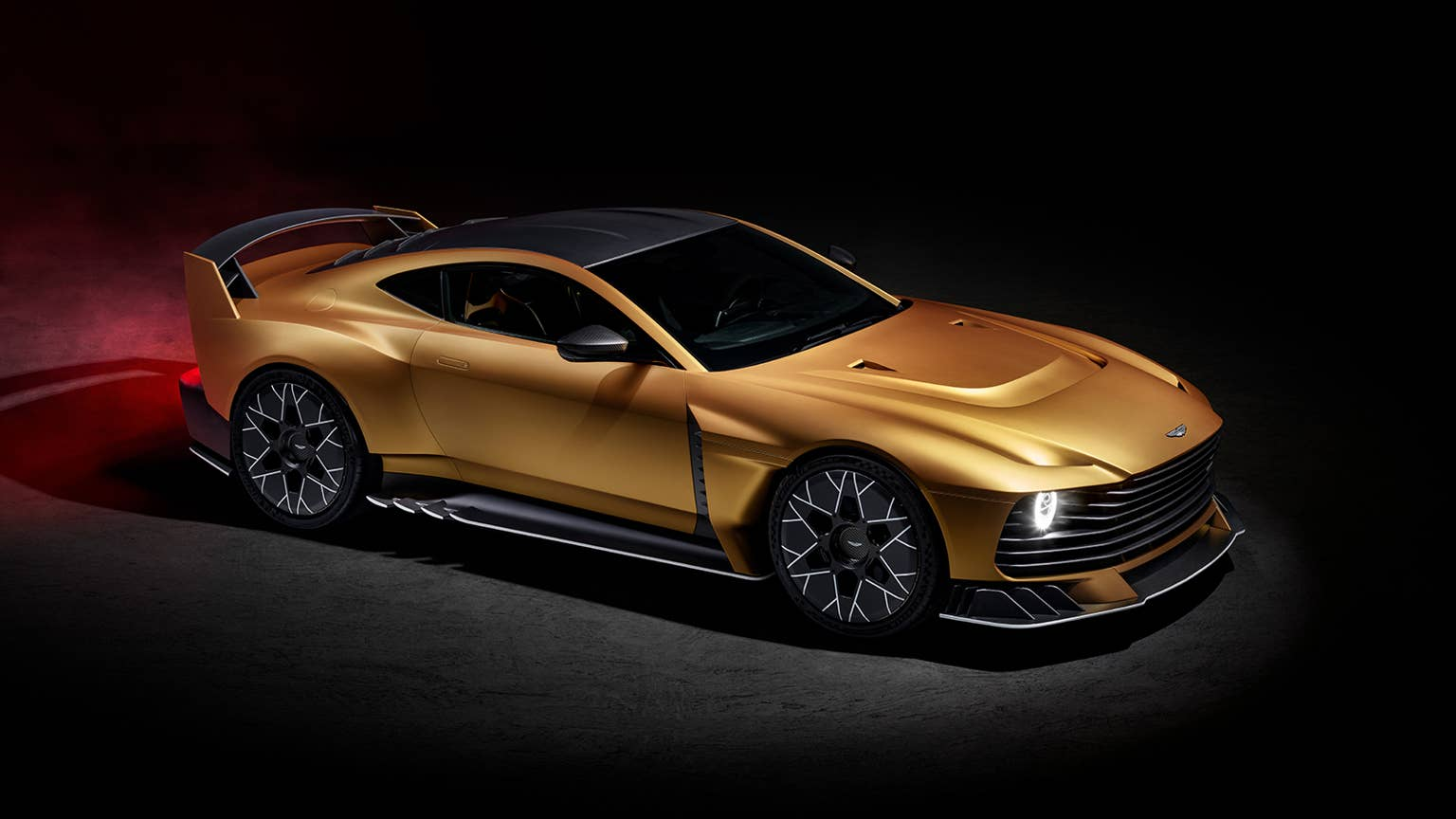
Aston Martin has never completely abandoned manual transmissions. The British automaker offered the limited-run Valour with a manual gearbox in 2023, followed by the rarer and more focused Valiant a year later.
However, neither is part of Aston Martin’s mainstream lineup. The last regular model offered with a manual transmission was the Vantage AMR, raising the question of why another Vantage, Vanquish or DB model hasn’t received three pedals and a stick shift.
According to Hallmark, the issue isn’t a lack of interest from customers. Instead, the challenge is making a manual transmission work with the electronic systems required on modern production cars.
ADAS Makes Manual Transmissions More Expensive
Hallmark explained that the difficulty isn’t obtaining a manual gearbox but developing the electronic and modified systems needed to make it function alongside Aston Martin’s advanced driver-assistance technology.
“The problem we have is not getting a manual gearbox; it’s getting an electronic and modified system to be able to work with a manual box. Why? Because when you’ve got ADAS—because this car’s got all the safety systems of a production car, if we put a manual in, you couldn’t have the adaptive speed control and the anti-crash intervention,” Hallmark said.
Aston Martin cannot simply remove those systems. Hallmark said ADAS is a requirement in Europe, meaning the automaker would have to develop a system capable of supporting a manual transmission.
That development could cost more than creating a new manual gearbox for the cars. Hallmark also said the current electronics architecture does not support pairing manual transmissions with ADAS, adding another expense to the project.
Aston Martin Needs a Strong Business Case
Even if Aston Martin can technically build a manual car, the company must determine whether enough customers would actually buy it. Hallmark pointed out that the number of people who call for manual transmissions online is considerably larger than the percentage who ultimately purchase them, particularly at higher price points.
Some automakers have managed to offer manual transmissions alongside these driver-assistance systems, but Hallmark noted that those companies have significantly greater financial resources than Aston Martin.
“When you look at how many cars you need to sell at what incremental price to offset the cost of the box and the electronics, it’s a marginal case,” Hallmark said.
Aston Martin’s Manual Transmission Dilemma
Hallmark also understands why Ferrari chose an automated manual approach, describing it as the more cost-effective solution in the 12Cilindri Manuale.
For Aston Martin, however, the decision remains difficult. “So our dilemma: Do we do a fake manual? Or don’t go manual? So that’s the problem,” Hallmark said.
The challenge does not necessarily mean Aston Martin will never build another manual car. The automaker could eventually offer a three-pedal model, but it would likely be reserved for its top-shelf cars.