Finding the Top SUV for Elderly drivers is not simply a matter of choosing the vehicle with the highest seating position or the longest list of safety features. For older drivers, the right SUV should make everyday driving feel easier—from getting into the driver’s seat and seeing clearly at intersections to adjusting the climate controls and backing out of a crowded parking space.
That is why the best choice can vary considerably from one driver to another. A driver who prioritizes visibility may prefer the Subaru Forester, while someone focused on fuel economy may find the Toyota RAV4 Hybrid more attractive. For an all-around combination of comfort, space, manageable dimensions and safety technology, however, the Honda CR-V stands out as the strongest overall recommendation.
The key is to look beyond horsepower, exterior size and styling. Entry height, seat support, visibility, control simplicity, parking assistance and the exact safety equipment on a particular trim can matter much more to an older driver.
What Makes an SUV a Great Choice for Elderly Drivers?
Compact SUVs and crossovers have become appealing choices for older drivers because they can provide a more upright seating position than many sedans while offering useful cargo flexibility. That extra space can be valuable for groceries, canes, walkers and other everyday equipment.
But taller does not automatically mean better. An SUV with an excessively high step-in can make entry and exit harder, particularly for drivers who have difficulty lifting themselves vertically or twisting their hips. Large SUVs can also be more challenging to park and maneuver.
The ideal vehicle is therefore a compromise: high enough to make access comfortable, but not so tall that climbing into it becomes a chore.
For most buyers, the most important considerations are:
- Easy entry and exit
- Supportive, adjustable seats
- Clear forward, side and rear visibility
- Automatic emergency braking and pedestrian detection
- Blind-spot monitoring and rear cross-traffic alert
- Simple climate and audio controls
- Parking sensors and a high-quality rear camera
- Comfortable ride quality and low cabin noise
- Manageable exterior dimensions
- Reasonable fuel, insurance and maintenance costs
AAA specifically identifies technologies such as backup cameras, blind-spot monitoring, automatic emergency braking and lane-departure warning as potentially useful for addressing challenges associated with reduced vision, slower reaction times and mobility limitations among older drivers.
What Should Elderly Drivers Look for in an SUV?
Easy Entry and Exit
For many older drivers, the first test happens before the engine is even started.
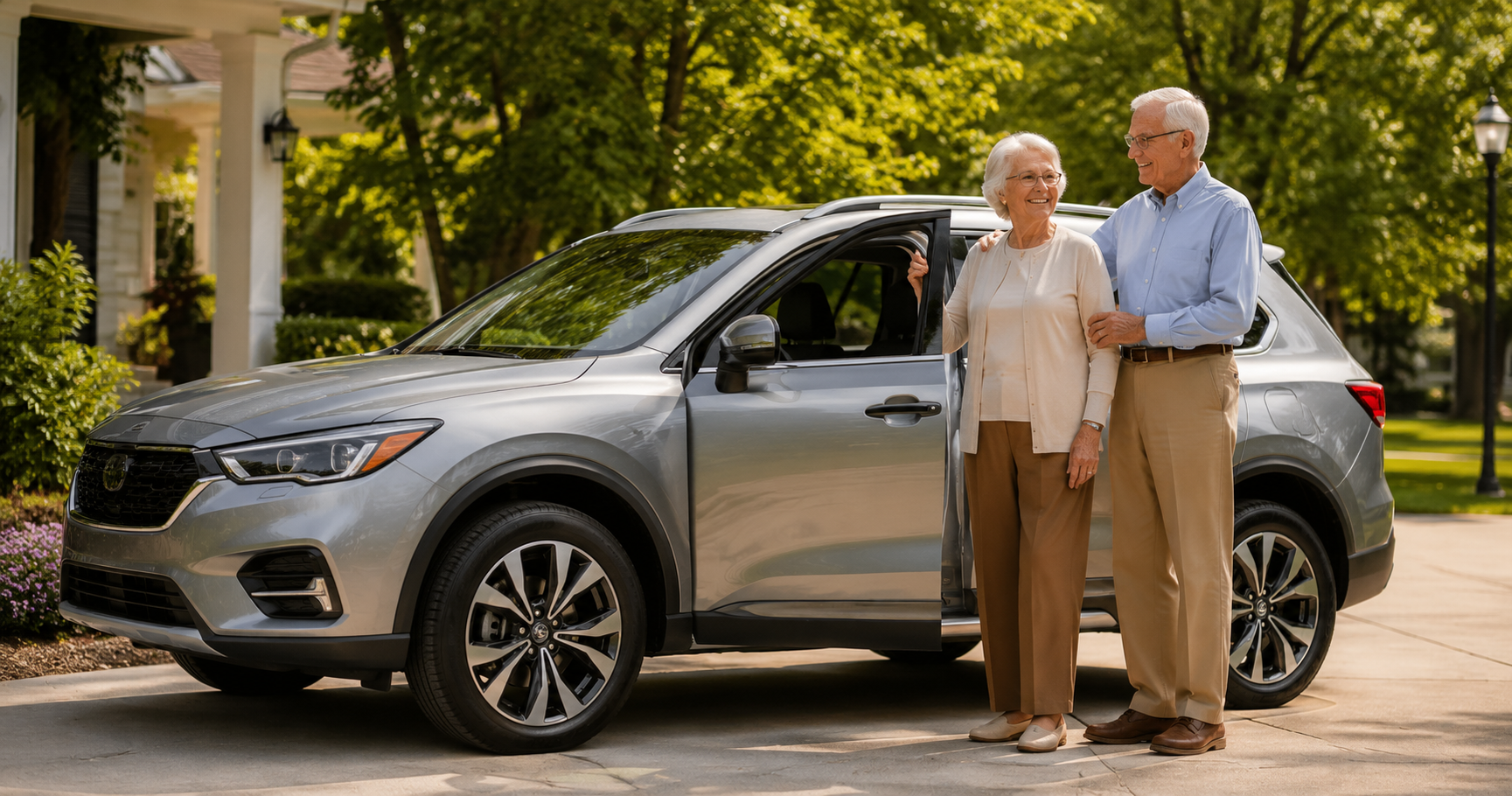
The driver should be able to sit down without dropping deeply into the cabin, avoid pulling themselves sharply upward, swing both legs into position without excessive twisting and use the door frame or grab handle for support.
A wide-opening door is particularly useful when a driver regularly carries a cane or walker. The relationship between the driver’s hip height and the seat is more important than the SUV’s overall ride height.
A practical dealership test is simple: get in and out several times. If the process requires substantial pushing, twisting or lifting, another vehicle may be a better fit even if its specifications look impressive on paper.
Comfortable and Supportive Seats
Seat comfort can become increasingly important as driving time increases. A seat that feels acceptable for five minutes at a dealership may not feel comfortable after an hour on the highway.
Look for:
- Power adjustment for seat height and cushion angle
- Lumbar support
- A firm but comfortable cushion
- Adequate thigh support
- Generous steering-wheel adjustment
- Memory settings when multiple people drive the vehicle
- Heated seats and a heated steering wheel where appropriate
Evaluate the seat after at least 20 to 30 minutes of driving rather than judging it immediately after sitting down.
Excellent Visibility From the Driver’s Seat
A high seating position alone does not guarantee good visibility.
Older drivers should look for large side windows, relatively thin pillars, a clear view over the shoulder and minimal obstruction from mirrors or displays. Blind-spot monitoring can add another layer of assistance, while a high-quality rear camera can make reversing easier.
The Subaru Forester is especially notable in this category because of its upright design and large glass area.
Simple, Intuitive Controls
Technology is helpful only when it is easy to use.
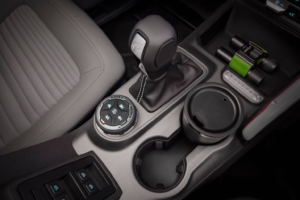
Physical volume and temperature knobs, clearly labeled buttons, large display text and steering-wheel controls can reduce the need to navigate multiple touchscreen menus. Voice controls can also make phone and navigation functions easier to operate.
A useful test is to ask the driver to adjust the temperature, change the audio source, activate the defroster and select a navigation destination without consulting the owner’s manual. If basic functions are confusing, the SUV may not be the best senior-friendly choice.
How Important Is Advanced Safety Technology for Older Drivers?
Automatic Emergency Braking
Automatic emergency braking is designed to provide additional protection when a potential frontal collision is detected and the driver does not react quickly enough.
Forward-collision warning can alert the driver to a possible impact, while automatic braking can apply or supplement braking in certain circumstances. Pedestrian and cyclist detection, where available, can extend the system’s usefulness beyond vehicle-to-vehicle situations.
These systems should be viewed as assistance rather than autonomous driving technology. Drivers still need to remain attentive.
Blind-Spot Monitoring and Rear Cross-Traffic Alert
Blind-spot monitoring can warn when another vehicle is alongside or approaching in an area that is difficult to see. Rear cross-traffic alert can warn about approaching vehicles or pedestrians while reversing.
Those features can be particularly useful in crowded shopping-center parking lots, narrow driveways and spaces surrounded by large vehicles.
Adaptive Cruise Control and Lane-Centering Assistance
Adaptive cruise control can reduce the amount of accelerator and brake adjustment required on longer highway drives. Lane-centering assistance can provide steering support on roads with visible lane markings.
However, these systems have limitations. Heavy rain, faded lane markings, construction zones, sharp curves and unusual road layouts can reduce their effectiveness. Drivers must continue to pay attention and remain responsible for controlling the vehicle.
Parking Sensors and 360-Degree Cameras
Parking assistance may be just as valuable as highway driver assistance for an older driver.
Rear cameras, front and rear parking sensors and surround-view cameras can help compensate for limited neck mobility or difficulty judging distance. Buyers should confirm whether a 360-degree camera is actually included on the exact trim they are considering.
Best SUV for Elderly Drivers: Quick Comparison
| SUV | Best For | Main Strengths | Potential Drawbacks |
|---|---|---|---|
| Honda CR-V | Best overall | Comfort, space, hybrid efficiency, Honda Sensing | Some desirable features depend on trim |
| Subaru Forester | Best visibility | Large windows, upright seating, standard AWD | Gas models are less efficient than leading hybrids |
| Toyota RAV4 Hybrid | Best efficiency | Excellent fuel economy, smooth hybrid operation, practical cargo area | Hybrid-only 2026 lineup can increase entry cost |
| Kia Sportage | Best comfort and technology | Roomy cabin, comfortable seats, hybrid and PHEV options | Some advanced features vary by trim |
| Mazda CX-50 | Best driving engagement | Strong safety technology, attractive cabin, available hybrid | Firmer ride and sportier seating |
#1 Honda CR-V: Best Overall SUV for Elderly Drivers

Why the Honda CR-V Stands Out
The Honda CR-V is the strongest all-around Top SUV for Elderly recommendation because it balances manageable dimensions, interior room, comfortable seating, useful visibility and available hybrid efficiency.
It does not attempt to solve every problem with extreme size or performance. Instead, its crossover proportions create a useful middle ground between a low sedan and a much taller SUV.
Entry and Exit Comfort
The CR-V’s proportions can make it easier to approach the driver’s seat without the deep drop associated with some cars or the high climb associated with larger SUVs. However, seat height is highly personal, so the driver should still perform repeated entry-and-exit tests.
Seating, Interior Space and Ride Quality
The CR-V offers a roomy cabin, comfortable ride and useful passenger and cargo space. Those characteristics are particularly valuable for drivers who frequently carry groceries, luggage or mobility equipment.
Honda Sensing Safety Technology
Honda says every 2026 CR-V includes Honda Sensing, with technologies including forward-collision warning, Collision Mitigation Braking, lane-keeping assistance, road-departure mitigation and adaptive cruise control.
Buyers should still verify the availability of blind-spot monitoring, rear cross-traffic alert and parking assistance on the exact trim being considered.
CR-V Hybrid: Is It Worth Considering?
The hybrid is especially attractive for drivers who spend considerable time in city traffic or plan to keep the SUV for many years. Electric-motor assistance can provide smooth low-speed acceleration and help reduce fuel consumption in stop-and-go driving.
A gas-powered model may make more sense when purchase price is the priority, annual mileage is low or the buyer wants a simpler selection of trims.
#2 Subaru Forester: Best SUV for Visibility
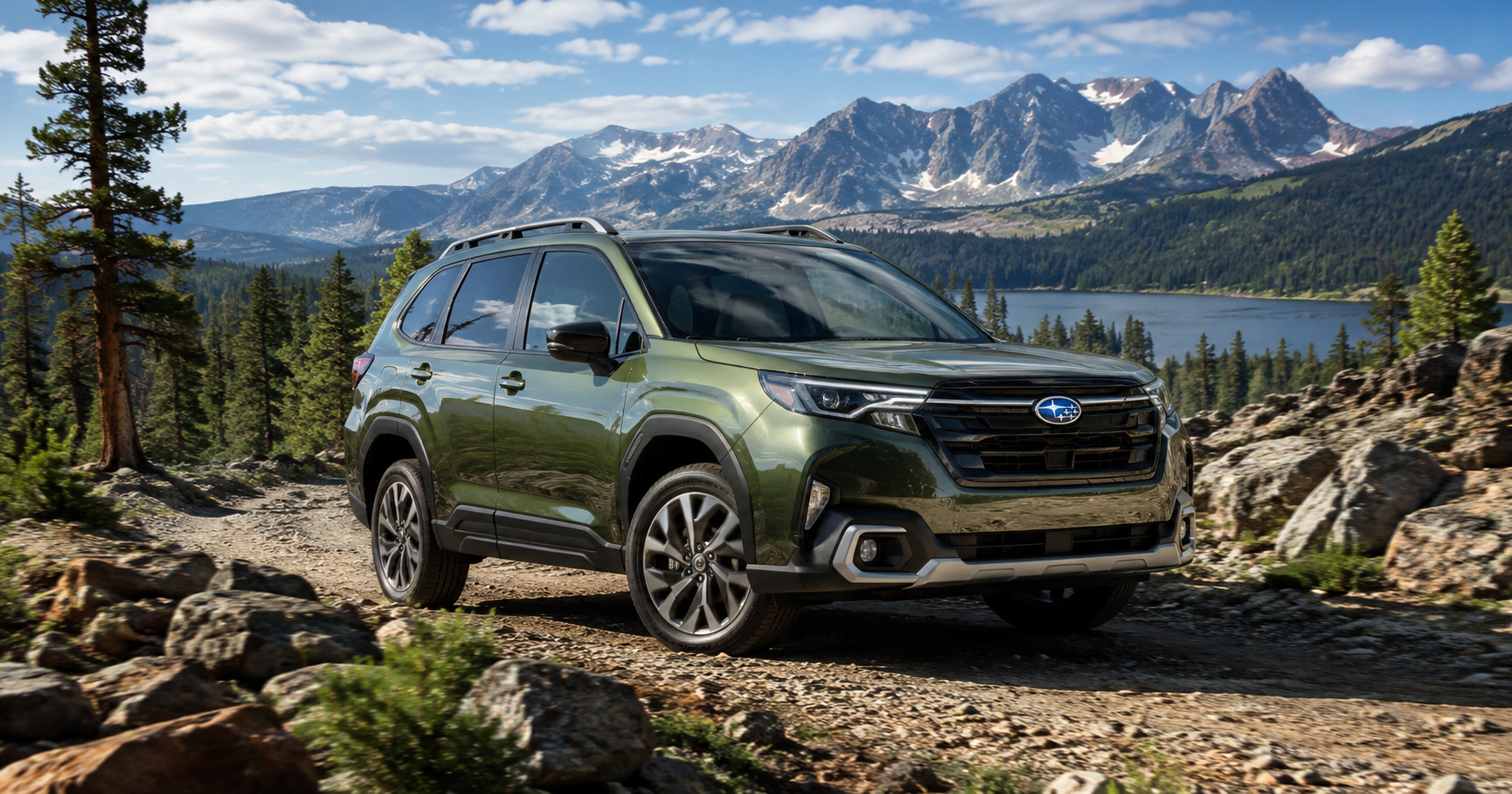
If visibility is the deciding factor, the Subaru Forester may be the strongest choice.
Its upright design and large glass area can make it easier to judge vehicle edges and monitor nearby traffic. That can be helpful when merging, reversing, driving through narrow streets or watching for pedestrians and cyclists.
Consumer Reports selected the Forester as its 2026 compact-SUV Top Pick, citing easy access, visibility, ride comfort, safety credentials and interior space.
Standard All-Wheel Drive and Everyday Confidence
Subaru says symmetrical all-wheel drive is standard on the 2026 Forester, with fuel economy of up to 33 mpg. AWD can provide additional traction, although it does not eliminate the need for appropriate tires or careful driving.
The 2026 Forester also earned IIHS Top Safety Pick+ recognition.
Who Should Choose the Forester?
The Forester is particularly compelling for an older driver who values an open view of the road more than maximum fuel economy.
Its main disadvantages are that gas versions trail leading hybrids in efficiency, while the taller Wilderness version may not be ideal for every mobility concern.
#3 Toyota RAV4: Best SUV for Efficiency and Practicality

The 2026 Toyota RAV4 is a particularly interesting option because the U.S. lineup moved to hybrid-only powertrains.
That makes the RAV4 attractive to drivers who want smooth low-speed operation, fewer fuel stops and strong fuel economy. The most efficient versions are reported at up to 47 mpg city, 40 mpg highway and 43 mpg combined, depending on configuration.
Seating Position and Cabin Accessibility
The RAV4’s compact dimensions can make it manageable in urban environments. But buyers should compare its driver’s seat height directly with the CR-V and Forester.
Wheel size and suspension tuning can also affect the ride and the feel of getting into the vehicle.
Hybrid Efficiency and Ownership Benefits
The RAV4 Hybrid is the efficiency leader among the primary recommendations in this research. It is especially appealing for urban drivers who frequently encounter stop-and-go traffic.
The trade-off is that the hybrid-only lineup can increase the initial purchase price, while higher trims can become expensive.
#4 Kia Sportage: Best for Comfort and User-Friendly Technology

The Kia Sportage brings a different strength to the comparison: a roomy cabin, comfortable seating and a substantial technology package.
Its interior space can be particularly useful for older passengers who regularly carry luggage or mobility equipment.
The 2026 Sportage Plug-in Hybrid is reported to have a five-star NHTSA rating, with features including forward-collision warning, pedestrian and cyclist detection, blind-spot monitoring and lane-keeping assistance.
Trim-Level Caution
One important consideration is equipment variation. Highway Driving Assist and Highway Driving Assist 2 are not necessarily standard on every trim, so buyers should verify the exact vehicle rather than assuming that a model-wide feature is included on the base version.
The Sportage is a good candidate for drivers who value interior comfort and modern technology, but the wide body can feel less convenient in particularly tight parking spaces.
#5 Mazda CX-50: Best for Drivers Who Still Want an Engaging Drive

The Mazda CX-50 is aimed at an older driver who does not want to give up responsive handling simply because practicality has become more important.
Mazda lists i-Activsense driver-assistance technology including automatic emergency braking, adaptive cruise control, lane-departure warning, lane-keeping assistance, blind-spot monitoring and rear cross-traffic alert, depending on detailed configuration. The 2026 CX-50 also earned IIHS Top Safety Pick+ recognition.
Comfort Versus Sporty Ride Quality
The CX-50’s athletic character can come with compromises for some older drivers. Its ride is firmer, its seat bolsters can be more pronounced and its seating position may feel less upright than the Forester.
For drivers with significant knee or hip mobility limitations, those characteristics deserve particular attention during a test drive.
The 2026 CX-50 Hybrid is rated at 38 mpg combined and starts at $34,750 for the Hybrid Preferred, according to Mazda’s U.S. announcement.
Best Small SUV for Elderly Drivers
For many older drivers, a compact SUV is the sweet spot.
Smaller dimensions can make parking, turning and maneuvering easier without sacrificing the upright seating position and cargo flexibility that make SUVs attractive.
The Subaru Forester is the strongest small-SUV choice when visibility and access are the priorities. The CR-V provides a more balanced combination of space, comfort and hybrid availability, while the Sportage is an appealing alternative for buyers who place greater emphasis on comfort and technology.
Best Luxury SUV for Elderly Drivers
A luxury SUV can make sense, but only when the premium price delivers meaningful benefits.
Features worth prioritizing include:
- Multi-way power seats with memory
- Supportive seating
- Quiet ride and cabin insulation
- Head-up display
- 360-degree camera
- Power liftgate
- Easy-to-use controls
Potential choices include the Acura RDX, Lexus NX, Volvo XC60 and Genesis GV70. The important point is not to pay a premium simply for oversized wheels, complicated touchscreens or excessive performance.
Best SUV for Elderly Drivers With Mobility Concerns
For mobility concerns, vehicle geometry matters more than brand reputation.
Look for a moderate step-in height, wide doors, a low or flat door sill, a firm seat cushion and strong grab handles. A power liftgate can also make cargo access easier.
There should be enough cargo height and floor space for a folded walker or other equipment.
For serious mobility limitations, a physical therapist, occupational therapist or trained vehicle-adaptation specialist may offer more useful advice than a salesperson.
Best SUV for Elderly Passengers Rather Than Drivers
If the older person will usually be a passenger, rear-seat accessibility becomes more important.
Check:
- Rear-door opening angle
- Rear-seat hip height
- Ease of placing both feet inside
- Grab handles
- Rear legroom
- Ability to load mobility equipment
- Cargo-floor height
A midsize SUV can offer more passenger room, but compact SUVs are often easier to park and less intimidating for the person behind the wheel.
Best SUV for Elderly Drivers on a Budget
A lower-trim CR-V, Forester or Sportage may provide better value than a luxury SUV loaded with expensive options.
A carefully inspected used SUV can also make financial sense. Buyers should look for a clean history, current tires, functioning cameras and sensors, good headlights, completed recalls and comfortable seats.
Most importantly, do not compare only monthly payments. Fuel, insurance, tires, maintenance, registration, financing costs and resale value all affect the true cost of ownership.
Best Hybrid SUV for Elderly Drivers
Hybrid SUVs can be particularly appealing for older drivers who spend a lot of time in urban traffic.
They can provide smooth acceleration, strong city fuel economy and fewer trips to the gas station. The 2026 RAV4 Hybrid is the efficiency leader among the primary recommendations, while the CR-V Hybrid offers a strong alternative focused on space and comfort. The Mazda CX-50 Hybrid and Subaru Forester Hybrid provide additional choices.
A plug-in hybrid is more complicated as a recommendation because its advantages depend on having convenient access to charging.
Best SUV for Long Highway Trips
For long-distance driving, comfort should take priority over aggressive performance.
- Supportive seats
- Quiet cabin
- Adaptive cruise control
- Lane-centering assistance
- Clear headlights
- Readable gauges
- Comfortable steering effort
- Useful cargo capacity
The CR-V, Forester and Sportage are strong candidates, although road noise and seat comfort should ultimately be evaluated during a personal drive.
Best SUV for City Driving and Parking
City drivers should prioritize compact dimensions, good turning ability and visibility.
Parking sensors, a clear rear camera and, where available, a 360-degree camera can make a substantial difference in crowded urban environments.
The CR-V, Forester and RAV4 are generally more manageable in urban settings than large three-row SUVs.
Are Large SUVs Better for Elderly Drivers?
Usually, no.
A larger SUV can provide more rear-seat and cargo space, but it may also create a higher step-in, wider doors, more difficult parking and larger blind spots. It can also cost more to fuel, insure and maintain.
A midsize SUV makes sense when passenger or mobility-equipment needs demand additional space. For a single older driver, however, a compact SUV is often the better compromise.
SUV vs. Sedan for Elderly Drivers: Which Is Easier?
Advantages of an SUV
- More upright seating
- Potentially easier entry and exit
- Flexible cargo space
- More room for walkers and groceries
- Availability of advanced parking assistance
Advantages of a Sedan
- Lower step-over height in some vehicles
- Lower center of gravity
- Often easier highway handling
- Potentially better fuel economy
- Often lower purchase price
The best compromise may be a compact crossover with moderate seat height rather than an extremely tall SUV.
How to Test-Drive an SUV Before Buying
The test drive should be treated as a practical accessibility test—not simply a chance to determine whether the engine feels powerful enough.
- Enter and exit the vehicle at least five times.
- Check whether the driver can sit down without twisting or dropping deeply.
- Adjust the seat, steering wheel and mirrors.
- Check forward, side and rear visibility.
- Test blind-spot alerts and the rear camera.
- Operate the climate and audio controls without the owner’s manual.
- Practice parking and reversing.
- Drive over rough pavement and speed bumps.
- Test highway merging and adaptive cruise control.
- Load a walker, cane, groceries or other regular equipment.
- Evaluate seat comfort after at least 30 minutes.
- Confirm the complete safety package on the exact trim or VIN.
Common Mistakes Elderly Buyers Should Avoid
- Choosing the tallest SUV simply because it appears safer
- Assuming every trim has identical safety equipment
- Buying based only on crash-test scores
- Ignoring seat firmness and hip support
- Choosing a vehicle with confusing touchscreen controls
- Failing to test rear visibility
- Choosing large wheels that compromise ride comfort
- Overlooking insurance and tire costs
- Skipping recall and maintenance checks on used vehicles
- Assuming driver assistance can drive independently
- Failing to test the SUV with a spouse, caregiver or regular passenger
How Much Should You Spend on a Senior-Friendly SUV?
There is no universal price point that makes an SUV senior-friendly.
The better approach is to establish a total ownership budget that includes the purchase price as well as fuel, insurance, tires, maintenance, registration and financing costs.
A less expensive SUV with comfortable seats, good visibility and the right safety equipment can be a better choice than a substantially more expensive luxury model with features the driver rarely uses.
What Safety Ratings Should You Check Before Buying?
Buyers should check both NHTSA and IIHS results for the specific model year and configuration.
Do not stop at an overall crash-test score. Also examine:
- Crash-test performance
- Headlight performance
- Pedestrian front-crash prevention
- Vehicle-to-vehicle front-crash prevention
- Standard versus optional safety equipment
- IIHS Top Safety Pick or Top Safety Pick+ status
IIHS introduced stricter requirements for its 2026 awards, including stronger crash-test and crash-prevention criteria. An award from an older model year should not automatically be assumed to apply to a newer vehicle.
What Is the Best SUV for Elderly Drivers Overall?
For most U.S. buyers, the Honda CR-V is the strongest overall choice because it balances comfort, space, manageable dimensions, hybrid efficiency and driver-assistance technology.
But the answer changes according to priorities:
- Best overall: Honda CR-V
- Best visibility: Subaru Forester
- Best efficiency: Toyota RAV4 Hybrid
- Best comfort and technology: Kia Sportage
- Best driving engagement: Mazda CX-50
The central lesson is that horsepower and sheer size should not dominate the buying decision. A vehicle that is easy to enter, comfortable for long periods, simple to operate and easy to see out of may be much better suited to an older driver.
Final Buying Checklist for Elderly SUV Shoppers
- Entry and exit: Can you get in and out without twisting or pulling yourself up?
- Seat comfort: Does the seat remain comfortable after 30 minutes?
- Visibility: Can you see traffic, parking spaces and vehicle edges clearly?
- Safety: Does the exact trim have the desired driver-assistance systems?
- Controls: Can you operate basic functions without navigating complicated menus?
- Parking: Are the camera and sensors easy to understand?
- Cargo: Can the vehicle accommodate your regular equipment?
- Ownership: Can you comfortably afford fuel, insurance, tires and maintenance?
- Test drive: Have you driven the exact trim you plan to buy?
Frequently Asked Questions
What is the best SUV for elderly drivers?
The Honda CR-V is the strongest all-around recommendation because it combines manageable dimensions, comfortable seating, useful visibility, available hybrid efficiency and a broad safety package. The Subaru Forester is especially strong for visibility, while the Toyota RAV4 Hybrid stands out for fuel economy.
What is the easiest SUV for seniors to get in and out of?
The Subaru Forester and Honda CR-V are strong starting points because of their upright seating and compact-crossover dimensions. However, the ideal vehicle depends on the driver’s height, hip position and mobility, so a personal test is essential.
What is the safest SUV for elderly drivers?
There is no single safest SUV based only on an overall score. Buyers should consider crash-test performance, automatic emergency braking, pedestrian detection, headlights and blind-spot coverage. The 2026 Mazda CX-50, Subaru Forester and qualifying Kia Sportage earned IIHS Top Safety Pick+ recognition.
Is the Honda CR-V a good SUV for elderly drivers?
Yes. The Honda CR-V combines a spacious cabin, comfortable ride, available hybrid powertrain and Honda Sensing technology. Buyers should verify blind-spot monitoring, rear cross-traffic alert and parking equipment on the exact trim.
Is the Subaru Forester good for seniors?
Yes. The Subaru Forester is particularly appealing to seniors who prioritize large windows, upright seating, standard all-wheel drive and clear visibility around the vehicle.
Is the Toyota RAV4 good for elderly drivers?
Yes. The 2026 Toyota RAV4 hybrid-only lineup offers smooth operation and strong fuel economy. Buyers should compare seat height, infotainment usability and parking-camera availability across trims.
What is the best small SUV for seniors?
The Subaru Forester is the strongest choice for visibility, while the Honda CR-V is the best general-purpose recommendation. The Kia Sportage is a strong alternative for comfort and technology.
Are SUVs safer than sedans for elderly drivers?
Not automatically. Safety depends on crash structure, restraint systems, driver-assistance technology, tires, headlights and the driver’s ability to control the vehicle. A manageable crossover may be a better fit than a large SUV that is difficult to enter or park.
What SUV has the best visibility for seniors?
The Subaru Forester is the clearest recommendation among the shortlisted vehicles because of its large windows and upright design. Visibility should still be tested from the individual driver’s seat.
What is the best SUV for seniors with knee or hip problems?
Look for moderate seat height, wide-opening doors, a firm seat cushion, adjustable lumbar support and low door sills. The Honda CR-V and Subaru Forester deserve early consideration, but physical fit matters more than model reputation.
Should seniors buy a hybrid SUV?
A hybrid can provide smooth acceleration, strong city fuel economy and fewer fuel stops. Buyers should also consider the initial purchase price, warranty coverage, long-term ownership plans and local service availability.
What SUV is easiest to park for older drivers?
A compact SUV with good visibility, a tight turning circle, parking sensors and a clear rear or 360-degree camera is usually easiest to park. The Honda CR-V, Subaru Forester and Toyota RAV4 are more manageable than full-size SUVs.
What features should seniors avoid in an SUV?
Seniors should be cautious about vehicles where essential functions are buried in confusing menus, visibility is obstructed by thick pillars or screens, seats have excessive bolsters, or entry requires a difficult step up. Large wheels and sporty suspension can also reduce comfort.
Is a luxury SUV worth it for an elderly driver?
A luxury SUV can be worthwhile when premium features provide genuine benefits, such as multi-way power seats, quietness, a head-up display, a 360-degree camera and easy-to-use controls. Mainstream SUVs often provide similar core safety functions for less money.
What should seniors check during an SUV test drive?
Seniors should test entry and exit, seat comfort, steering-wheel adjustment, visibility, controls, cameras, parking, highway assistance, ride quality and cargo access. The exact trim being purchased should be tested.
Conclusion: Choosing the Right SUV Is About Fit, Not Just Age
There is no single vehicle that can be called the perfect Top SUV for Elderly drivers. Older motorists have different heights, mobility needs, driving habits, budgets and expectations.
For most U.S. buyers, the Honda CR-V remains the strongest all-around recommendation. The Subaru Forester makes more sense when visibility is the overriding concern. The Toyota RAV4 Hybrid is the efficiency choice, the Kia Sportage emphasizes comfort and technology, and the Mazda CX-50 is a better match for drivers who still want a more engaging driving experience.
The smartest approach is practical: sit in the vehicle, get in and out repeatedly, spend enough time in the driver’s seat to judge comfort, check visibility from every direction, operate the controls, test parking assistance and confirm the complete safety package on the exact trim.
Ultimately, the best senior-friendly SUV is not necessarily the biggest, newest or most powerful one. It is the vehicle that fits the driver comfortably and confidently—and makes everyday driving easier rather than more complicated.