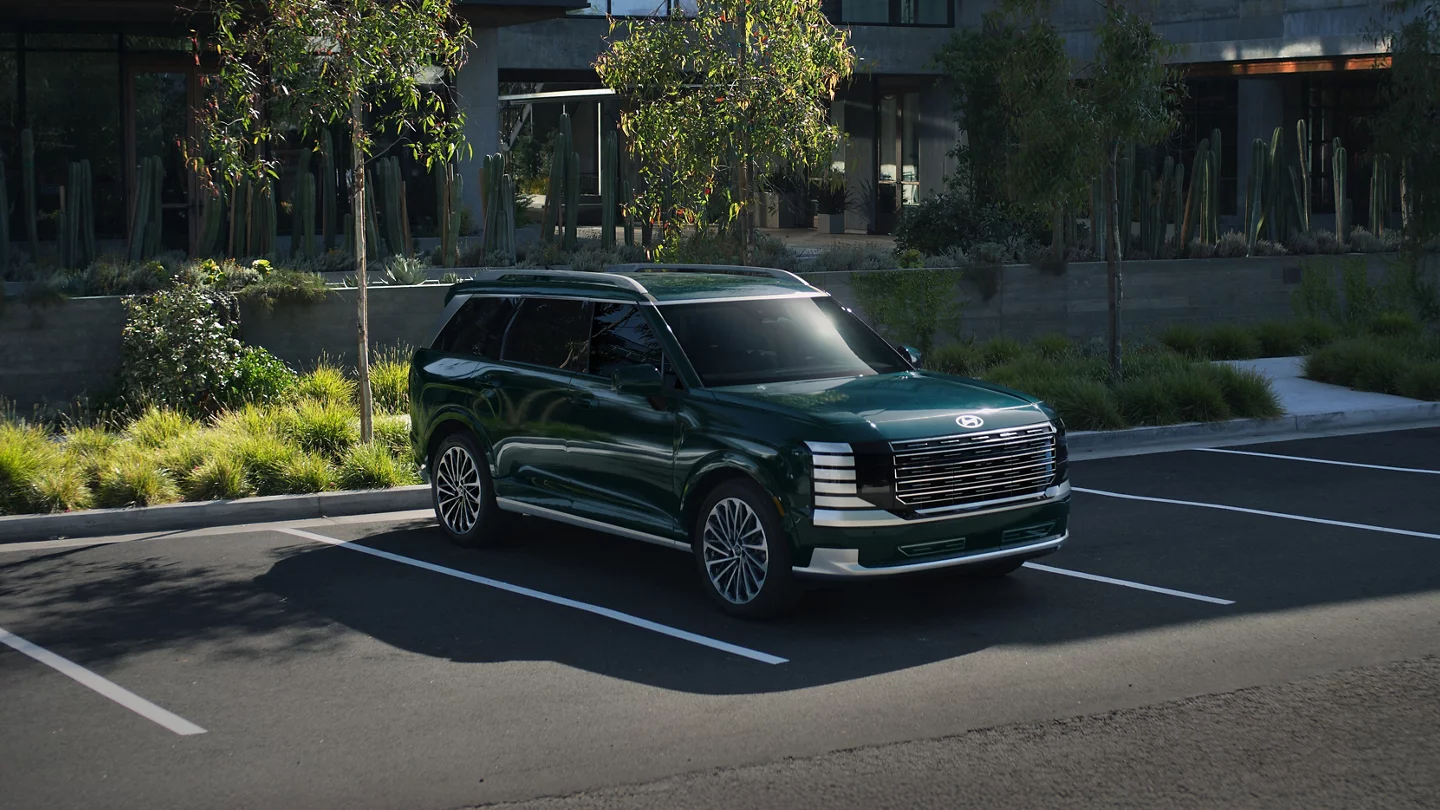
The Hyundai Palisade High Roof 2027 may be one of the most unexpected SUV variants Hyundai has introduced in years. Instead of chasing a sportier stance, more ground clearance, or a more aggressive off-road image, Hyundai has taken the family-oriented Palisade in a completely different direction: upward.
Built for the South Korean market, the new high-roof variant raises the Palisade to an unusual 78.9 inches tall, approximately 9.4 inches higher than the standard model. The extra space is designed primarily to transform the passenger compartment, with a large rear entertainment display, additional ambient lighting and a starfield-style headliner.
That makes the Hyundai Palisade High Roof 2027 less about traditional SUV performance and more about giving passengers in the second and third rows a premium, lounge-like experience.
It is an unusual concept for an SUV, particularly in the United States, where high-roof vehicles are more commonly associated with vans and commercial conversions. But in South Korea, where executive transportation and luxury passenger vans are popular, the idea makes considerably more sense.

What Is the Hyundai Palisade High Roof 2027?
The Hyundai Palisade High Roof 2027 is a new South Korean-market version of Hyundai’s three-row midsize SUV. As its name suggests, its defining feature is an extensively raised roof that creates additional vertical space inside the cabin.
Unlike a conventional SUV with a slightly taller suspension or roof rails, this version fundamentally changes the vehicle’s proportions. The Palisade High Roof stands 78.9 inches tall, placing it significantly above the standard Palisade and making it taller than several much larger vehicles.
Hyundai says the additional height is concentrated primarily in the space beneath the headliner. In other words, the goal is not simply to give the vehicle more ground clearance. The extra volume is intended for passengers.
That distinction is important. A traditional SUV buyer might expect increased height to translate into better off-road capability. The High Roof follows a different philosophy. It is essentially a passenger-focused luxury conversion built around the Palisade platform.
A Different Interpretation of SUV Luxury
Luxury SUVs typically compete through leather upholstery, premium audio systems, advanced driver-assistance technology, powerful engines and increasingly sophisticated infotainment systems.
The Palisade High Roof adds another dimension: vertical space.
For passengers riding in the rear, especially those spending long periods inside the vehicle, additional headroom can change the perception of the cabin. Instead of feeling like a conventional three-row SUV, the interior can feel more open and limousine-like.
That is particularly relevant in South Korea, where vehicles used for business transportation frequently place a greater emphasis on rear-seat comfort than on the driving experience.

2027 Palisade High Roof Dimensions: Nearly 79 Inches Tall
The most remarkable specification of the Hyundai Palisade High Roof 2027 is its overall height.
Hyundai lists the High Roof at 78.9 inches. That is an extraordinary number for an SUV and puts the vehicle into territory more commonly occupied by tall passenger vans.
For perspective, the High Roof is approximately:
- 9.4 inches taller than the standard Palisade.
- About 1 inch taller than the Lincoln Navigator.
- Approximately 3 inches taller than the Volkswagen ID. Buzz.
Those comparisons help illustrate just how unusual the Palisade becomes with its raised roof. It is still fundamentally an SUV, but its height gives it the visual proportions of a luxury passenger van.
Will the Palisade High Roof Fit in Parking Garages?
One obvious concern with a vehicle approaching 79 inches in height is parking infrastructure.
Hyundai says the Palisade High Roof should still fit in most underground parking garages. However, buyers would need to pay much closer attention to posted clearance limits than they would with a conventional Palisade.
This is an important practical consideration. Parking garages can have different clearance levels at entrances, ramps and individual sections. A vehicle that fits under one structure may not necessarily clear another.
For owners who regularly use older underground garages, automated parking structures or facilities with particularly low entrances, the additional height could become a genuine ownership consideration.
That trade-off demonstrates the central philosophy of the High Roof: Hyundai is accepting some additional exterior height in exchange for a more spacious and luxurious passenger environment.

Why Did Hyundai Raise the Roof?
The answer appears to be simple: passenger comfort.
Most SUV manufacturers spend enormous amounts of engineering effort keeping vehicles as low as possible. Lower roofs can improve aerodynamics, reduce wind noise, make loading easier and help keep a vehicle within conventional parking dimensions.
Hyundai has intentionally moved in the opposite direction.
The additional roof volume gives designers more freedom to create a distinctive rear passenger environment. Rather than using the extra height for cargo, Hyundai is emphasizing entertainment, lighting and the overall atmosphere inside the cabin.
This approach has precedent in the Korean automotive market.
The Influence of Luxury Passenger Vans
High-roof passenger vehicles are not entirely new in South Korea. Hyundai’s corporate sibling Kia has already embraced the concept with the Kia Carnival Hi Limousine.
The Carnival Hi Limousine takes the company’s popular minivan and raises its roof to create a more spacious passenger compartment. It is particularly suited to executive transportation, family travel and customers who want something more luxurious than a conventional minivan.
The Hyundai Palisade High Roof 2027 appears to borrow that philosophy while applying it to an SUV.
That distinction could be important for customers who prefer the appearance and driving position of an SUV but want some of the interior openness associated with a luxury van.
A 21.4-Inch Rear Entertainment Screen
One of the headline features of the Hyundai Palisade High Roof 2027 is a standard 21.4-inch rear-seat entertainment screen.
That is an unusually large display for a passenger vehicle. Hyundai is positioning the screen as a major part of the rear-cabin experience rather than as a minor entertainment accessory.
The system can stream content from popular platforms including:
- YouTube
- Netflix
- Disney+
For families, this could make long road trips substantially easier. Children can watch movies or shows from the second or third row without relying exclusively on smartphones or tablets.
For executive transportation, the same feature takes on a different role. A large rear display can provide entertainment during airport transfers, business travel or long-distance journeys.
Why a Large Rear Screen Makes Sense in This SUV
A 21.4-inch display would seem excessive in a standard family SUV. In the High Roof, however, it fits the vehicle’s purpose.
The increased roof height creates a cabin designed around rear passengers. Once Hyundai commits to that philosophy, a large entertainment display becomes a logical addition.
The combination of extra headroom, ambient lighting and a large screen is intended to make the rear cabin feel more like a private lounge than the back seat of an ordinary SUV.

Starfield Headliner and Ambient Lighting
The High Roof also receives a starfield-style headliner with additional ambient lighting.
This feature is more than a cosmetic change. Luxury vehicles increasingly use lighting to influence the mood of the cabin, particularly in models designed around rear-seat passengers.
A starfield roof can create a dramatic atmosphere at night, while ambient lighting can make the interior feel warmer and more sophisticated.
Combined with the taller roof, the lighting concept reinforces the impression that the High Roof is designed to be experienced from inside rather than simply admired from outside.
A Different Kind of Luxury
The High Roof demonstrates how automotive luxury is evolving.
For decades, luxury largely meant expensive materials and powerful engines. More recently, technology and passenger experience have become equally important.
Rear-seat entertainment, advanced connectivity, personalized lighting and increased space can matter more to certain customers than acceleration figures.
That is especially true for vehicles used by families, corporate transportation services and customers who spend substantial amounts of time being driven.
Is the Palisade High Roof a Van or an SUV?
Technically, the vehicle remains based on the Palisade SUV. But visually and functionally, the Hyundai Palisade High Roof 2027 moves closer to the luxury passenger-van category.
That is precisely what makes it interesting.
Traditional SUVs prioritize a balance between passenger space, cargo capacity, road manners and exterior proportions. Luxury vans can focus more heavily on the occupants.
The High Roof sits somewhere between those two worlds.
It retains the basic SUV identity of the Palisade while adding a roof design more closely associated with passenger vans and limousine-style conversions.
High-Roof SUVs Are Extremely Unusual
Raised-roof designs have historically been more common among vehicles based on commercial vans. Models derived from platforms such as the Ford E-Series and Chevrolet Express have been converted into high-roof passenger vehicles for transportation and recreational applications.
That makes Hyundai’s decision particularly unconventional.
Rather than starting with a traditional van, Hyundai has taken a mainstream three-row SUV and created a factory high-roof variant.
Hyundai describes the model as Korea’s first SUV-based high-roof vehicle, highlighting how unusual the configuration is in its home market.
Who Is the 2027 Palisade High Roof For?
The Hyundai Palisade High Roof 2027 is unlikely to appeal to every Palisade buyer. Its design targets a much more specific audience.
Potential customers include:
- Families who prioritize rear-seat comfort and entertainment.
- Executive transportation services looking for a more distinctive passenger vehicle.
- Business travelers who spend significant time in the rear seats.
- Luxury-oriented buyers who want more interior drama than a conventional Palisade provides.
- Customers who prefer SUVs but want some of the space and comfort associated with premium vans.
It is not difficult to imagine the High Roof being used for airport transfers, corporate transportation or long-distance family travel.
Hyundai Palisade High Roof 2027 vs. Standard Palisade
The standard Palisade is already positioned as a premium-leaning three-row SUV. The High Roof takes that formula and concentrates even more heavily on passenger experience.
Here are the major differences based on the information currently available:
| Feature | Standard Palisade | Palisade High Roof |
|---|---|---|
| Body style | Three-row SUV | High-roof three-row SUV |
| Overall height | Standard roof | 78.9 inches |
| Roof increase | — | About 9.4 inches |
| Rear entertainment | Varies by configuration | 21.4-inch standard rear screen |
| Streaming | Varies by configuration | YouTube, Netflix and Disney+ |
| Headliner | Conventional design | Starfield-style headliner |
| Market | Multiple markets | South Korea initially |
The most important difference is therefore not performance. It is the experience provided to passengers.

How Does the High Roof Compare With the Kia Carnival Hi Limousine?
The Kia Carnival Hi Limousine is probably the closest conceptual comparison to the Hyundai Palisade High Roof 2027.
Both vehicles use increased roof height to create a more luxurious passenger environment. Both also target customers who want more than the typical family transportation experience.
The key difference is the underlying vehicle philosophy.
The Carnival is a minivan, with an open and highly configurable passenger compartment. The Palisade begins with an SUV architecture and retains the visual identity of an SUV even after receiving its dramatically taller roof.
For buyers who strongly prefer SUVs, that could be a meaningful distinction.
Why the SUV Formula Could Appeal to Some Buyers
SUVs remain enormously popular because of their elevated seating position, styling and perceived versatility.
Some customers simply do not want to drive a minivan, even if a minivan may provide better interior packaging.
The High Roof offers a potential middle ground: SUV styling on the outside with a more passenger-oriented cabin on the inside.
Will the Hyundai Palisade High Roof Come to the United States?
For American shoppers searching for the Hyundai Palisade High Roof 2027, the most important question may be whether Hyundai plans to sell it in the United States.
At this point, the model is being introduced for Hyundai’s home market in South Korea, and a U.S. launch appears unlikely.
There are several reasons why.
American SUV Buyers Generally Favor Conventional Proportions
The U.S. market has a strong appetite for large SUVs, but that does not necessarily translate into demand for high-roof SUV conversions.
American buyers commonly prioritize cargo capacity, towing capability, performance, off-road features, technology and three-row practicality. A dramatically raised roof serves a much narrower purpose.
There is also the issue of parking infrastructure. A vehicle measuring nearly 79 inches tall could create additional complications for drivers who frequently use garages with restrictive clearance.
The Van Conversion Market Is Different
High-roof vehicles already exist in the United States, particularly in the commercial van and conversion market. Vehicles based on large vans can be transformed into executive shuttles, recreational vehicles and luxury passenger transports.
That makes the business case for adding a factory high-roof Palisade to the U.S. lineup less obvious.
Hyundai would need to determine whether enough American consumers would pay for the additional height and specialized rear-seat experience to justify the engineering, manufacturing and certification requirements.
For now, there is little indication that such demand would be strong enough.
Why the Palisade High Roof Is Still Important
Even if the vehicle never reaches American dealerships, the Hyundai Palisade High Roof 2027 is worth watching because it reveals something about how Hyundai views the future of premium passenger vehicles.
Hyundai is increasingly willing to experiment with specialized body styles and highly differentiated cabin experiences.
Instead of making every version of a vehicle appeal to the widest possible audience, automakers can create niche derivatives aimed at specific lifestyles and markets.
The High Roof is a clear example of that strategy.
Hyundai Is Exploring the Space Between SUV and Luxury Van
The traditional categories of sedan, SUV and minivan are becoming less rigid.
Luxury buyers increasingly care about the experience provided inside the vehicle. That opens the door to unconventional configurations such as high-roof SUVs, executive vans and lounge-style rear cabins.
The Palisade High Roof fits directly into that trend.
Advantages of the Hyundai Palisade High Roof
The concept has several obvious strengths.
- Exceptional rear-seat space: The raised roof creates significantly more vertical room inside the cabin.
- Premium passenger experience: The starfield headliner and additional ambient lighting add a luxury atmosphere.
- Large rear entertainment display: The 21.4-inch screen is substantially larger than what most conventional SUVs offer.
- Streaming capability: Support for YouTube, Netflix and Disney+ gives rear passengers access to familiar entertainment platforms.
- Distinctive styling: The High Roof looks unlike virtually any other factory SUV.
- Executive potential: The configuration could work particularly well for chauffeured transportation.
Potential Drawbacks of the High Roof
The unconventional design also introduces compromises.
- Increased overall height: At 78.9 inches, parking clearance becomes more important.
- Limited market appeal: The concept is likely to remain a niche product.
- Uncertain U.S. availability: American buyers should not expect the High Roof to arrive soon.
- Different proportions: The taller roof may not appeal to buyers who prefer the conventional Palisade silhouette.
- Specialized purpose: Buyers who rarely carry rear passengers may gain little from the additional roof volume.
Ultimately, the High Roof makes the most sense when passengers are the priority.
What the Palisade High Roof Could Mean for Future Hyundai Models
The most interesting aspect of the Hyundai Palisade High Roof 2027 may not be the vehicle itself. It could be what the experiment tells us about future Hyundai products.
Hyundai has spent years moving upmarket in terms of design, technology and interior presentation. The Palisade already sits near the top of Hyundai’s mainstream SUV lineup, and the High Roof pushes that premium positioning into a more specialized category.
If customers respond positively, Hyundai could potentially explore other passenger-focused derivatives in markets where executive transportation is particularly important.
That does not necessarily mean more high-roof SUVs will appear globally. Instead, it shows that Hyundai is willing to adapt a vehicle to very specific regional tastes.
Is the 2027 Palisade High Roof Worth Getting Excited About?
For most American SUV shoppers, the answer will depend heavily on availability. If Hyundai keeps the High Roof exclusive to South Korea, American consumers will be able to admire the concept from afar but will not have it as a practical shopping option.
For South Korean buyers, however, the proposition is considerably more compelling.
The vehicle combines the familiar Palisade name with an unusual body configuration, substantial rear-seat space and technology that clearly targets passengers rather than just the driver.
It is also an interesting alternative to traditional luxury vans. Someone who wants a premium chauffeur-style vehicle but prefers SUV styling could find the High Roof particularly appealing.
Bottom Line: Hyundai Has Made the Palisade Taller for a Reason
The Hyundai Palisade High Roof 2027 is not a conventional model update. Hyundai did not simply add a new trim level or cosmetic package. Instead, it fundamentally changed the Palisade’s proportions to create a vehicle focused on passenger comfort and entertainment.
With a height of 78.9 inches, the High Roof stands nearly 79 inches from the ground and towers over the conventional SUV formula. Its 21.4-inch rear display, streaming services, starfield headliner and enhanced ambient lighting reinforce its role as a luxury-oriented passenger vehicle.
The concept makes particular sense in South Korea, where high-roof luxury passenger vehicles have an established market and executive transportation is common.
For the United States, however, the story is different. The specialized design, unusual height and relatively limited demand for high-roof SUV conversions make an American launch difficult to justify.
Even so, the High Roof is an important reminder that the modern SUV can take many forms. Hyundai has effectively asked a simple question: What happens when an SUV’s extra space is used not for cargo or off-road equipment, but to make the people inside feel like they are riding in a luxury lounge?
The 2027 Palisade High Roof is Hyundai’s answer—and it is certainly one of the strangest and most interesting Palisade variants yet.
Frequently Asked Questions About the Hyundai Palisade High Roof 2027
What is the Hyundai Palisade High Roof 2027?
The Hyundai Palisade High Roof 2027 is a new high-roof version of Hyundai’s three-row Palisade SUV. It is designed primarily for the South Korean market and focuses on additional passenger space, rear-seat entertainment and a more luxurious cabin experience.
How tall is the 2027 Palisade High Roof?
The Palisade High Roof measures 78.9 inches tall. Hyundai says that is approximately 9.4 inches taller than the standard Palisade.
What is special about the Palisade High Roof interior?
The vehicle features a 21.4-inch rear-seat entertainment screen, streaming access to platforms such as YouTube, Netflix and Disney+, a starfield-style headliner and additional ambient lighting.
Is the Palisade High Roof taller than a Lincoln Navigator?
Yes. At 78.9 inches tall, the Palisade High Roof is approximately one inch taller than the Lincoln Navigator.
Is the Hyundai Palisade High Roof coming to the United States?
The High Roof is being introduced in South Korea, and U.S. availability appears unlikely at this time. Its specialized design and limited demand for high-roof SUV conversions could make an American launch difficult to justify.
Can the Palisade High Roof fit in underground parking garages?
Hyundai says the High Roof should still fit in most underground parking garages. However, because the vehicle stands 78.9 inches tall, owners would need to check individual garage clearance restrictions.
How does the Palisade High Roof compare with the Kia Carnival Hi Limousine?
Both vehicles use additional roof height to create a more spacious and luxurious passenger environment. The key difference is that the Carnival Hi Limousine is based on a minivan, while the Palisade High Roof retains an SUV-based design.
Who is the 2027 Palisade High Roof designed for?
The High Roof is particularly suited to families, executive transportation services, business travelers and buyers who prioritize second- and third-row comfort over conventional SUV proportions.
Why did Hyundai make the Palisade so tall?
The additional height is intended primarily to increase the space beneath the headliner and create a more distinctive rear passenger environment. Hyundai combines that extra room with entertainment technology and luxury-focused lighting.
Is the Palisade High Roof an SUV or a van?
It is an SUV-based vehicle, but its raised roof and rear-passenger-focused interior give it some characteristics commonly associated with luxury passenger vans.