If you barely drive your car, paying the same insurance premium as someone who spends hours behind the wheel every week can seem unfair. That is where pay-per-mile coverage comes in. But how does pay-per-mile car insurance work, and can it actually lower your costs?
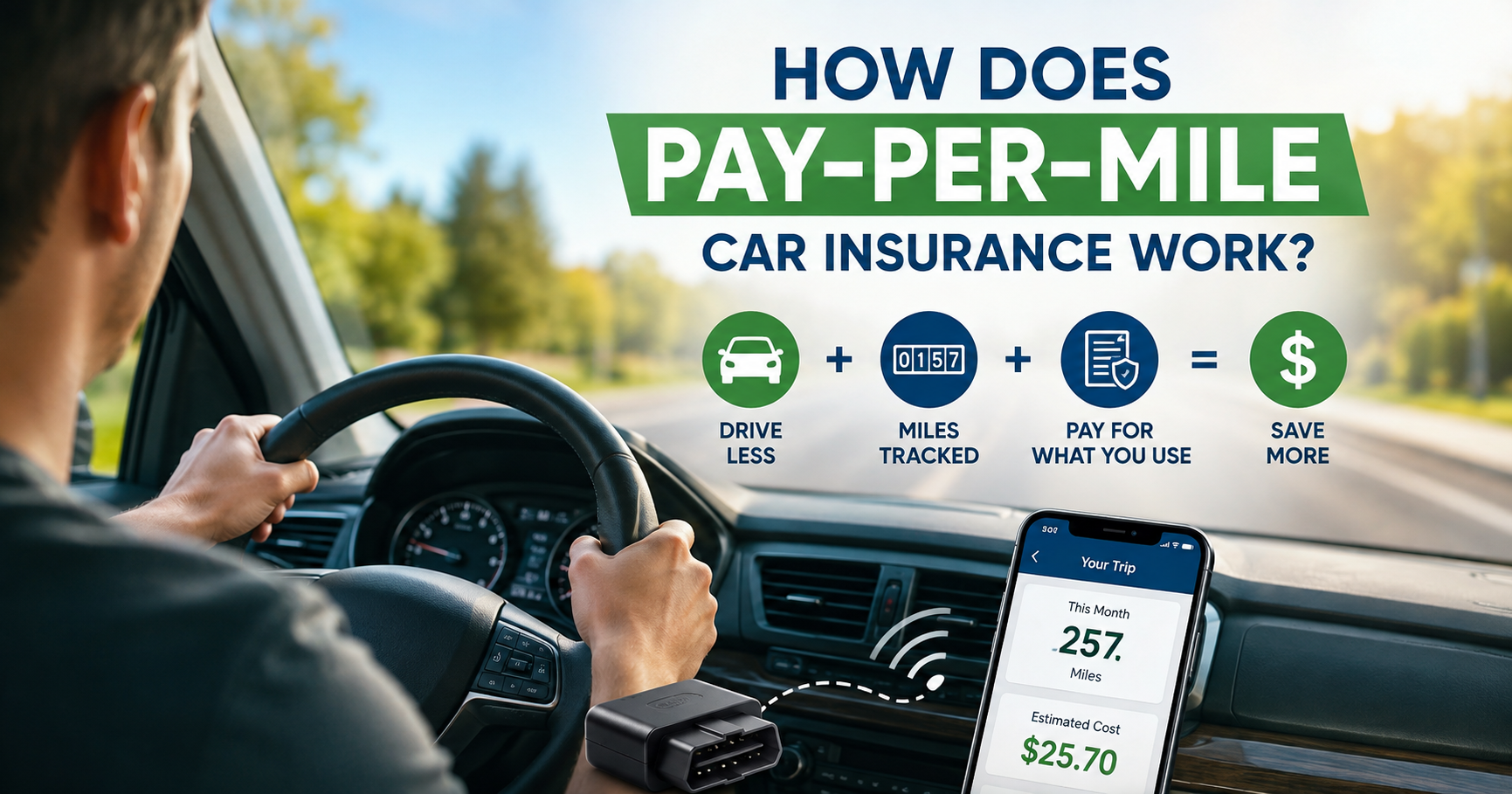
Instead of relying primarily on an estimated annual mileage figure, pay-per-mile insurance combines a fixed base charge with a fee for the miles you actually drive. For people who drive relatively little, that structure can potentially produce significant savings compared with a conventional auto insurance policy.
The model is particularly relevant in 2026 as more drivers look for flexible ways to control insurance costs. According to research prepared by the Newest Cars editorial team, pay-per-mile policies are generally aimed at low-mileage drivers, with many sources identifying drivers below roughly 10,000 miles a year as the primary audience.
However, mileage is only part of the equation. Your driving record, age, vehicle, ZIP code, coverage choices and other traditional insurance-rating factors can still affect what you pay. Availability also varies considerably by state and insurer.
Here is a detailed look at how mileage-based car insurance works, how insurers calculate the bill, how mileage is tracked, who can benefit and what to consider before switching.
What Is Pay-Per-Mile Car Insurance?
Pay-per-mile car insurance is a form of usage-based insurance in which your premium has two main components: a fixed base rate and a variable mileage charge.
The base rate covers the fixed costs associated with maintaining your policy and is influenced by many of the same factors used in traditional auto insurance pricing. The mileage portion then changes according to how far you drive.
In simple terms, the less you drive, the fewer miles you pay for.
That makes the concept different from a conventional policy, where an insurer typically estimates your annual mileage and sets a premium that does not directly rise and fall with every month’s actual mileage.
The Two-Part Pricing Structure
A typical pay-per-mile policy can be understood through two charges:
- Base rate: A fixed monthly amount that covers the underlying insurance policy and standard coverage.
- Per-mile rate: A variable charge multiplied by the number of miles you drive.
Research prepared by the Newest Cars editorial team places typical base rates at approximately $20 to $60 per month, with many policies falling between $30 and $55. Per-mile charges can range from roughly 2 to 10 cents per mile, with 6 to 7 cents commonly cited.
Actual pricing varies by insurer, state, driver and coverage level, so these figures should be treated as general ranges rather than a guaranteed quote.
How Does Pay-Per-Mile Car Insurance Work in Practice?
Once you understand the two-part pricing system, the basic process is relatively straightforward. The insurer determines your base rate, establishes a per-mile charge and then records how much you drive.
At the end of the billing period, your mileage charge is added to the fixed portion of your policy.
Step 1: The Insurer Determines Your Base Rate
Your base rate is not simply a fee for having a car. It reflects many of the traditional factors insurers use when determining risk.
These can include:
- Your age
- Driving history
- Vehicle type
- ZIP code
- Credit history, where applicable
- Coverage choices
This is important because pay-per-mile insurance does not eliminate traditional insurance underwriting. A driver with a poor driving record, for example, should not assume that simply driving fewer miles will automatically result in the cheapest possible policy.
Step 2: Your Per-Mile Rate Is Established
The insurer also assigns a mileage rate. The research prepared by the Newest Cars editorial team indicates that rates commonly fall between 2 and 10 cents per mile, although the actual number depends on the insurer and driver profile.
For example, suppose a hypothetical policy has a $40 monthly base rate and a 6-cent mileage charge.
If the driver travels 500 miles during the month, the mileage portion would be $30. The combined premium would therefore be approximately $70 before considering any other applicable charges or policy-specific details.
If that same driver travels 1,000 miles the following month, the mileage portion would double to $60, making the combined amount approximately $100.
This illustrates one of the central characteristics of mileage-based insurance: the bill can change from month to month.
Step 3: The Insurer Tracks Your Mileage
Insurers need a reliable way to determine how far the insured vehicle travels. Depending on the provider, mileage can be monitored in several ways.
- OBD-II device: A device plugs into the vehicle’s diagnostic port and reports mileage information.
- Smartphone app: Some programs use an app with GPS or Bluetooth-related technology.
- Odometer photos: Some insurers allow drivers to submit periodic photographs of the vehicle’s odometer instead of using continuous tracking.
The tracking method matters because it can affect both convenience and privacy. Drivers who are uncomfortable with location tracking may prefer a program based primarily on odometer verification.
Step 4: You Receive a Mileage-Based Bill
Your actual mileage is then used to calculate the variable portion of your premium. Because your driving can change from one month to the next, your total bill can change as well.
Some programs also include daily mileage caps. These limits can prevent an occasional long road trip from creating an unexpectedly large mileage charge.
How Much Does Pay-Per-Mile Car Insurance Cost?
There is no universal price for pay-per-mile insurance because insurers calculate premiums using different rating models and because state regulations and individual driver characteristics vary.
Still, the research prepared by the Newest Cars editorial team provides useful 2025–2026 ranges.
- Monthly base rate: About $20–$60.
- Common base rate range: Roughly $30–$55.
- Per-mile charge: Approximately 2–10 cents per mile.
- Common per-mile rate: About 6–7 cents per mile.
- Total monthly range: Approximately $58–$150, depending on mileage and state.
For extremely low-mileage drivers, some research cited in the brief reports annual costs as low as $360–$720 for people driving fewer than 5,000 miles per year.
Those numbers should not be interpreted as a guaranteed price. Insurance premiums are highly individualized, and a quote is ultimately the best way to determine whether the model works for a particular driver.
Can Pay-Per-Mile Insurance Save You Money?
Potentially, yes. But the biggest savings tend to go to drivers who genuinely use their vehicles infrequently.
Research included in the Newest Cars editorial team’s brief indicates average savings of approximately 20% to 40% compared with traditional policies for drivers who travel fewer than 10,000 miles annually.
Some studies cited in the research indicate even larger potential savings for drivers with extremely low annual mileage.
Who Is Most Likely to Save?
Pay-per-mile coverage can make particular sense for people whose cars spend more time parked than moving.
Potential candidates include:
- Remote workers who rarely commute
- Retirees who drive primarily for errands and appointments
- Urban residents who regularly use public transportation
- Drivers who own a second vehicle that is rarely used
- People who drive fewer than 10,000 miles annually
- Ultra-low-mileage drivers traveling fewer than 5,000 miles per year
The lower your mileage, the more opportunity there is for the mileage-based model to work in your favor.
Where Is the Break-Even Point?
One of the most important questions to ask is not simply, “Can I save money?” but rather, “At what mileage does the savings disappear?”
The research brief indicates that pay-per-mile insurance is typically more competitive below approximately 7,500 to 12,000 miles per year. Once annual mileage moves beyond that range, a traditional insurance policy can become more cost-effective.
The exact break-even point varies because every policy has a different base rate, mileage rate, coverage package and driver risk profile.
A Simple Example
Imagine two drivers with similar coverage.
Driver A works remotely and drives only 4,000 miles per year. Much of the vehicle’s time is spent parked.
Driver B commutes every weekday and drives 15,000 miles per year.
The mileage-based model is naturally more attractive for Driver A because the variable portion of the insurance bill remains relatively small. Driver B may find that the cumulative per-mile charges reduce or eliminate the potential savings.
That is why annual mileage should be one of the first numbers you calculate before comparing policies.
Pay-Per-Mile vs. Traditional Car Insurance
The biggest difference between pay-per-mile and traditional insurance is how mileage affects what you pay.
| Feature | Pay-Per-Mile Insurance | Traditional Insurance |
|---|---|---|
| Pricing structure | Base rate plus mileage charge | Primarily fixed premium |
| Actual mileage | Directly affects monthly bill | Typically estimated rather than billed mile-by-mile |
| Best suited to | Low-mileage drivers | Broad range of drivers |
| Monthly cost | Can fluctuate | Generally more predictable |
| Tracking | Usually required | Generally not required for basic policies |
Pay-per-mile coverage does not necessarily mean reduced insurance protection. According to the research, policies can offer standard coverages such as liability, collision, comprehensive, uninsured motorist and medical payments, depending on the policy selected.
How Is Mileage Tracked?
Understanding mileage tracking is essential because it affects both the accuracy of your bill and your privacy.
OBD-II Devices
An OBD-II device plugs into a vehicle’s diagnostic port. The device can communicate mileage information to the insurer and, depending on the program, provide additional information through an associated system or app.
The advantage is automated mileage collection. The disadvantage is that some drivers may not want another device connected to their vehicle.
Smartphone Apps
Smartphone-based systems can make enrollment and mileage visibility easier. Research for 2026 indicates that many programs are emphasizing smartphone applications rather than dedicated hardware.
However, drivers should carefully review what information an app collects and how that information is used.
Odometer Photos
Odometer verification provides another approach. Mile Auto, for example, is cited in the research as a provider that uses odometer photos rather than continuous GPS or device-based tracking.
For privacy-conscious consumers, this can be an important distinction.
Does Pay-Per-Mile Insurance Track Your Location?
It depends on the insurer and tracking method.
Some programs use GPS-enabled technology, which can collect location-related information. Other providers use odometer photographs to verify mileage without continuous GPS tracking.
It is therefore important to distinguish between mileage tracking and driving-behavior tracking.
Pure pay-per-mile programs primarily track mileage, not speed, braking or phone use in the same way that some telematics-based insurance programs do. However, GPS location data may still be collected depending on the provider.
Before signing up, drivers should understand what data is collected, how often it is collected and how the insurer uses or stores it.
What Happens If You Take a Road Trip?
A common concern is that one long vacation could turn a low monthly insurance bill into a surprisingly expensive mileage charge.
Many pay-per-mile programs address this issue through daily mileage caps.
The research indicates that caps can generally fall in the range of 150 to 250 miles per day. Nationwide’s SmartMiles program, for example, is cited as having a 250-mile daily cap.
These caps can make mileage-based coverage more practical for drivers who usually drive very little but occasionally take a long-distance trip.
Still, the rules vary by insurer. Before choosing a policy, check exactly how the provider treats road-trip mileage and whether the daily cap applies automatically.
Pay-Per-Mile Insurance Providers in 2026
Availability is one of the biggest limitations of mileage-based insurance. Not every insurer offers a true pay-per-mile product, and not every program is available in every state.
Nationwide SmartMiles
Research prepared by the Newest Cars editorial team identifies Nationwide SmartMiles as one of the most widely available true pay-per-mile programs in 2026, with availability cited at approximately 40 states.
Nationwide reports that SmartMiles customers save an average of 25% compared with standard auto insurance policies. The program also has a daily mileage cap designed to help protect drivers from unusually high charges during long trips.
Allstate Milewise
Allstate Milewise is another mileage-based program. The research cites availability in approximately 17–22 states plus Washington, D.C., depending on current program availability.
The program uses a daily base charge plus a per-mile rate and provides trip-related information through its app.
Mile Auto
Mile Auto stands out because it uses odometer photos rather than requiring continuous GPS tracking. The research cites availability in approximately 7–13 states.
This approach may appeal to drivers who prioritize privacy and want mileage-based pricing without continuous location monitoring.
Metromile and Lemonade
Metromile’s position in the market changed following its acquisition by Lemonade. According to the research brief, the service now operates through Lemonade’s digital insurance platform and has reduced standalone availability compared with its earlier footprint.
The research cites availability in approximately 3–8 states and notes that Metromile/Lemonade reports average savings exceeding 40%, although such figures reflect the insurer’s customer base and should not be interpreted as a guaranteed result for every driver.
Hugo
Hugo is also mentioned in the research, but it is important to understand the distinction. Its model is described as pay-as-you-go rather than a true pay-per-mile policy.
Advantages of Pay-Per-Mile Car Insurance
The strongest argument for mileage-based coverage is straightforward: drivers who use their cars less may have an opportunity to pay less.
1. Potential Savings
Low-mileage drivers can potentially save 20% to 40% compared with traditional coverage, according to research cited in the Newest Cars editorial team’s brief.
2. Pricing Reflects Vehicle Usage
Traditional insurance can feel disconnected from actual vehicle use. Pay-per-mile insurance directly connects part of your premium to how much you drive.
3. Standard Coverage Can Still Be Available
Choosing mileage-based pricing does not necessarily mean sacrificing standard protection. Liability, comprehensive, collision and other coverage options can be included, depending on the policy.
4. Road Trips May Be Protected by Mileage Caps
Daily mileage limits can reduce the financial impact of occasional long-distance trips.
5. Privacy-Focused Options Exist
Drivers who do not want continuous GPS tracking may have alternatives, including mileage verification through odometer photos.
Disadvantages and Potential Drawbacks
Pay-per-mile insurance is not automatically the best choice for every driver.
Monthly Bills Can Fluctuate
If your driving changes significantly from month to month, your insurance bill can change too. That can make budgeting less predictable than with a traditional policy.
Availability Is Limited
True pay-per-mile insurance is not offered everywhere. Availability varies by provider and state, and some large insurers instead offer usage-based discounts rather than a genuine per-mile pricing model.
Privacy Can Be a Concern
Programs that use apps, GPS or connected devices may collect information about your vehicle and driving activity. Consumers should review the provider’s data practices before enrolling.
High-Mileage Drivers May Lose the Advantage
The model is designed primarily for people who drive relatively little. Once annual mileage becomes high enough, a traditional policy can become less expensive.
Technology May Be Required
Depending on the insurer, you may need an OBD-II device, smartphone application or regular odometer verification. For some drivers, that additional requirement can be inconvenient.
Who Should Consider Pay-Per-Mile Insurance?
The best candidates are drivers whose vehicles spend substantial amounts of time parked.
You may want to investigate a mileage-based policy if you:
- Drive fewer than 10,000 miles per year.
- Work from home and rarely commute.
- Use public transportation for most daily travel.
- Own a second vehicle that is rarely driven.
- Drive primarily for occasional errands.
- Typically travel fewer than 5,000 miles per year.
By contrast, drivers with long commutes, frequent road trips or annual mileage above 10,000–12,000 miles should compare the numbers carefully against conventional insurance.
How to Decide Whether Pay-Per-Mile Insurance Is Worth It
Knowing how does pay-per-mile car insurance work is only the first step. The more important question is whether it makes financial sense for your specific situation.
Use this five-step approach before switching.
1. Calculate Your Real Annual Mileage
Do not guess. Look at your odometer, maintenance records or other reliable information and estimate how many miles you actually drive in a typical year.
2. Request a Traditional Insurance Quote
Find out what comparable conventional coverage would cost you. Make sure the coverage limits and deductibles are comparable.
3. Get a Pay-Per-Mile Quote
Ask for the base rate, per-mile rate and any applicable fees. Do not compare a bare-bones mileage-based policy with a comprehensive traditional policy and assume the cheaper number represents a true saving.
4. Test Different Mileage Scenarios
Consider a low-mileage month, an average month and a high-mileage month. This gives you a better idea of how much your bill could fluctuate.
5. Check Availability and Privacy Policies
Confirm that the program is offered in your state and understand how mileage is measured. If privacy matters to you, pay particular attention to GPS, app and data-collection requirements.
Why Your Mileage Matters More Than You Might Think
Insurance companies have long considered mileage an important part of understanding vehicle use. A vehicle driven 3,000 miles a year is exposed to the road differently from one driven 20,000 miles annually.
Pay-per-mile insurance takes that concept further by making actual mileage a direct component of the monthly price.
This can be particularly useful for modern driving patterns. Remote work, public transportation and multi-car households can leave some vehicles sitting unused for days or weeks at a time.
For those drivers, a traditional flat premium may not align as closely with actual vehicle usage as a mileage-based model does.
Pay-Per-Mile vs. Usage-Based Insurance
The terms can sometimes be confusing because both models fall under the broader usage-based insurance category.
However, they are not necessarily identical.
A true pay-per-mile policy primarily bases the variable part of the premium on distance driven. Other telematics programs may evaluate driving behavior, including factors such as acceleration, braking, speed or phone use, to determine discounts or pricing.
That distinction is important for consumers who want mileage-based pricing but do not want their driving behavior evaluated in the same way.
What the 2026 Market Looks Like
The pay-per-mile market continues to evolve. Nationwide SmartMiles remains among the most widely available programs cited in the research, while other providers operate across smaller geographic footprints.
The research also highlights changes surrounding Metromile and the contraction of the UK pay-as-you-go market. These developments illustrate an important point: availability and product offerings can change, so consumers should verify current availability before making a decision.
Pricing itself has remained relatively stable in the research for 2026, with base fees generally remaining around $20–$60 per month and mileage rates around 2–10 cents per mile.
Frequently Asked Questions
How does pay-per-mile car insurance work?
Pay-per-mile car insurance combines a fixed base insurance charge with a variable fee based on the miles you actually drive. Your insurer tracks mileage through an approved device, smartphone system or odometer verification method and uses that mileage to calculate the variable portion of your bill.
Is pay-per-mile insurance cheaper than traditional insurance?
It can be, particularly for low-mileage drivers. Research cited in the Newest Cars editorial team’s brief indicates potential average savings of approximately 20%–40% for drivers under 10,000 miles annually. Actual savings depend on the driver, insurer, state and coverage.
Who qualifies for pay-per-mile insurance?
Eligibility varies by provider and state, but the model is generally most attractive to drivers who travel fewer than 10,000 miles annually. Remote workers, retirees, public-transit users and households with rarely driven second vehicles may be good candidates.
How is mileage tracked?
Depending on the insurer, mileage may be tracked using an OBD-II device, smartphone app or odometer photographs. The tracking method varies by program.
Does pay-per-mile insurance provide full coverage?
It can. Pay-per-mile policies can offer liability, collision, comprehensive, uninsured motorist, medical payments and other standard coverage options, depending on the insurer and policy selected.
Does pay-per-mile insurance track my location?
Some programs use GPS-enabled technology and may collect location information. Others use odometer photos. Drivers should review the insurer’s privacy and data-collection policies before enrolling.
What happens if I take a long road trip?
Many programs use daily mileage caps, commonly in the 150–250-mile range, to limit the impact of occasional long trips. The exact rules depend on the insurer.
Can I switch back to traditional car insurance?
Yes. Drivers can generally cancel a pay-per-mile policy and obtain traditional coverage, although cancellation fees, prepaid premiums and other policy-specific conditions may apply.
How much can I save with pay-per-mile insurance?
Potential savings vary considerably. Research cited in the Newest Cars editorial team’s brief reports average savings of 20%–40% for many low-mileage drivers, while some ultra-low-mileage drivers may save substantially more.
Is pay-per-mile insurance available in every state?
No. Availability varies by provider and state. The research cites Nationwide SmartMiles at approximately 40 states, Allstate Milewise at roughly 17–22 states plus Washington, D.C., and Mile Auto at approximately 7–13 states.
The Bottom Line
So, how does pay-per-mile car insurance work? The concept is simple: instead of paying a largely fixed premium regardless of how much you use your vehicle, you pay a base insurance rate plus a charge tied directly to your mileage.
For someone who drives only a few thousand miles a year, that can be a compelling alternative to traditional insurance. The research prepared by the Newest Cars editorial team indicates that low-mileage drivers can potentially save 20%–40%, with some ultra-low-mileage motorists seeing substantially larger savings.
But the lowest possible mileage bill is not necessarily the best insurance deal. Drivers should compare equivalent coverage, calculate their actual annual mileage, understand how mileage is tracked, investigate privacy policies and check whether the program is available in their state.
The basic rule is straightforward: the less you drive, the more likely pay-per-mile insurance is worth investigating. If you spend most of your time behind the wheel, however, traditional insurance may ultimately offer better value.
For consumers willing to compare the numbers carefully, mileage-based insurance offers something traditional policies cannot: a premium structure that more directly reflects how much you actually use your car.