
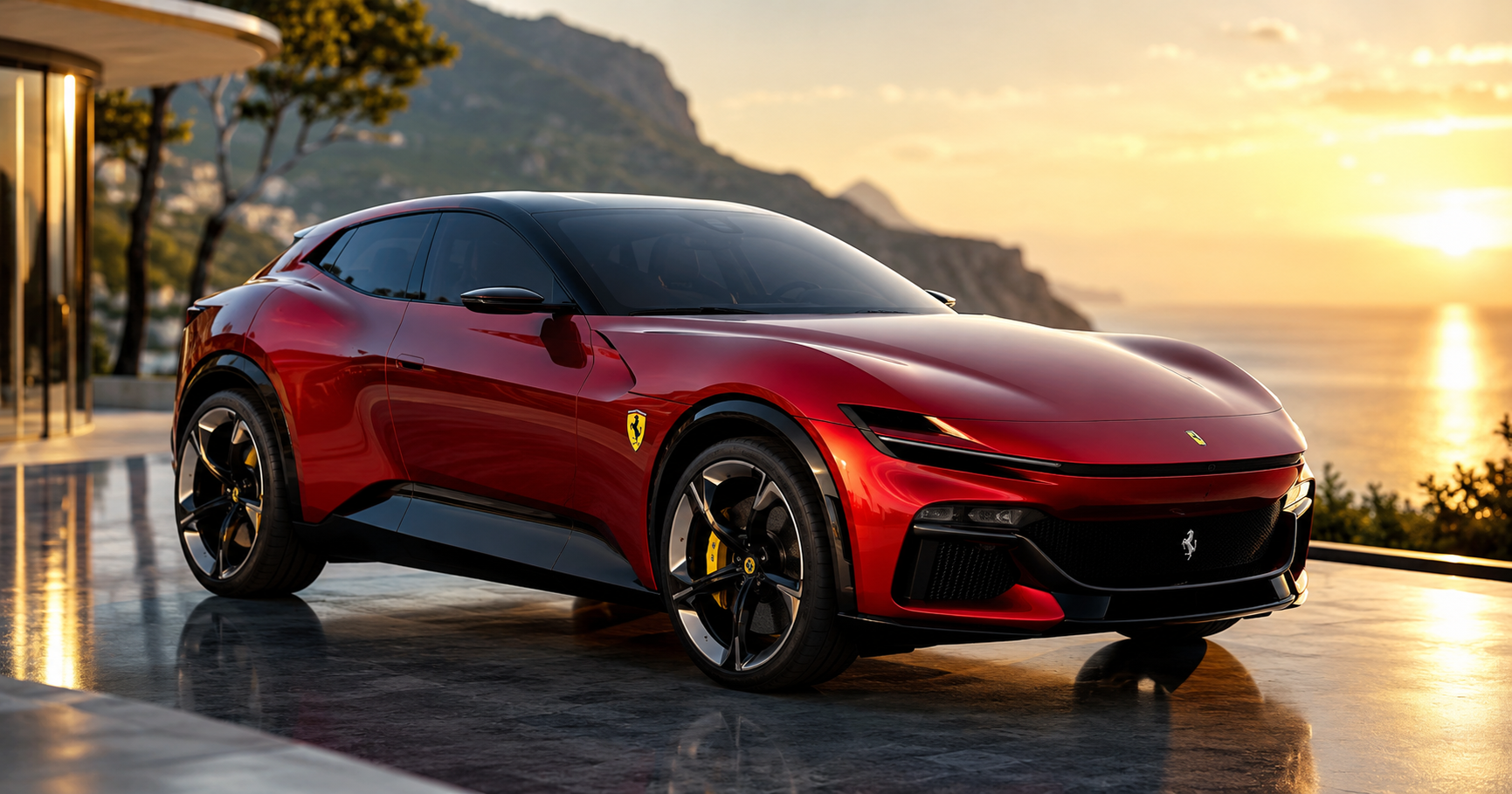
Ferrari is entering a new era, and the automotive world is watching closely. After years of speculation, teaser campaigns, and industry rumors, the legendary Italian automaker has finally unveiled its first fully electric performance SUV for the 2027 model year. Known in early reports as the Ferrari Elettrica or Ferrari Luce, this groundbreaking vehicle could redefine what enthusiasts expect from an electric super SUV.
The Ferrari Electric SUV is not just another luxury EV trying to compete with high-end electric crossovers. Instead, Ferrari appears determined to prove that electric power can still deliver the emotional driving experience, precision handling, and exclusivity that made the brand famous for decades.
With more than 1,000 horsepower, a quad-motor setup, advanced torque vectoring, and ultra-fast charging technology, Ferrari’s first EV may become one of the most ambitious electric vehicles ever produced. But beyond the headline specifications, several hidden technologies and engineering decisions make this model truly fascinating.
Here are the seven secret features that could make the Ferrari Electric SUV one of the most important performance vehicles of the decade.
What Is the Ferrari Electric SUV?
Ferrari officially revealed its first all-electric production vehicle during a major 2026 presentation, confirming that customer deliveries are expected to begin in late 2026 before wider 2027 availability.
Although many reports describe it as an SUV, the vehicle actually blends several body styles together. It combines the elevated stance and practicality of a crossover with the sleek proportions of a grand touring liftback. This design strategy allows Ferrari to target buyers who want everyday usability without sacrificing performance-focused styling.
The Ferrari Electric SUV reportedly includes:
- Quad electric motors
- 122 kWh battery pack
- 800V electrical architecture
- 0–60 mph in approximately 2.5 seconds
- Top speed exceeding 186 mph
- 350 kW DC fast charging capability
- Advanced active suspension system
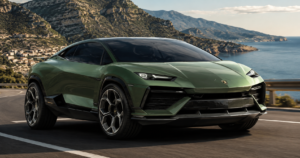
Those numbers place the Ferrari EV directly against competitors like the Tesla Model X Plaid, Lotus Eletre R, and future Lamborghini electric performance SUVs.
1. Quad-Motor Torque Vectoring Changes Everything
One of the biggest secrets behind the Ferrari Electric SUV is its sophisticated quad-motor architecture. Unlike traditional dual-motor EVs, Ferrari’s setup allows each wheel to receive independent power delivery.
This matters because torque vectoring dramatically improves cornering precision, traction, and stability. Instead of relying only on brakes or mechanical differentials, the system can instantly adjust power at each wheel in milliseconds.
In real-world driving, this means:
- Sharper corner exits
- Better grip during acceleration
- More stable high-speed handling
- Improved wet-weather performance
- Track-ready responsiveness
Ferrari engineers reportedly spent years tuning the software to replicate the dynamic feel of the brand’s gasoline-powered sports cars. That may be one reason Ferrari delayed entering the EV market while rivals moved faster.
2. The Battery Is Part of the Chassis
Many EVs use large battery packs mounted beneath the floor, but Ferrari took the concept further by integrating the battery as a structural element of the vehicle.
This approach provides several important benefits:
Lower Center of Gravity
The structural battery design lowers the vehicle’s mass closer to the road, helping reduce body roll and improve handling.
Better Weight Distribution
Ferrari’s engineers carefully balanced the battery placement to maintain the agility expected from the brand.
Increased Structural Rigidity
The battery pack contributes to chassis stiffness, which can improve both safety and driving precision.
Combined with the 800V electrical architecture, the Ferrari Electric SUV can reportedly charge at speeds approaching 350 kW. Under ideal conditions, that could add hundreds of miles of range in less than 20 minutes.
3. Ferrari’s Active Suspension Could Defy Physics
One of the biggest criticisms of high-performance EVs is weight. Even advanced electric SUVs often struggle to hide their mass during aggressive driving.
Ferrari’s answer appears to be an advanced electronically controlled active suspension system designed specifically for this platform.
The technology continuously adjusts damping, ride height, and chassis balance in real time. Combined with four-wheel steering, the SUV may feel significantly smaller and lighter than its actual curb weight of roughly 2,300 kilograms.
This matters because Ferrari customers expect razor-sharp handling, not simply fast acceleration in a straight line.
According to early technical reports, the suspension system works alongside the torque vectoring software to create a more natural and engaging driving experience.
4. It Has an “Authentic” Ferrari EV Sound
One of the most controversial questions surrounding any Ferrari EV is simple: will it still sound like a Ferrari?
Ferrari’s engineers reportedly refused to create fake artificial engine noise similar to some competitors. Instead, they developed a performance-oriented aural system that captures real mechanical frequencies and amplifies them into a unique soundtrack.
The goal is not to imitate a V12 engine but to create a new emotional identity for Ferrari’s electric future.
This may become one of the most distinctive aspects of the Ferrari Electric SUV because emotional engagement has always been central to the brand’s appeal.
5. The Design Language Is Surprisingly Radical
Early reveal materials suggest the Ferrari Electric SUV introduces a dramatically new design philosophy.
Reports linked the project to design collaboration influences connected to LoveFrom, the creative firm associated with former Apple design chief Jony Ive.
Instead of aggressive vents and oversized styling elements, the Ferrari EV uses:
- Smooth aerodynamic surfaces
- A floating roofline
- Minimalist lighting signatures
- Glass-heavy architecture
- Integrated aerodynamic channels
The result looks more futuristic than traditional Ferrari models while still maintaining strong visual presence.
Ferrari appears to understand that EV buyers increasingly value sophistication and aerodynamic efficiency over excessive styling drama.
6. Ferrari Tuned the Regenerative Braking for Track Driving
Most electric SUVs prioritize efficiency and smoothness. Ferrari, however, reportedly tuned regenerative braking for repeatable high-performance driving.
That means the regenerative system works not only to maximize range but also to improve stability and cornering balance during aggressive driving sessions.
Drivers may even be able to adjust regenerative intensity through steering wheel controls or paddle-style selectors.
This could provide several advantages:
- Reduced brake fade during track use
- Improved energy recovery
- More consistent performance laps
- Better throttle modulation entering corners
It is another example of Ferrari approaching electrification from a racing perspective rather than a purely efficiency-focused mindset.
7. Ferrari Is Making It Exclusively Scarce
Ferrari has always relied on exclusivity, and the Ferrari Electric SUV appears to follow the same strategy.
Unlike mass-market luxury EV brands, Ferrari is expected to limit production volumes and prioritize loyal clients during the initial launch period.
That exclusivity could significantly increase demand while preserving resale values and brand prestige.
Industry analysts believe Ferrari’s strategy differs from many competitors because it is targeting ultra-high-net-worth buyers who want both sustainability and status.
This may allow Ferrari to command premium pricing while avoiding the discount wars affecting some luxury EV manufacturers.
How the Ferrari Electric SUV Compares to Rivals
| Model | Horsepower | 0-60 mph | Architecture | Charging Speed |
|---|---|---|---|---|
| Ferrari Electric SUV | 1,000+ hp | ~2.5 sec | 800V | 350 kW |
| Tesla Model X Plaid | 1,020 hp | 2.5 sec | 400V | 250 kW |
| Lotus Eletre R | 905 hp | 2.9 sec | 800V | 350 kW |
| Lamborghini Lanzador (expected) | TBD | TBD | 800V | TBD |
Pros and Cons of the Ferrari Electric SUV
Pros
- Exceptional acceleration and handling potential
- Advanced torque vectoring technology
- Ultra-fast charging capability
- Unique Ferrari driving experience
- Exclusive ownership appeal
Cons
- Very high expected price
- Heavy curb weight
- Limited availability
- Potentially expensive maintenance
- Charging infrastructure still varies globally
What This Means for Ferrari’s Future
The Ferrari Electric SUV is more than a single vehicle launch. It represents a turning point for one of the world’s most iconic performance brands.
Ferrari appears determined to prove that electrification does not have to eliminate excitement, emotion, or exclusivity. Instead of chasing mass production, the company is focusing on engineering innovation and driver engagement.
If the Ferrari EV delivers on its promises, it could influence how the entire luxury performance industry approaches electric vehicles over the next decade.
FAQ: Ferrari Electric SUV 2027
When will the Ferrari Electric SUV be released?
Customer deliveries are expected to begin in late 2026, with broader market availability during 2027.
How much horsepower does the Ferrari Electric SUV have?
Reports suggest the SUV produces more than 1,000 horsepower using a quad-motor setup.
What is the range of the Ferrari Electric SUV?
Estimated driving range exceeds 500 kilometers, or roughly 300 miles, depending on testing standards and driving conditions.
How fast can it charge?
The Ferrari EV reportedly supports DC fast charging up to 350 kW using its 800V architecture.
Will the Ferrari Electric SUV sound like a traditional Ferrari?
Ferrari developed a custom sound system that creates an authentic performance-oriented soundtrack derived from real mechanical signals rather than fake engine audio.
Is the Ferrari Electric SUV a true SUV?
It blends SUV practicality with liftback and grand touring design elements, creating a unique crossover-style performance vehicle.
Final Thoughts
The Ferrari Electric SUV may become one of the most significant luxury EV launches of the decade. Instead of simply following industry trends, Ferrari appears to be redefining what an electric performance vehicle can feel like.
From quad-motor torque vectoring to structural battery engineering and advanced active suspension, this vehicle showcases how deeply Ferrari approached electrification.
Most importantly, Ferrari is not trying to replace its identity. It is trying to evolve it.
And if early specifications and engineering details prove accurate, the Ferrari Electric SUV could deliver something many enthusiasts thought impossible: a fully electric Ferrari that still feels unmistakably Ferrari.