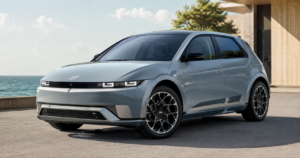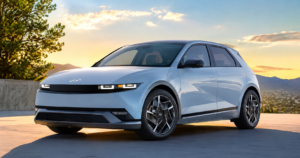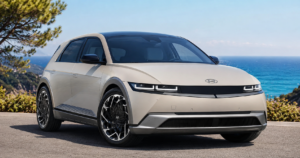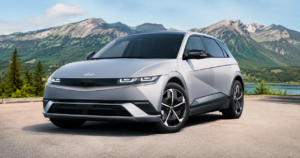

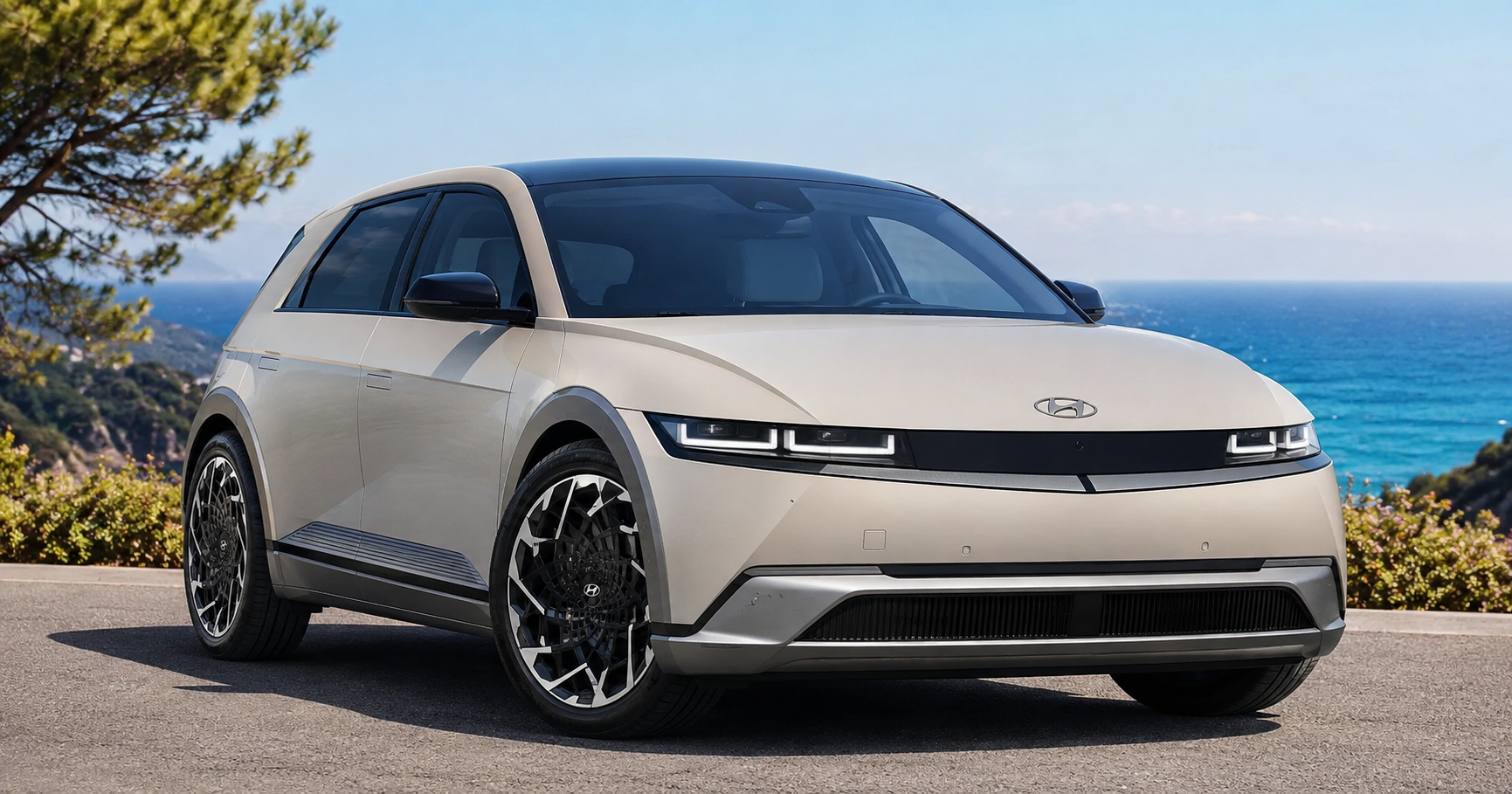
The Hyundai IONIQ 3 is shaping up to become one of the biggest electric vehicle stories of the year. Before reaching dealerships, Hyundai announced that customer interest has already reached record-breaking levels—higher than any previous Hyundai model, whether electric or gasoline-powered.
That excitement isn’t difficult to understand. With a starting price below $30,000 in some markets, practical driving range, modern technology, and Hyundai’s growing reputation for building outstanding EVs, the IONIQ 3 could dramatically reshape the affordable electric vehicle market.
In this comprehensive Hyundai IONIQ 3 review, we’ll explore its pricing, design, battery options, charging capabilities, technology, driving experience, competitors, ownership value, and whether this compact hatchback truly deserves the title of the best EV under $30,000.
Why the Hyundai IONIQ 3 Matters
Affordable electric vehicles have become one of the hottest segments in today’s automotive industry. While luxury EVs continue pushing technology forward, many buyers simply want an electric car that offers:
- Affordable pricing
- Practical daily range
- Fast charging
- Modern technology
- Reliable ownership
- Comfortable interior space
The Hyundai IONIQ 3 appears to deliver exactly that formula.
Rather than creating another expensive flagship EV, Hyundai focused on making electric driving accessible to a much larger audience.
Hyundai IONIQ 3 Pricing
One of the biggest headlines surrounding the Hyundai IONIQ 3 is undoubtedly its price.
Hyundai confirmed that pricing will begin below £25,000 in the UK, while early retailer listings place the entry-level model at approximately £22,245 ($29,800).
Available Trims
| Trim | Battery | Approximate Starting Price |
|---|---|---|
| Advance | 42.2 kWh | $29,800 |
| Advance Extended Range | 61 kWh | $34,500 |
| Premium | 61 kWh | $37,000 |
| Ultimate | 61 kWh | $40,000 |
| N-Line Evo | 61 kWh | $42,700 |
These prices position the Hyundai IONIQ 3 as one of the most affordable modern EVs from a mainstream global manufacturer.
Exterior Design
The Hyundai IONIQ 3 introduces what Hyundai calls its new “Aero Hatch” design philosophy.
Instead of copying the retro appearance of the IONIQ 5 or the sleek sedan styling of the IONIQ 6, Hyundai designed an entirely new identity.
Highlights
- Compact hatchback proportions
- Clean aerodynamic body
- Modern LED lighting
- Distinctive pixel-inspired styling
- Low drag coefficient of just 0.263
The aerodynamic profile doesn’t only improve efficiency—it also gives the IONIQ 3 a futuristic appearance without becoming overly aggressive.
Compact Outside, Spacious Inside
At first glance, the Hyundai IONIQ 3 looks like a small city car.
However, smart packaging allows Hyundai to maximize interior room.
Dimensions
- Length: 4,155 mm
- Width: 1,800 mm
- Height: 1,505 mm
- Wheelbase: 2,680 mm
- Cargo capacity: 441 liters
The luggage compartment is especially impressive for this segment, making weekend trips and grocery shopping much easier than buyers might expect.
Battery Options
The Hyundai IONIQ 3 offers two battery configurations designed for different lifestyles.
42.2-kWh Battery
- Up to 213 miles WLTP
- Lowest purchase price
- Ideal for urban commuting
61-kWh Battery
- Up to 308 miles WLTP
- Better highway capability
- Greater flexibility for long-distance driving
While EPA figures are not yet available, the larger battery should remain highly competitive among affordable electric vehicles.
Charging Performance
Unlike larger Hyundai EVs that utilize an 800-volt architecture, the Hyundai IONIQ 3 adopts a 400-volt electrical system to lower production costs.
Despite that change, charging remains impressively quick.
- 10–80% in approximately 29 minutes (42.2-kWh battery)
- 10–80% in approximately 30 minutes (61-kWh battery)
For most drivers, this means grabbing coffee during a road trip while the battery quickly recovers most of its capacity.
Performance Expectations
Hyundai has not positioned the standard IONIQ 3 as a high-performance vehicle.
Instead, it focuses on smooth acceleration, quiet operation, and everyday usability.
The upcoming IONIQ 3 N performance model should satisfy enthusiasts looking for significantly more power.
Technology and Infotainment
The Hyundai IONIQ 3 becomes Hyundai’s first European model featuring the company’s brand-new Pleos Connect operating system.
Technology Features
- Android Automotive operating system
- Smartphone-like interface
- Available 12.9-inch display
- Optional 14.6-inch touchscreen
- Optional digital instrument display
- Over-the-air software updates
- AI-powered Gleo assistant
One welcome surprise is Hyundai’s decision to retain physical buttons for climate controls and audio functions.
This practical approach addresses one of the biggest complaints about many modern vehicles.
Interior Quality
Inside, Hyundai appears to prioritize simplicity and functionality over unnecessary complexity.
The cabin features:
- Minimalist dashboard
- Large storage compartments
- Comfortable seating
- Modern digital displays
- Thoughtful ergonomics
Families and commuters alike should appreciate the spacious layout despite the compact exterior dimensions.
Safety
Although complete crash-test ratings are not yet available, Hyundai’s recent vehicles have consistently performed well in safety testing.
Expected driver assistance features include:
- Adaptive cruise control
- Automatic emergency braking
- Lane keeping assistance
- Blind-spot monitoring
- Rear cross-traffic alert
- Driver attention monitoring
Ownership Costs
One reason affordable EVs continue growing in popularity is their lower long-term operating expenses.
Compared with similarly priced gasoline hatchbacks, owners may benefit from:
- Lower charging costs
- Reduced maintenance
- No oil changes
- Fewer moving engine parts
- Potential government incentives depending on the market
How It Compares with Rivals
Hyundai IONIQ 3 vs Kia EV3
The Kia EV3 offers similar technology but adopts a crossover-inspired design. Buyers wanting a traditional hatchback may prefer the Hyundai.
Hyundai IONIQ 3 vs Chevrolet Bolt
The Chevrolet Bolt remains one of America’s value leaders, but the Hyundai offers newer software, faster charging technology, and a more modern cabin.
Hyundai IONIQ 3 vs Volkswagen ID.2
Volkswagen’s upcoming affordable EV is another strong competitor, although availability may differ by region.
Who Should Buy the Hyundai IONIQ 3?
The Hyundai IONIQ 3 makes sense for:
- First-time EV buyers
- Urban commuters
- Young professionals
- Small families
- Drivers looking to reduce fuel costs
- People upgrading from compact gasoline hatchbacks
Pros
- Excellent entry-level pricing
- Modern technology
- Good driving range
- Fast charging
- Practical cargo space
- Physical controls
- Efficient aerodynamic design
Cons
- Uses 400V architecture instead of Hyundai’s faster 800V system
- EPA range figures are not yet confirmed
- Higher trims quickly exceed the $30,000 mark
Expert Analysis
Perhaps the most impressive aspect of the Hyundai IONIQ 3 isn’t any single specification—it is the overall package.
Hyundai has carefully balanced affordability with technology instead of treating budget-conscious buyers as an afterthought.
The decision to simplify the platform, adopt a 400-volt electrical architecture, and maintain practical physical controls demonstrates a clear understanding of mainstream consumer priorities. Rather than chasing headline-grabbing specifications alone, Hyundai has focused on everyday usability.
The impressive aerodynamic efficiency also deserves attention. A drag coefficient of 0.263 is exceptional for a compact hatchback and contributes directly to improved range, reduced wind noise, and greater highway efficiency.
For commuters driving between 30 and 60 miles per day, the standard battery should be more than sufficient, while the extended-range version offers additional confidence for weekend travel. This flexibility broadens the IONIQ 3’s appeal across a wide range of buyers.
Should You Wait for the Hyundai IONIQ 3?
If you’re planning to purchase an affordable electric vehicle within the next year, the Hyundai IONIQ 3 deserves a place near the top of your shortlist.
Its combination of competitive pricing, generous equipment, practical range, fast charging, and user-friendly technology makes it one of the most compelling new EVs entering the market.
Buyers who prioritize the fastest charging speeds or maximum performance may still gravitate toward premium electric models. However, for shoppers focused on overall value, the Hyundai IONIQ 3 strikes an impressive balance that few competitors currently match.
Final Verdict
The Hyundai IONIQ 3 isn’t trying to become the fastest electric car, the largest SUV, or the most luxurious EV on the market. Instead, it aims to deliver what many consumers have been waiting for: a practical, well-equipped, attractively priced electric hatchback from a trusted global automaker.
With pricing beginning below $30,000 in some markets, up to 308 miles of WLTP driving range, rapid charging, spacious packaging, advanced infotainment, and Hyundai’s proven EV expertise, the IONIQ 3 checks nearly every box that matters to mainstream buyers.
While real-world EPA ratings and U.S. availability remain important questions, the early signs are overwhelmingly positive. If Hyundai can maintain its aggressive pricing strategy while delivering the quality expected from the IONIQ family, the IONIQ 3 could become one of the defining affordable electric vehicles of its generation.
Frequently Asked Questions
How much does the Hyundai IONIQ 3 cost?
Entry-level models are listed at approximately $29,800 (£22,245) in the UK, making it one of Hyundai’s most affordable electric vehicles.
What is the Hyundai IONIQ 3 driving range?
The extended-range version delivers up to 308 miles (496 km) under the WLTP testing cycle, while the standard battery provides up to 213 miles (344 km).
Does the Hyundai IONIQ 3 support fast charging?
Yes. DC fast charging can replenish the battery from 10% to 80% in approximately 29–30 minutes, depending on the battery pack.
Is the Hyundai IONIQ 3 built on Hyundai’s E-GMP platform?
Yes. It shares the E-GMP platform with other IONIQ models but uses a cost-effective 400V electrical architecture instead of the 800V system found in the IONIQ 5 and IONIQ 6.
Who is the Hyundai IONIQ 3 designed for?
The IONIQ 3 is aimed at drivers seeking an affordable, practical, and technology-rich electric vehicle, including first-time EV buyers, commuters, and small families.