
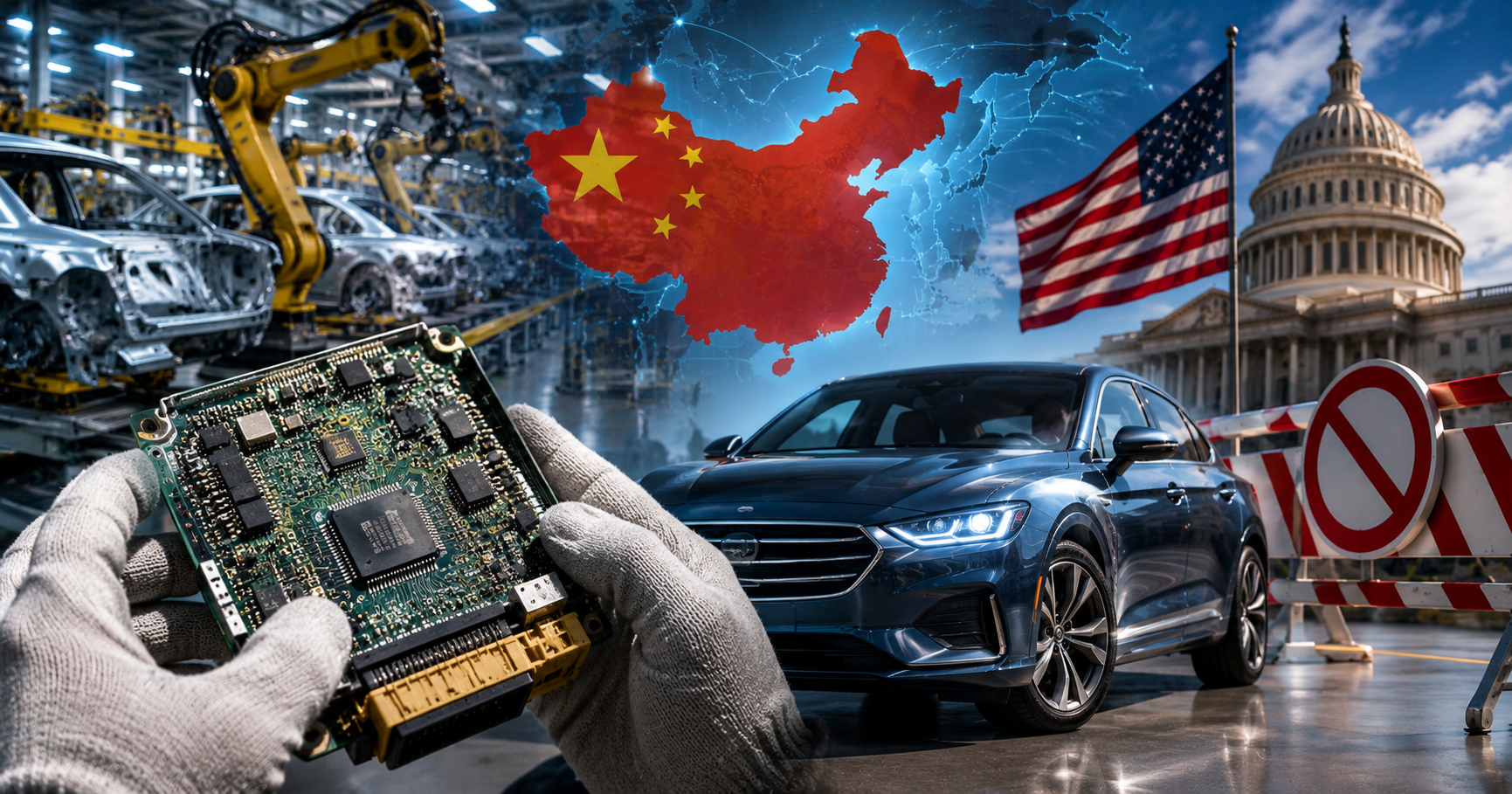
The proposed China auto parts ban is driving significant changes across the U.S. automotive industry, as lawmakers move to restrict vehicles and components with Chinese ties. New legislation and related measures are prompting suppliers and automakers to prepare for a major shift in sourcing, while raising concerns about higher vehicle costs.
Senate Advances New Restrictions on Chinese Automotive Ties
A U.S. Senate committee has approved a bill that would prohibit automakers that are more than 15% owned by Chinese entities from selling vehicles in the United States. At the same time, a separate proposal seeks to eliminate Chinese-made components from vehicles sold in the U.S.
According to the report, the software restrictions scheduled to take effect next year are the reason Polestar is leaving the U.S. market, while Volvo has received a waiver.
Ohio Supplier Sees Opportunity
Reuters reported that Ohio-based automotive electronics startup Eagle Wireless is working to rapidly expand production in anticipation of increased demand if automakers are no longer able to source certain Chinese-built components.
The company is preparing for restrictions expected to affect communications and location-tracking hardware beginning in 2030. However, Eagle Wireless said its modules currently cost between 5% and 15% more than comparable components produced in China.
Higher Costs Could Reach Consumers
The report cites one former Detroit automotive executive who said, “My jaw dropped when I looked at the price increase” after comparing an advanced driver-assistance system (ADAS) produced outside China with one imported from China.
Those higher component costs could eventually translate into more expensive vehicles for consumers. Cox Automotive reported that the average transaction price of a new vehicle reached $49,456 in May.
Automakers Face Different Levels of Risk
Some manufacturers may be better positioned than others to adapt to new sourcing requirements. Rivian’s software chief told Reuters the company could respond more quickly because it is able to shift between suppliers more easily.
The report also notes that Ford sought authorization to continue importing models such as the China-built Lincoln Nautilus. However, Republican Senator Bernie Moreno of Ohio, who co-authored the investment ban bill, said Wednesday that Ford had agreed to move production of those vehicles to the United States.
Supply Chain Challenges Extend Beyond Manufacturing
The proposed hardware restrictions could affect components manufactured domestically if they rely on technology licensed from Chinese companies.
The report notes that Ford began producing batteries at a Michigan plant last month using technology licensed from China-based CATL. According to the report, removing Chinese involvement from today’s automotive supply chain remains a complex challenge, and its full impact may not become clear until the new rules are implemented over the coming years.