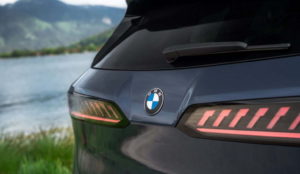

BMW is preparing to reduce its workforce and simplify its management structure in Germany as the automaker looks to lower costs and improve efficiency. A voluntary redundancy program for indirect staff will begin this month and run through 2027, with BMW expecting the savings from a smaller payroll to cover the program’s cost within about two years.
BMW Targets Workforce and Management Costs
BMW has not disclosed how many positions will be eliminated through the voluntary redundancy program. However, as many as 8,000 jobs could disappear, according to a person familiar with the matter cited in a report from late July.
The BMW Group employed 154,540 people at the end of last year. If 8,000 positions were eliminated, that would represent roughly five percent of the workforce.
BMW is also planning significant changes to its management structure. The automaker intends to reduce the number of divisions and associated senior vice president positions by 20% by the middle of next year.
Comparable reductions are also planned at lower organizational levels, meaning the restructuring will extend beyond senior management and remove several layers within the company.
BMW Plans to Use More AI
Artificial intelligence will play a larger role in BMW’s effort to improve efficiency and accelerate processes. The company plans to use AI to automate more repetitive work, simplify its structure and speed up decision-making.
The broader cost-cutting effort comes as BMW continues spending on its Neue Klasse rollout, batteries, electric vehicles and new technology while facing a difficult global market.
China is a particular concern for the BMW Group. The country is its largest market, but sales there have been declining for consecutive years, increasing the importance of reducing costs across the business.
BMW Is Cutting Back Its Model Lineup
BMW’s efforts to reduce costs also extend to its vehicle lineup, with several models not expected to receive another generation.
The only model officially confirmed so far to be discontinued is the 2 Series Active Tourer. Multiple reports have also indicated that the i4 and iX may not continue, while the future of the XM also appears uncertain.
BMW has already phased out the X4, Z4 and 8 Series as the company focuses more heavily on models that generate more revenue.
New Electric Models Remain in Development
Despite the planned cuts, BMW continues to invest in new electric vehicles. The upcoming iX4 is unlikely to be a blockbuster, but its development costs may be relatively low because it will essentially use the iX3 with a different rear section.
The same approach applies to the already confirmed i3 Touring, which is essentially an i3 sedan in wagon form.
BMW is also continuing development of an electric i4 convertible. An i4 coupe without an engine is also expected, while a smaller entry-level EV for Europe is planned from 2028.
At the higher end of the lineup, BMW is planning a flagship SUV for North America, possibly the X9, as part of its future product strategy.
BMW’s restructuring combines workforce reductions, management cuts, greater use of artificial intelligence and changes to its vehicle lineup as the automaker works to reduce costs while continuing investment in electric vehicles and new technology.