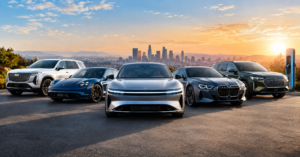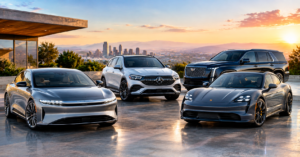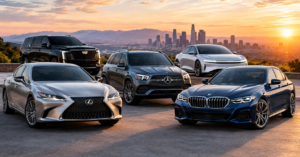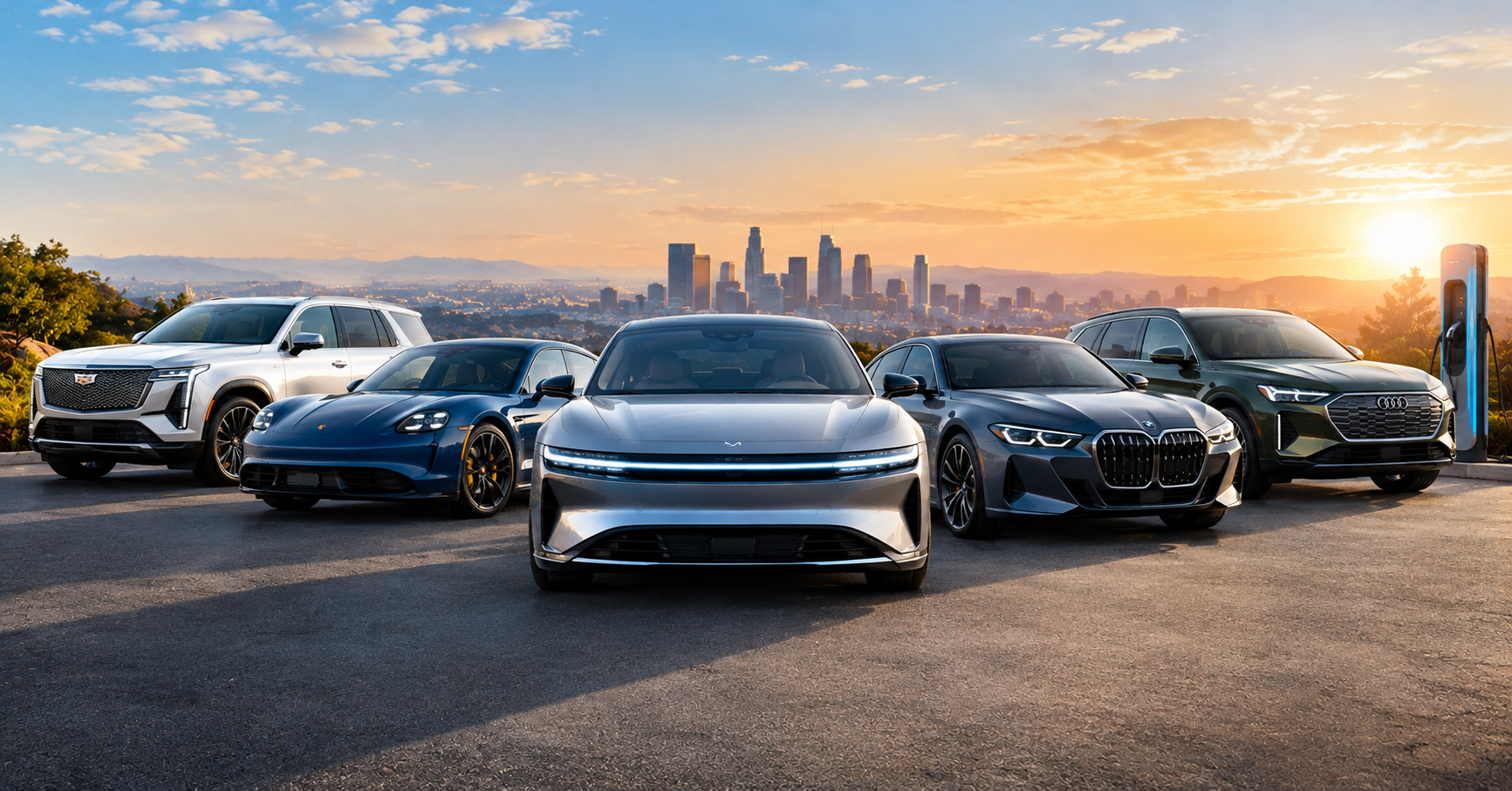
Luxury electric vehicles have reached a point where buyers no longer have to choose between refinement, performance and useful driving range. The best luxury electric cars 2026 offer quiet cabins, rapid acceleration, advanced technology and increasingly competitive pricing, although the right choice still depends on how far you drive, how you charge and how much you want to spend.
Price is also becoming a more important part of the conversation. Cox Automotive reported that the average transaction price for a new EV fell to $54,754 in August 2026, while the price premium over comparable gasoline vehicles narrowed to 9.7%. Those figures do not make every luxury EV affordable, but they show why buyers should compare the complete package rather than focus only on the window sticker.
This guide examines 10 luxury electric cars and SUVs worth considering in 2026, including their starting prices, available range figures, standout strengths and notable drawbacks. It also explains how to choose a model based on charging needs, passenger space, technology and long-term ownership considerations.
How We Evaluated the Best Luxury Electric Cars 2026
A high starting price does not automatically make an electric vehicle a better luxury car. The most useful comparisons consider how well a vehicle performs in daily life, not just how impressive its specifications look on paper.
This roundup draws on the supplied research from Edmunds, Car and Driver, MotorTrend, Cars.com and Cox Automotive, alongside the EPA range figures included in the research. Their assessments use different testing methods and scoring systems, so their ratings should be understood within the context of each publication rather than treated as directly interchangeable.
Range and Charging Capability
Driving range determines how often a driver needs to stop for charging, but the highest EPA estimate is not a guarantee of real-world results. Edmunds, for example, has reported that the Lucid Air did not meet its EPA range estimate in testing. Weather, driving conditions and vehicle configuration can affect actual range, so shoppers should consider both official estimates and independent testing.
Ride Comfort and Cabin Refinement
Luxury buyers typically expect a quiet cabin, smooth acceleration, comfortable seating and a composed ride. Electric powertrains can complement those priorities through low vibration and near-silent operation, but suspension tuning, interior materials and cabin design still distinguish one model from another.
Technology and Ease of Use
Large displays and sophisticated software can make a vehicle feel modern, but they are not automatically improvements. Touchscreen-heavy controls and complicated infotainment systems are recurring criticisms in the supplied reviews. Intuitive controls, straightforward navigation and an easy-to-understand charging interface deserve as much attention as headline technology features.
Price and Ownership Value
Starting prices help establish the initial cost, but buyers should also compare optional equipment, insurance quotes, charging access, warranty terms and depreciation. Used EV shoppers should pay particular attention to battery condition, software support and warranty transferability.
The models below are selected for different buyer priorities rather than presented as a universal ranking. A performance sedan and a three-row electric SUV serve different purposes, even when both qualify as luxury vehicles.
Quick Picks: Which Luxury EV Fits Your Needs?
- Best flagship sedan for range: Lucid Air.
- Best for driving engagement: Porsche Taycan.
- Best performance wagon: Porsche Taycan Cross Turismo.
- Best all-around luxury sedan: Audi A6 Sportback e-tron.
- Best executive commuter: BMW i5.
- Best entry point into BMW electric luxury: BMW i4.
- Best futuristic comfort focus: Mercedes-Benz EQE.
- Best chauffeur-style flagship: BMW i7.
- Best American luxury-SUV value pick: Cadillac Lyriq.
- Best for maximum range and road presence: Cadillac Escalade IQ.
These categories reflect the supplied expert assessments and the models’ stated strengths. The best choice for an individual buyer will depend on budget, driving patterns, charging access and the space needed.
1. Lucid Air: Best for Long-Range Luxury
The Lucid Air is a strong starting point for shoppers who want a luxury electric sedan with substantial range and a premium positioning. MotorTrend ranks it No. 1 among flagship electric luxury cars, giving it a 9.5 out of 10 score in the supplied research. Its starting price is $72,400.
Depending on configuration, the Lucid Air offers an EPA-estimated range of approximately 420 to 480 miles. That figure places it among the most compelling options for drivers who want to reduce charging stops on longer trips. It also gives the car a clear selling point for buyers who regularly travel beyond their local area.
Why It Stands Out
- EPA-estimated range of 420–480 miles, depending on configuration.
- Strong expert recognition in the flagship electric luxury category.
- A premium sedan format suited to drivers who prioritize range and refinement.
What to Consider
Range should not be the only deciding factor. Edmunds has raised concerns about the gap between EPA estimates and its real-world results, while fit-and-finish issues have appeared in expert reviews. Higher trims can also become substantially more expensive.
Best for: Drivers who want a long-range luxury sedan and are willing to compare configurations carefully before buying.
2. Porsche Taycan: Best for Driving Engagement
The Porsche Taycan approaches electric luxury from a performance-first perspective. Car and Driver gives it a 10 out of 10 rating in the supplied research, reflecting its position as a highly regarded electric performance car. The starting price is $108,050, and EPA-estimated range is listed at 251–293 miles.
That range is lower than the Lucid Air’s stated estimates, but the Taycan appeals to a different kind of shopper. Rather than making maximum range its central selling point, it emphasizes a sports-car-oriented experience combined with premium design and an electric powertrain.
Why It Stands Out
- A 10/10 rating from Car and Driver in the supplied research.
- A performance-focused alternative to traditional luxury sedans.
- A premium brand and an emphasis on driver engagement.
What to Consider
The Taycan has a high starting price and less EPA-estimated range than the Lucid Air. Buyers who frequently take long journeys should map their likely charging stops and compare the range of the specific Taycan configuration they intend to purchase.
Best for: Drivers who value performance and an engaging driving experience more than having the highest possible range figure.
3. Porsche Taycan Cross Turismo: Best Performance Wagon
The Porsche Taycan Cross Turismo combines the Taycan’s performance-oriented character with a wagon body style. Car and Driver also rates it 10 out of 10 in the supplied research. Its starting price is $120,095, while EPA-estimated range is 261–277 miles.
The Cross Turismo is worth considering for buyers who want something different from a conventional luxury sedan. Its wagon layout offers an alternative to the growing field of electric SUVs, while its five-seat configuration gives it everyday passenger utility.
Why It Stands Out
- Five-seat configuration.
- A wagon body style with a performance-oriented identity.
- A 10/10 Car and Driver rating in the supplied research.
What to Consider
The Cross Turismo is expensive, starting above $120,000, and its range remains below that of some long-range luxury EVs. Rear headroom is also a consideration compared with an SUV, according to the supplied research.
Best for: Buyers who want a distinctive performance wagon and do not need the upright seating position or overall utility of a large SUV.
4. Audi A6 Sportback e-tron: Best All-Around Luxury Sedan
The Audi A6 Sportback e-tron may be the most balanced option in this group for drivers who want a luxury EV for regular commuting and longer journeys. Edmunds ranks it No. 1 among electric luxury cars in the supplied research and gives it an 8.4 out of 10 score.
Its strengths include range, fast charging, quiet operation and ride quality. That combination matters because a luxury car must perform consistently across different situations. A vehicle that is comfortable in traffic, composed on the highway and convenient to charge can be more useful than one that excels in only a single category.
Why It Stands Out
- Edmunds’ top ranking among electric luxury cars in the supplied research.
- Positive assessments of charging, range and ride comfort.
- A strong fit for buyers seeking an everyday luxury sedan.
What to Consider
Rear visibility is a reported weakness, and the cabin may feel less opulent than those of some competitors. Buyers should check the seating position, rearward view and interior materials during a test drive rather than relying entirely on photographs or equipment lists.
Best for: Drivers who want one luxury electric car to handle commuting, highway travel and everyday responsibilities without focusing exclusively on performance or maximum range.
5. BMW i5: Best for Executive Commuting
The BMW i5 is aimed at buyers who want an executive-style electric sedan with a premium cabin, contemporary technology and a range of performance choices. Edmunds gives it an 8.2 out of 10 rating in the supplied research, while the starting price is $68,550.
Edmunds praises its cabin, technology, real-world range and the performance of the M60 version. For a driver who spends substantial time commuting, those qualities can make the i5 a compelling alternative to a conventional gasoline-powered executive sedan.
Why It Stands Out
- A premium interior and technology-focused cabin.
- An M60 version for buyers who want more performance.
- A starting price below several six-figure luxury EVs in this roundup.
What to Consider
The i5 relies heavily on touchscreen controls, and its steering has been criticized for lacking feel. Drivers who prefer physical buttons for common tasks should spend time with the cabin before committing to a purchase.
Best for: Professionals and commuters seeking a modern executive EV with a refined interior and an available high-performance version.
6. BMW i4: Best Lower-Cost Entry Into BMW Electric Luxury
With a starting price of $59,250, the BMW i4 is one of the more accessible ways into this group of premium electric cars. Car and Driver rates it 9.5 out of 10 in the supplied research, and EPA-estimated range is listed at 278–333 miles, depending on configuration.
The i4 is especially relevant for buyers who want a luxury-brand EV without moving into the price territory of the Porsche Taycan or BMW i7. Its range estimates also make it a practical candidate for people who split their driving between daily commutes and longer highway trips.
Why It Stands Out
- A starting price below $60,000.
- EPA-estimated range of 278–333 miles.
- A 9.5/10 Car and Driver rating in the supplied research.
What to Consider
Optional equipment can increase the price quickly, and the cabin depends heavily on touchscreen controls. Buyers should compare the final price of a properly equipped i4 with alternatives rather than relying only on the base MSRP.
Best for: Shoppers who want a premium electric car with a useful range and a lower starting price than many flagship luxury models.
7. Mercedes-Benz EQE: Best for Futuristic Comfort
The Mercedes-Benz EQE focuses on comfort, quiet operation and a technology-rich cabin. Edmunds gives it a 7.4 out of 10 rating in the supplied research, highlighting silent acceleration, a spacious interior and the availability of the Hyperscreen.
For drivers who associate luxury with a calm cabin and a sense of technological sophistication, the EQE deserves consideration. Its appeal is less about winning a performance contest and more about delivering a relaxed premium driving environment.
Why It Stands Out
- Quiet electric acceleration.
- A spacious cabin.
- An available Hyperscreen for buyers who want a more display-focused interior.
What to Consider
The infotainment interface can be confusing, the base version’s acceleration has been described as modest, and rear visibility is a reported weakness. The optional display setup should be evaluated in person to determine whether it improves usability for the driver.
Best for: Buyers who prioritize a quiet, comfortable cabin and a futuristic interior over sporty handling.
8. BMW i7: Best Chauffeur-Style Electric Flagship
The BMW i7 serves buyers who want a large, high-end electric sedan with a flagship character. Car and Driver rates it 8.5 out of 10 in the supplied research. Its starting price is $107,250, and EPA-estimated range is 285–301 miles.
Its position in the luxury market makes it a natural option for drivers who place a high value on executive presence and premium transportation. It also provides an alternative for shoppers who want a flagship sedan rather than a large electric SUV.
Why It Stands Out
- A flagship luxury-sedan format.
- EPA-estimated range of 285–301 miles.
- A premium option for executive or chauffeur-style use.
What to Consider
The i7 is expensive, with a starting price above $107,000, and the supplied research notes that it is less engaging to drive than smaller BMW EVs. Buyers who mainly travel alone and prefer an agile driving experience may find a smaller model more suitable.
Best for: Drivers seeking a large luxury electric sedan for executive travel, passenger comfort and flagship presence.
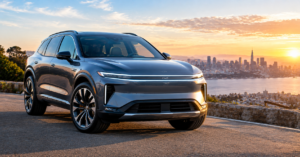
9. Cadillac Lyriq: Best American Luxury-SUV Value Pick
The Cadillac Lyriq is a compelling option for shoppers who prefer an electric SUV and want a luxury model with a starting price below $65,000. It starts at $60,995, and MotorTrend ranks it No. 1 among electric midsize luxury SUVs in the supplied research.
The Lyriq offers a different value proposition from the most expensive vehicles in this roundup. Rather than pursuing the highest price or the largest footprint, it gives buyers a luxury-SUV option at a lower starting point than the Escalade IQ or BMW i7.
Why It Stands Out
- A starting price of $60,995.
- MotorTrend’s top ranking in the electric midsize luxury SUV category, according to the supplied research.
- An SUV format for buyers who do not want a sedan.
What to Consider
Edmunds’ comparisons suggest that the BMW iX is a more polished overall package. The supplied research also recommends checking the software and charging experience at delivery. Buyers should confirm that the vehicle’s interface, charging behavior and equipment meet their expectations.
Best for: Shoppers seeking an American luxury electric SUV without stepping into the six-figure segment.
10. Cadillac Escalade IQ: Best for Maximum Range and Road Presence
The Cadillac Escalade IQ is the most imposing vehicle in this roundup, combining an oversized luxury-SUV format with a standout real-world range result. Edmunds recorded 558 miles in its testing, according to the supplied research, and ranks it second among super-luxury electric SUVs. The starting price is $127,405.
That measured range is particularly notable because official range estimates and actual driving results do not always match. The Edmunds figure is a result from its testing, not a promise that every owner will achieve the same distance under different conditions.
Why It Stands Out
- A reported 558-mile real-world range result in Edmunds testing.
- A large, imposing luxury-SUV format.
- A high-end alternative for buyers who want range and road presence.
What to Consider
The Escalade IQ starts at $127,405, placing it firmly in the six-figure market. Its enormous dimensions can also make the driving experience less convenient, and the supplied research notes compromises in driving dynamics. Buyers should consider parking spaces, garage dimensions and the roads they regularly use.
Best for: Buyers who want a very large luxury electric SUV and place exceptional importance on range and presence, with less concern about price or maneuverability.
Luxury Electric SUV Alternatives Worth Considering
The 10 featured models cover several major luxury-EV categories, but buyers shopping specifically for an electric SUV have other strong options. The right alternative depends on whether the priority is passenger capacity, range, charging performance or overall polish.
BMW iX
Edmunds ranks the BMW iX as its top midsize luxury electric SUV in the supplied research, ahead of the Lucid Gravity and Tesla Model X. It deserves a place on a shortlist for shoppers who want an upscale electric SUV and value a well-rounded package.
Lucid Gravity
The Lucid Gravity is another option for buyers focused on range, charging speed and performance in an SUV body style. The supplied research identifies it as a leading alternative to the Cadillac Escalade IQ, particularly for shoppers who want electric-SUV capability without choosing the Escalade’s enormous format.
Rivian R1S
Edmunds ranks the Rivian R1S No. 1 among large luxury electric SUVs in the supplied research. Its three-row configuration and adventure-oriented positioning make it especially relevant for households that need additional passenger capacity and want an SUV rather than a sedan.
Mercedes-Benz CLA Electric
For shoppers who want a lower-cost entry point into a luxury-brand EV, the Mercedes-Benz CLA Electric is listed in the research at $48,600 with an EPA-estimated range of 374 miles. It is worth comparing if a six-figure luxury vehicle would stretch the budget too far.
What Luxury EV Buyers Need to Know in 2026
EV Prices Are Becoming More Competitive
Cox Automotive reported that the average transaction price for a new EV fell to $54,754 in August 2026, down 1.3% from July and 2.8% from a year earlier. The EV premium over comparable gasoline vehicles narrowed to $4,847, or 9.7%.
Those figures describe the overall new-EV market, not the price of every luxury model. Many of the vehicles in this guide cost substantially more than the average. Still, a narrowing price gap gives buyers a useful reason to compare electric and gasoline-powered alternatives side by side.
Inventory Can Influence Negotiations
New-EV inventory stood at 78 days’ supply in August, just two days above gasoline-vehicle inventory, according to Cox Automotive. Inventory conditions vary by model, trim and location, but buyers can use competing dealer offers to evaluate the final purchase price rather than assuming the advertised MSRP is the only available option.
Used EVs Deserve Serious Consideration
Used-EV sales reached 44,350 units in August 2026, up 25.9% month over month and 14.7% year over year. The average used-EV listing price was $37,441.
For buyers who want a luxury interior and electric driving without paying for a new flagship model, the used market may offer alternatives. However, the lower purchase price should not replace a careful inspection. Check battery condition, warranty coverage, software support, charging compatibility and the vehicle’s service history before buying.
Range Should Be Evaluated in Context
Cox Automotive’s supplied research places average EV range near 300 miles, while some luxury models exceed 400 miles in EPA estimates or independent testing. The Escalade IQ’s reported 558-mile result in Edmunds testing is an example of how a specific model can stand out, but it should not be used as a guarantee for all driving conditions.
For a driver who mostly commutes locally and charges at home, a model with moderate range may be sufficient. Someone who frequently travels long distances may prefer a vehicle with a larger range buffer and charging stops that fit the routes they use.
How to Choose the Right Luxury Electric Car
Before deciding which of the best luxury electric cars 2026 belongs in your garage, work through a few practical questions. These can help narrow the field more effectively than starting with brand prestige alone.
- Set a realistic budget. Compare the starting price with the price of the configuration you actually want. Options can increase the cost of models such as the BMW i4, while the Porsche Taycan, Taycan Cross Turismo and BMW i7 begin well above $100,000.
- Decide how much range you need. Consider your typical commute, weekend travel and longest regular journey. EPA estimates are useful for comparing configurations, but real-world testing and driving conditions matter too.
- Check charging access before buying. Home charging can make daily ownership more convenient for drivers who have a suitable place to install a charger. If you depend on public charging, investigate the networks and charging locations available along your regular routes.
- Test the controls and infotainment system. Several models in this roundup have received criticism for touchscreen-heavy controls or confusing software. Test common tasks such as adjusting climate settings, navigating and finding charging information while parked.
- Choose the right body style. A sedan such as the Lucid Air or Audi A6 Sportback e-tron suits a different need from a three-row SUV such as the Rivian R1S. Consider passenger capacity, cargo requirements, parking and rear visibility.
- Review ownership costs. Request insurance quotes, check warranty terms, understand battery coverage and consider depreciation. These costs can materially affect the value of a luxury EV over several years.
Are Luxury Electric Cars Worth Buying in 2026?
For the right driver, luxury EVs offer a persuasive combination of quiet operation, smooth acceleration, modern technology and premium cabin design. The strongest models also offer useful range, quick charging and a choice of body styles to fit different lifestyles.
They are not automatically the right choice for everyone. A driver who cannot reliably access charging, regularly travels through areas with limited charging options or is uncomfortable with a touchscreen-heavy interface should assess those limitations before buying. High purchase prices also remain a concern, particularly for flagship models such as the Porsche Taycan Cross Turismo, BMW i7 and Cadillac Escalade IQ.
The market data points to a more competitive environment. New-EV transaction prices have declined, the price premium over gasoline vehicles has narrowed, and used-EV sales have increased. These changes give shoppers more reasons to compare new and used models carefully.
For many buyers, the Audi A6 Sportback e-tron is a strong all-around sedan choice based on Edmunds’ ranking. The Lucid Air is the standout for flagship range, while the Porsche Taycan is the natural option for drivers who prioritize engagement. Among SUVs, the BMW iX, Cadillac Lyriq, Lucid Gravity and Rivian R1S each deserve consideration for different reasons.
The smartest purchase is not necessarily the EV with the longest range or the highest price. It is the vehicle that best matches your daily driving, charging access, passenger needs and budget.
Frequently Asked Questions
What is the best luxury electric car in 2026?
There is no single winner for every buyer. Edmunds ranks the Audi A6 Sportback e-tron No. 1 among electric luxury cars in the supplied research, while MotorTrend ranks the Lucid Air first among flagship electric luxury cars. Car and Driver gives the Porsche Taycan and Taycan Cross Turismo 10/10 ratings in the same research.
Which luxury EV has the longest range?
The Cadillac Escalade IQ stands out after Edmunds recorded 558 miles in real-world range testing. The Lucid Air offers an EPA-estimated 420–480 miles, depending on configuration. These figures come from different types of measurements and should not be treated as directly equivalent.
What is the best luxury electric SUV in 2026?
According to the supplied research, Edmunds ranks the BMW iX as its top midsize luxury electric SUV and the Rivian R1S first among large luxury electric SUVs. The Lucid Gravity is another leading option for shoppers prioritizing range, charging speed and performance.
Are luxury electric cars worth buying in 2026?
They can be worth buying for drivers who value refinement, performance and technology and have reliable charging access. Buyers who rely on public charging or regularly take long trips should evaluate charging availability and real-world range before making a decision.
Should I buy a new or used luxury EV?
A new EV may appeal to buyers who want the latest configuration and a new-vehicle warranty. A used EV can offer a lower purchase price, but buyers should check battery condition, warranty transferability, software support, charging compatibility and depreciation before committing.
Is the Lucid Air better than the Porsche Taycan?
The two cars serve different priorities. The Lucid Air offers a higher stated range, with EPA estimates of 420–480 miles depending on configuration, and starts at $72,400. The Porsche Taycan starts at $108,050, has an EPA-estimated range of 251–293 miles and is positioned around driver engagement and performance.
What should I check before buying a luxury EV?
Compare the final price, EPA range, independent range testing, charging access, infotainment usability, cabin comfort, insurance costs and warranty coverage. For used models, battery health and software support deserve particular attention.
Should I wait for 2027 electric cars?
Waiting may make sense for buyers who specifically want an upcoming model or the newest technology. The supplied research mentions the Audi Q6 e-tron, Cadillac Optiq, Cadillac Vistiq and Mercedes-Benz C-Class EV in 2027-related previews. Buyers should compare confirmed specifications, pricing and availability before delaying a purchase based on preview information alone.