
Lucid Gravity 2026 Review — the latest benchmark in the rapidly evolving world of electric luxury SUVs — arrives at a pivotal moment for the U.S. automotive market. As buyers shift aggressively toward electric mobility, the Lucid Gravity luxury electric SUV enters the scene with bold claims: class-leading range, supercar-level acceleration, and a three-row configuration designed to challenge established luxury giants like Tesla, BMW, and Mercedes-Benz.
But does it truly live up to the hype? And more importantly, is it ready for mainstream luxury buyers in 2026? This in-depth analysis breaks down everything you need to know, from real-world performance and pricing to software reliability and ownership experience.
In this Lucid Gravity 2026 Review, we explore whether Lucid has finally delivered the electric SUV that can redefine the segment — or whether early production issues still hold it back.
Introduction: A New Benchmark in Electric Luxury SUVs
The luxury SUV market has always been a battlefield for innovation, but 2026 marks a turning point. Electrification is no longer optional — it is the foundation. Against this backdrop, the Lucid Gravity arrives as one of the most ambitious vehicles ever built by a startup automaker.
Unlike traditional luxury SUVs that evolved from combustion platforms, the Gravity is purpose-built as a fully electric architecture. This allows it to prioritize interior space, aerodynamic efficiency, and battery optimization in ways legacy competitors struggle to match.
Early impressions from experts describe it as a vehicle that blends performance, comfort, and technology in a way few EVs have achieved — but also one that reflects the growing pains of a young automaker scaling production quickly.
Design and Exterior: Functional Aerodynamics Meets Luxury
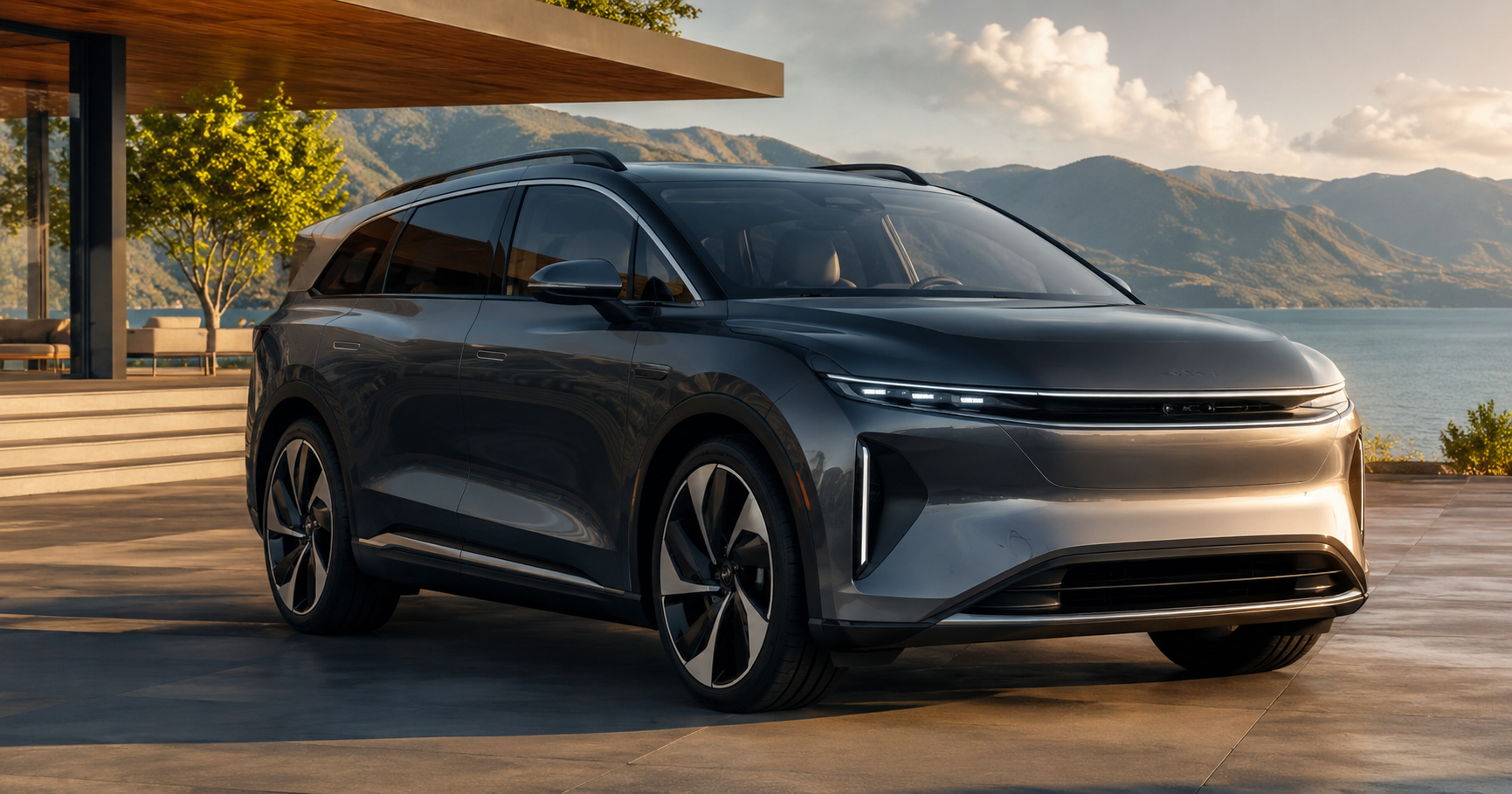
The Lucid Gravity adopts a clean, aerodynamic design philosophy similar to its sibling sedan, the Lucid Air. Every curve is engineered for efficiency rather than aggressive styling.
Key Design Highlights
- Smooth, wind-cheating silhouette optimized for long-range efficiency
- Minimalist LED lighting signature
- Large panoramic glass areas for cabin openness
- Functional aerodynamic wheels designed to reduce drag
At 198.2 inches long with a 119.5-inch wheelbase, the Gravity sits in the mid-size luxury SUV category but maximizes interior space thanks to its EV-first design. This is one of its biggest advantages over combustion-based rivals.
Performance: Where the Gravity Truly Shines
Performance is a defining pillar of this Lucid Gravity 2026 Review. Lucid has engineered the SUV not just to compete — but to dominate in acceleration, efficiency, and highway stability.
Powertrain Options
- Touring: 560 horsepower
- Grand Touring: 828 horsepower
- Dream Edition: 1,070 horsepower
Acceleration
- 0–60 mph in as quick as 3.1 seconds (Dream Edition)
- 3.4 seconds in Grand Touring tested runs
These numbers place the Gravity in supercar territory, despite being a three-row family SUV weighing over 5,500 pounds.
Driving Experience
On the road, the Gravity delivers instant torque, linear acceleration, and surprisingly agile handling for its size. Air suspension smooths out imperfections, giving it a refined, luxury-car ride quality while maintaining sporty responsiveness.
However, its weight is still noticeable during aggressive cornering — a reminder that physics still applies even in the EV era.
Range and Efficiency: Class-Leading Capability
One of the strongest selling points in this Lucid Gravity 2026 Review is its industry-leading range capability.
EPA-Estimated Range
- Touring: 337 miles
- Grand Touring: 450 miles
- Dream Edition: 378 miles
The 450-mile range of the Grand Touring trim positions the Gravity ahead of key competitors like the Tesla Model X and Rivian R1S in official testing.
Real-World Efficiency
Highway range tests show lower but still competitive figures, averaging between 260 and 310 miles depending on driving conditions and trim level.
Despite its size and power, the Gravity benefits from Lucid’s advanced battery and efficiency engineering, a hallmark of the brand’s identity.
Charging Technology: Ultra-Fast Energy Refill
The Lucid Gravity is built for long-distance travel convenience, supported by one of the fastest charging systems in the industry.
Charging Specifications
- Peak DC fast charging: up to 400 kW
- 200 miles of range in approximately 15 minutes
- 10% to 80% charge in around 15 minutes
This level of charging performance significantly reduces downtime on long trips and positions the Gravity as one of the most road-trip-friendly EVs currently available.
Interior and Technology: A Digital Luxury Lounge
The cabin of the Lucid Gravity reflects a futuristic interpretation of luxury. Minimalism meets high-tech functionality, with an emphasis on space and digital integration.
Interior Highlights
- 34-inch curved glass display
- Optional augmented reality head-up display
- Wireless Apple CarPlay and Android Auto
- Premium materials including soft leather and microsuede
- Available front-seat massage functionality
Seating and Space
The Gravity offers flexible seating configurations for five, six, or seven passengers. Unlike many EV SUVs, the third row is genuinely usable for adults, making it a practical family option.
Cargo capacity reaches up to 54.5 cubic feet with seats folded, reinforcing its dual identity as both a performance vehicle and a utility-focused SUV.
Technology and Software: Strength and Weakness
Technology is where the Lucid Gravity both impresses and struggles. While the hardware is cutting-edge, software maturity remains a concern in this Lucid Gravity 2026 Review.
Strengths
- Advanced infotainment interface
- Over-the-air updates improving functionality
- DreamDrive Pro hands-free driving capability
Weaknesses
- Reported software glitches and system freezes
- Inconsistent responsiveness in controls
- Delayed feature rollouts at launch stage
While improvements are ongoing, early adopters may experience occasional reliability frustrations.
Safety and Reliability: A Mixed Picture
Safety equipment is robust, including advanced driver assistance systems and structural engineering designed for crash protection. However, reliability perception is still evolving.
Key Safety Features
- Advanced driver monitoring systems
- Automatic emergency braking
- Lane keeping assistance
- Surround-view camera systems
Reliability Concerns
Despite strong engineering, early production units have shown software bugs and build-quality inconsistencies. While no widespread safety failures have been documented, consumer confidence is still developing.
Pricing and Value: Premium but Competitive
Pricing plays a crucial role in the Lucid Gravity 2026 Review, especially in the luxury EV segment.
Trim Pricing Overview
- Touring: ~$79,900–$81,550
- Grand Touring: ~$94,900–$98,900
- Dream Edition: ~$139,900–$141,550
While expensive, the Gravity undercuts or matches competitors when factoring in range, performance, and technology features.
Competitor Comparison: How It Stacks Up
The Gravity’s primary competition includes the Tesla Model X, Rivian R1S, BMW iX, and Mercedes EQS SUV.
Key Advantages Over Rivals
- Longest EPA range in its class
- Faster DC charging speeds
- Higher horsepower in top trims
- More usable third-row seating
Where Competitors Still Lead
- Tesla: more mature software ecosystem and charging network integration
- Mercedes: stronger perceived build quality and refinement consistency
- BMW: more polished driving interface and UI stability
Pros and Cons Summary
Pros
- Exceptional range and efficiency
- Supercar-level acceleration
- Fastest DC charging in its class
- Spacious three-row interior
- Advanced luxury technology features
Cons
- Software reliability issues
- Build quality inconsistencies in early units
- High pricing in upper trims
- Learning curve for digital controls
Ownership Experience: Who Should Buy It?
The Lucid Gravity is not just another luxury SUV — it is a statement vehicle. But it is not for everyone.
Ideal buyers include:
- Tech-forward luxury EV enthusiasts
- Long-distance drivers needing maximum range
- Families wanting a premium three-row EV
Less suitable for buyers who prioritize flawless software reliability or conservative, proven luxury brand consistency.
Final Verdict: Is the Lucid Gravity Worth It?
In conclusion, this Lucid Gravity 2026 Review finds the vehicle to be one of the most capable and ambitious electric SUVs ever built. It excels in performance, range, and innovation, setting new benchmarks in multiple categories.
However, it remains a product in transition — balancing groundbreaking engineering with early-stage software refinement challenges.
For early adopters and EV enthusiasts, the Gravity is a compelling and forward-looking choice. For conservative luxury buyers, waiting for refinement may be the smarter decision.
FAQ: Lucid Gravity 2026 Review
What is the Lucid Gravity 2026 Review about?
It evaluates the Lucid Gravity luxury electric SUV, covering performance, range, pricing, technology, and overall ownership experience in 2026.
How far can the Lucid Gravity go on a single charge?
The Lucid Gravity can travel up to 450 miles in its Grand Touring configuration under EPA estimates.
Is the Lucid Gravity better than the Tesla Model X?
In range, power, and charging speed, the Gravity has advantages, but Tesla leads in software maturity and ecosystem integration.
Does the Lucid Gravity have a third row?
Yes, it offers optional third-row seating suitable for adults, making it a true three-row luxury SUV.
What are the main problems with the Lucid Gravity?
Common issues include software glitches, build quality inconsistencies, and delayed feature rollouts.
Is the Lucid Gravity worth buying in 2026?
It depends on priorities. It is excellent for performance and range, but early reliability concerns may deter conservative buyers.
How fast is the Lucid Gravity?
It accelerates from 0–60 mph in as little as 3.1 seconds in its highest-performance trim.